IWC luxury watches, or An American in Switzerland
The story of the International Watch Company IWC cannot be told in a few sentences. Many components are unique about it, as about its watch models. First the geographical position, far away from the Swiss watchmaking metropolises, in a peripheral region near the Rhine; second the curious reversal of the trend that prevailed 150 years ago, which drew many emigrants from Europe to America, while the founder of the International Watch Company (IWC) set out from the States for Switzerland, then a low-wage country. The engineer and watchmaker Florentine Ariosto Jones, with chutzpah and pioneering spirit, staked everything on a transcontinental cooperation: the skilled watchmakers of Switzerland, the most modern machine technology imported by him from the States and the American “anything goes” motto were to build a broadly based watch empire. That he settled in Schaffhausen, a cradle of watchmaking, had, besides the practical consideration of using the energy of the Rhine power stations, a historical deeper meaning as well. As early as 1409 clocks were being made in the nearby Rheinau monastery, and a “guild of firework makers, gunsmiths, clockmakers and winch makers” is documented as early as 1583. In Schaffhausen the legendary clockmaking family Habrecht created a large astronomical clock for Strasbourg Cathedral. Jones evidently had a feel not only for what was feasible, but also for the genius loci. He did indeed fail – not least because of the high import duties into the USA – and went back to the States, and further owners and managing directors also struggled with high-running Rhine waves. But with the takeover by the Schaffhausen industrialist Johannes Rauschenbach, the wind turned in 1879. Fortune now seemed unwilling to desert IWC again; not even the bombing raid of 1 April 1944 was able to destroy the IWC factory site. The upward development intensified into the middle of the 20th century. Even the quartz watch crisis of the seventies and eighties could shake the IWC battleship only marginally. With Günter Blümlein, a company captain regarded as brilliant, the firm remained steadily on a course of success.
The IWC crown jewels
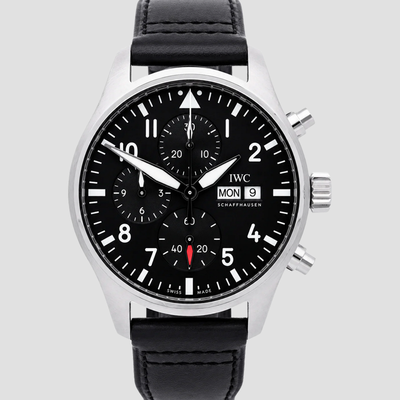
Today high to very high collectors' prices are paid for particularly sought-after IWC rarities. The company's history is paved with milestones. Shortly after the company was founded, the Pallweber pocket watch astonished with its digital display of hours and minutes; Albert Pellaton developed the automatic winding. With great innovative power the company recognised the future potential of wristwatches as early as the end of the 19th century and staked its hopes on movements of its own. In the thirties the original IWC pocket watch movements were installed in high-precision wristwatches. Ahead of their time were the Pilot's Watch Mark XI of 1948, protected against magnetic fields, and its no less spectacular successors, which the British Air Force used for timekeeping. It was followed by the Pilot's Chronograph and the Porsche Design by IWC line with titanium watches such as the Ocean 2000 and the compass watch developed in 1978. The first titanium chronograph came onto the market in 1980. Not to be forgotten is the Da Vinci of 1985, a chronograph with many complications such as perpetual calendar, tourbillon and moon phase display. With the presentation of an exclusive rarity – the Schaffhausen warhorse or Destriero Scafusia – IWC marked its company anniversary in 1993. All 125 examples issued were spoken for within the shortest of times. Model names such as Spitfire Chronograph, Big Pilot's Watch, Portugieser Perpetual Calendar, Rattrapante Chrono and Portofino make collectors and watch lovers prick up their ears.
IWC – Long-lived watch families for the few
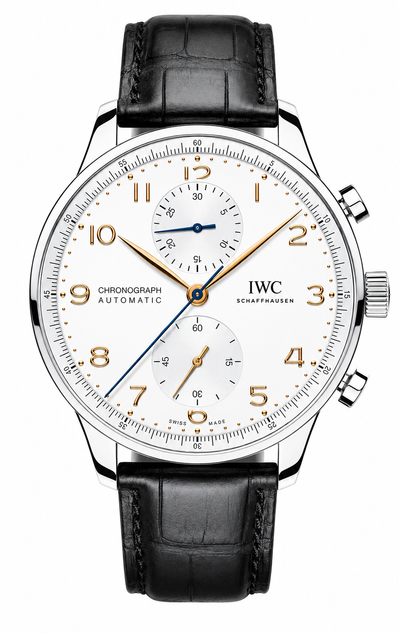
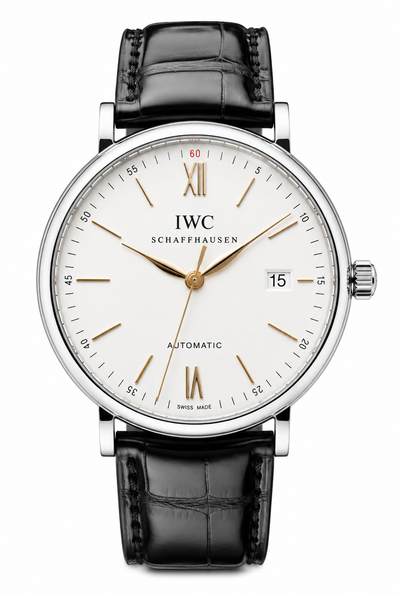
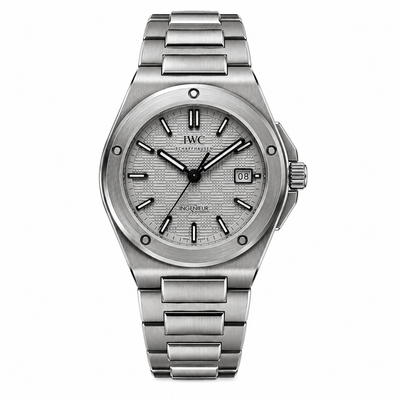
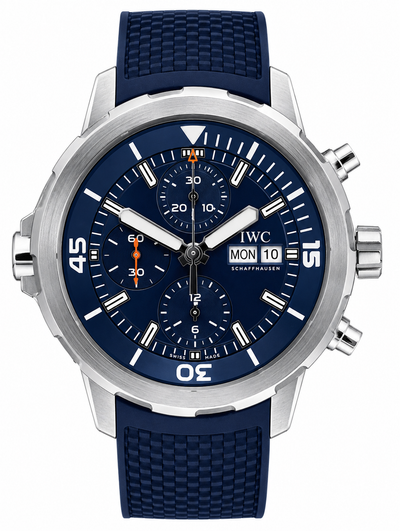
IWC collections – families – like to take up aspects of cultural history. Watchmaking history was written by the very first wristwatch with a Grande Complication, by the divers' watches water-resistant to as much as 2,000 metres and inspired by the look of diving suits, by the magnificent ones, by the first watch with a digital display. The IWC Ingenieur family shines through its unique understatement of form. With its strong emphasis on functionality, it is favoured by virile wearers who profess a noble restraint. The IWC Portugieser family sees itself as a reverence to the great seafaring nation of Portugal. The IWC Da Vinci family bows to the Tuscan universal genius Leonardo da Vinci, whose supposed flight drive revealed itself in the nineties to be a proto-movement. A light-footed Italianità puts its stamp on the IWC Portofino family. It, too, is a strong commitment to understatement, at a time when, from 1970 onwards, daring and sensational designer watches increasingly dominated the market. Clearly proportioned, but not without the decisive pinch of extravagance. In 1967 IWC responded to the growing popularity of diving with the development of divers' watches in the Aquatimer family, which enjoyed a celebrated revival in 2009. From the first pilot's watch of 1936 to the present day, the IWC Pilot's Watch family has been anchored as a tradition-rich and indispensable member of the company portfolio.
For Machos only?
The International Watch Company makes no secret of the fact that it builds its watches for the masculine, daring, hands-on man. Robustness, technical complexity and a sporting, powerful appearance made the brand unmistakably male. The award-winning IWC advertisement from the nineties, “IWC watches - almost as complicated as women. But punctual”, did earn the company a reprimand from the Swiss society for fair trading. And the Swiss equal opportunities commissioner judged the slogan “Almost as beautiful as a woman. But it ticks properly” to be sexist despite its ironic intention. Of the acclamation of its male regular clientele, however, IWC could be certain. IWC committed itself to a global outlook early on. Not without reason did the Swiss company of American origin position its flagship store in Hong Kong. And only there are special exclusive accessory collections to be had, in the smallest conceivable numbers. For the few – but for them only the best! Further IWC model lines Pilot's Watches, Ladies, Pilot's Chronograph, Schaffhausen, Le Petit Prince, Portugieser Automatic, Portugieser Perpetual Calendar, Portugieser Chronograph, Portofino Automatic, Diver's Watch, Moon Phase, Aquatimer Automatic, Big Pilot's Watch Top Gun, Pilot's Watch Spitfire Chronograph, Pilot's Watch Mark, Big Pilot's Watch, Yacht Club, Portugieser Yacht Club Chronograph, Portugieser Tourbillon, Portugieser Minute Repeater, Portugieser Grande Complication, Portugieser Annual Calendar, Portofino Chronograph, Pilot's Watch Chronograph Top Gun, Aquatimer Chronograph, Gold