


News from the World of Watches
Small Watches, Big Impact: Why 34 to 38mm Are Making a Comeback

There are developments in the watch world that happen overnight, and others you only notice once they have long since arrived. The return of small cases belongs to the second kind. For two decades, wristwatches grew: What was considered normal at 36 millimetres in the nineties had, by the 2010s, naturally become 42, 44 or more. In the summer of 2026 the opposite is becoming apparent – and at precisely those manufactures that set the tone.
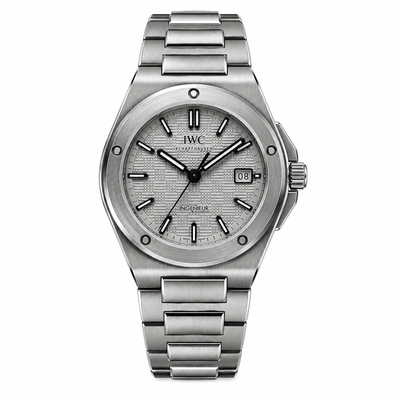
In July, Vacheron Constantin presented two new Overseas Automatic models in 34.5 millimetres, expressly not as a side line but as fully fledged members of the collection. A few days earlier, IWC had shown the Ingenieur Automatic in 35 millimetres. Neither is an isolated case; both are symptoms: Smaller diameters are once again a design objective rather than a compromise.
The key facts at a glance
- 34 to 38 millimetres are back. Major manufactures are deliberately relaunching their sports models in compact sizes, not as a scaled-down second version.
- Small does not mean less watch. Modern movements, full water resistance and elaborate finishing also fit into compact cases.
- Size determines wearing comfort. For most wrists, it is not the diameter alone that is decisive, but the interplay of lug width, case height and dial design.
How the growth in size came about
The path to the XXL watch began in the late nineties. Sports watches became status symbols, and presence on the wrist was most easily achieved through surface area. At the same time, the manufactures developed their calibres towards larger movement diameters, because chronographs, power reserves and calendars needed space. Anyone who designs a movement with a diameter of 30 millimetres does not build a 34-millimetre case around it.
This is precisely why the return to small formats is technically demanding today: Compact, thin calibres have to be either maintained or newly developed. Houses with long experience in small movements – such as Jaeger-LeCoultre, Cartier or Vacheron Constantin – have a noticeable head start here.
Why smaller watches are often the better choice in everyday life
A compact watch behaves differently. It does not slide over the back of the hand when you bend your wrist, it stays under the shirt cuff, and it does not get in the way when typing on a keyboard. Anyone who wears a watch every day notices these differences faster than any figure on a data sheet.
There is also a design aspect: On smaller dials, every detail has to be right. Indices, hand lengths and lettering cannot be distributed generously but must be precisely proportioned. Watches of 34 to 38 millimetres therefore often look more coherent than their larger siblings.
Which size suits which wrist?
As a rough guide: With a wrist circumference of up to around 16 centimetres, 34 to 38 millimetres is usually the most harmonious choice; between 16 and 18 centimetres, 36 to 40 millimetres works very well; beyond that, 40 to 42 millimetres is also unproblematic. More important than these figures, however, is the distance between the lugs: A watch whose lugs extend beyond the curve of the wrist never really sits well – regardless of its diameter.
| Case size | Character | Typical models |
|---|---|---|
| 30–34 mm | Understated, classic, jewellery-like | Dress watches, rectangular classics |
| 34–36 mm | Balanced, unisex, suitable for everyday wear | Classic three-hand watches |
| 36–38 mm | Present without being bulky | Elegant sports watches |
| 40 mm and more | Sporty, with a clear presence | Chronographs, dive watches |
Four models that show the trend particularly well
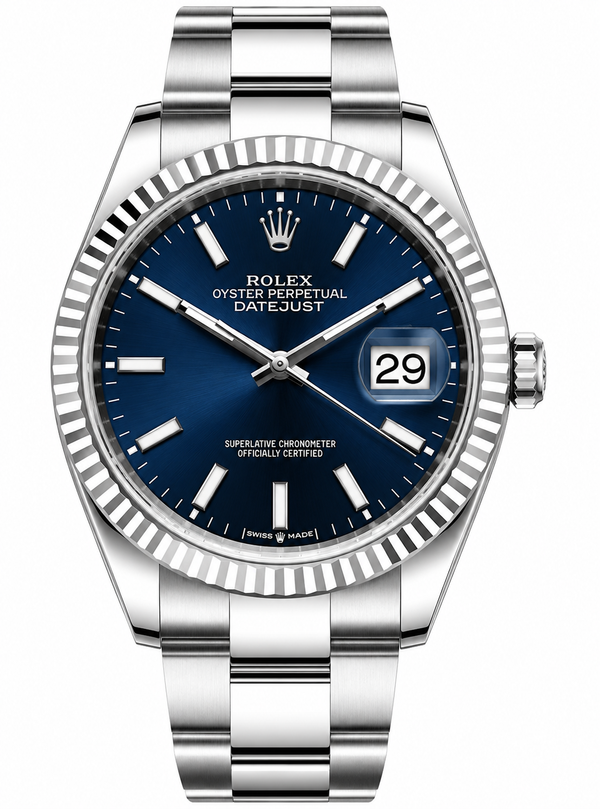
Rolex Datejust 36
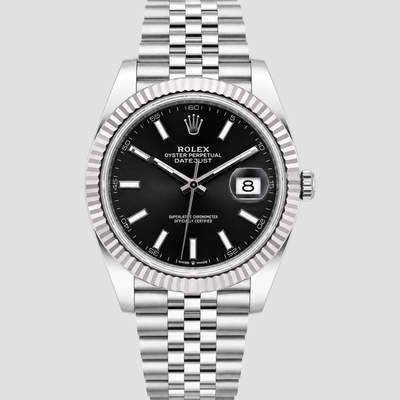
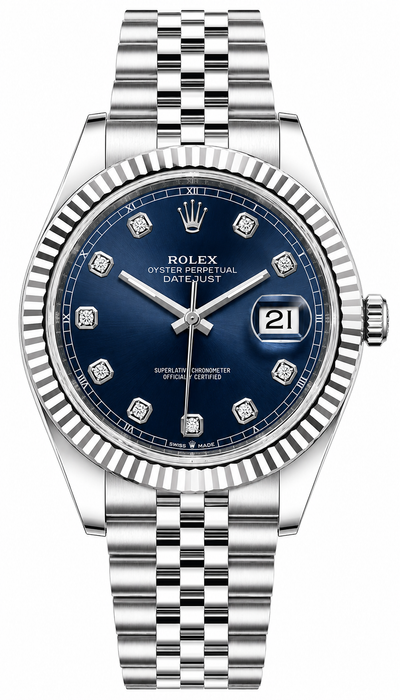
36 millimetres was never a reaction to a fashion, but the original size: The Datejust was introduced in this size in 1945. Its proportions have remained harmonious and unchanged for decades, which is why the Rolex Datejust 36 is once again regarded as the reference format today. You will find further models in our selection of Rolex watches.
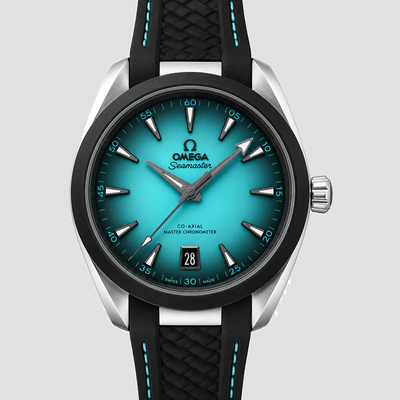
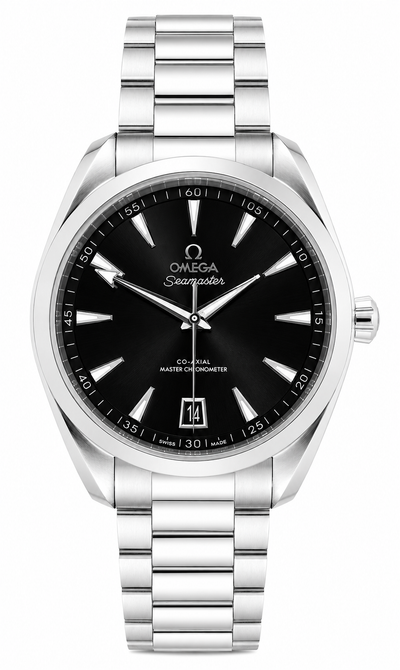
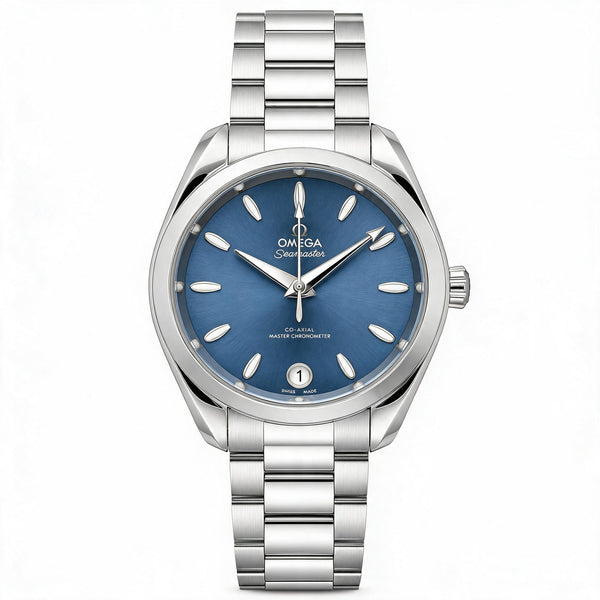
Omega Seamaster Aqua Terra 150M 34 mm
The Aqua Terra 150M in 34 millimetres demonstrates that smaller does not mean less: 150 metres of water resistance and a Master Chronometer calibre that has undergone the same tests as the large models in the line. A sports watch in the true sense of the word, just in compact form – more of them in our overview of Omega watches.
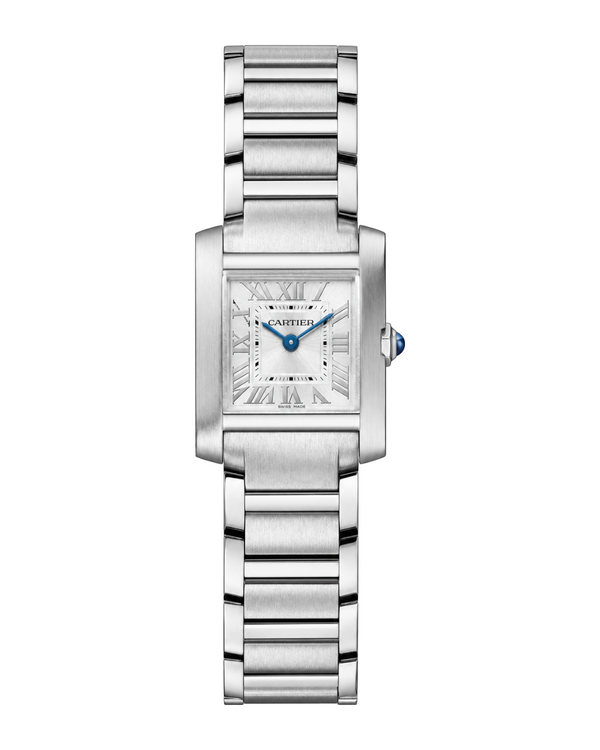
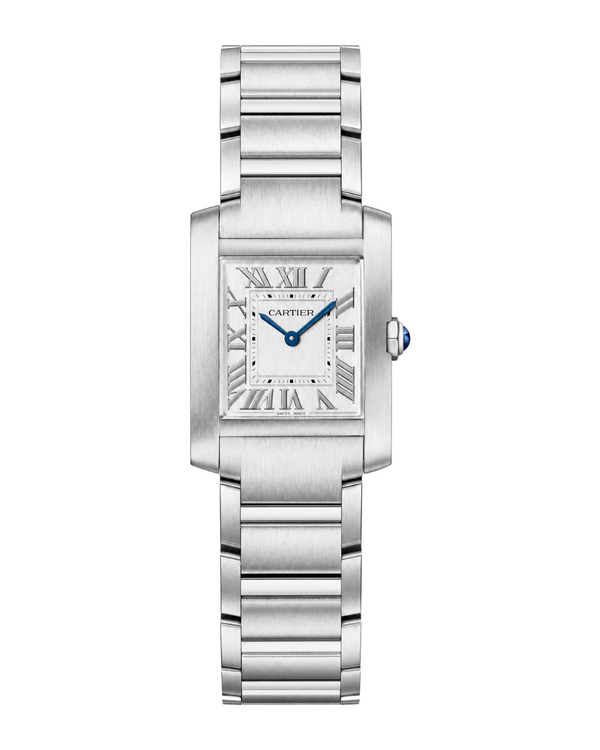
Cartier Tank Française
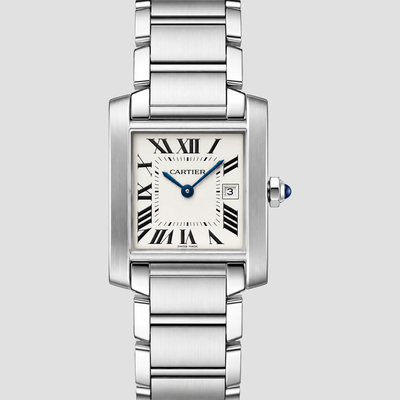
Cartier never took part in the size debate. The Tank was narrow, flat and angular from the very beginning, and on the Tank Française its case flows seamlessly into the bracelet. It is precisely this design language that explains why rectangular watches are so sought after again in the current trend environment. Our selection of Cartier watches shows the entire range.
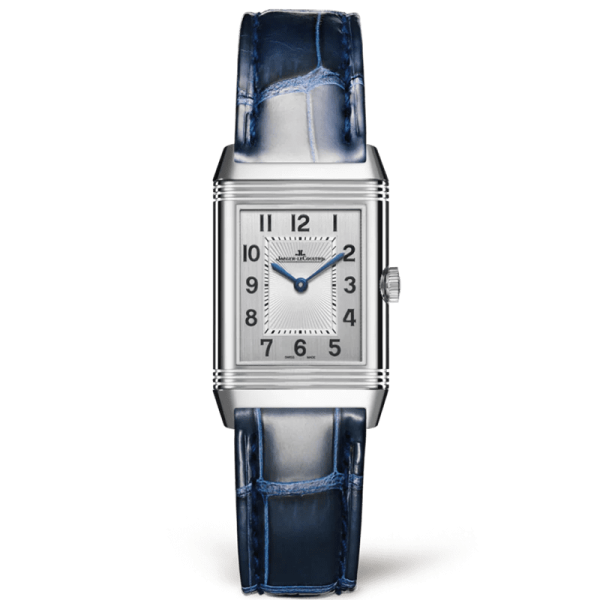
Jaeger-LeCoultre Reverso Classic Small Duetto
The Reverso proves how much technology fits into a small case: Its swivel mechanism reveals a second dial. The Reverso Classic Small Duetto is thus two watches in a format that works on any wrist – a good example of the movement expertise found throughout our selection of Jaeger-LeCoultre watches.
Small watches are not ladies’ watches
One misconception persists stubbornly: That compact cases are automatically ladies’ models. Historically, that was never the case, and today it is even less so. The new 34.5-millimetre models from Vacheron Constantin are expressly positioned as unisex watches, and many of the best-known men’s watches of the 20th century measured between 34 and 36 millimetres. Anyone specifically looking for models for slimmer wrists will also find what they are looking for in our selection of ladies’ watches – the category is a guide, not a rule.
What to look out for when buying
- Lugs rather than diameter: Measure how far the lugs extend. They determine the fit.
- Pay attention to case height: A thin watch looks smaller on the wrist than its diameter suggests.
- Check the dial design: A wide-open dial with a narrow bezel makes a 36-millimetre watch appear larger than a 38-millimetre watch with a wide bezel.
- Consider the strap: An integrated metal bracelet wears differently from a leather strap and noticeably influences the perceived size.
Conclusion
The return of compact cases is more than a passing fashion. It is a correction: Away from surface area as a status symbol, towards proportion, wearing comfort and design. Anyone choosing a watch between 34 and 38 millimetres today is not opting for less watch, but for a format that has worked for decades – and evidently works again. You will find an overview of the entire spectrum in our selection of luxury watches.
Frequently asked questions (FAQ)
Which watch size is currently on trend?
The range between 34 and 38 millimetres has gained considerably in importance in 2026. Several manufactures have relaunched their well-known sports and classic models in these sizes.
Are small watches only for slim wrists?
No. Compact cases work on almost all wrists because they sit flatter and overhang less. What matters is the distance between the lugs, not the diameter alone.
Does this mean large watches lose value?
Not across the board. Sought-after models remain sought after regardless of size. It can be observed, however, that collectors are increasingly seeking out compact versions of well-known references.
How do I measure my wrist circumference correctly?
Place a tape measure directly over the wrist bone without pulling it tight. The measured circumference gives you an initial guide to the right case size.
More from News from the World of Watches
All articles
News from the World of Watches Ballon d'Or 2026: The Stars' Watches – From Kane's Daytona to Mbappé's Hublot
News from the World of Watches How much does a Rolex cost in 2026? Submariner, Daytona, GMT-Master II and Day-Date price check
News from the World of Watches Tennis and Watches: Who Wears Which Brand – from Boris Becker to Carlos Alcaraz


