100 Years of the Rolex Oyster: How the Waterproof Wristwatch Came About – and What Water Resistance Means Today

In the summer of 1926, two unremarkable administrative acts took place in the Swiss watch industry whose effects are still felt today. On 24 July, a patent for a particularly tightly sealable watch case passed to Hans Wilsdorf; five days later he had the fitting name protected: Oyster. This marked the beginning of the history of the waterproof wristwatch as we know it today. Rolex has built its entire watch year 2026 around this anniversary, and the whole industry has been discussing a design principle ever since that now shapes every serious sports watch.
In this article we explain why the Oyster was technically a break with everything that came before, how other manufactures solved the same problem – and what the figures on the case back actually mean in everyday use.
The key facts at a glance
- In 1926 an idea became a system. A screw-down case back, a screw-down bezel and above all a screw-down crown made the wristwatch reliably sealed for the first time.
- Water resistance is a pressure value, not a diving depth. 10 bar does not mean that you can dive to a depth of 100 metres – testing is carried out statically in the laboratory.
- Gaskets age. The water resistance of a watch is not a permanent condition but has to be checked as part of a service.
Why a sealed watch was a real problem in 1926
In the 1920s the wristwatch was still young – and delicate. It moved from the waistcoat pocket to the wrist and thus, for the first time, permanently into rain, dust and moisture. The greatest weak point was not the case back but the winding crown: an open connection between movement and the outside world through which humidity could enter with every winding. Waterproof constructions had indeed existed here and there as early as the 19th century, but none of them had ever been successful in series production.
The decisive step was supplied by two watchmakers from La Chaux-de-Fonds, Paul Perregaux and Georges Perret. At the end of 1925 they filed a patent for a construction with a screw-down crown, which was granted in May 1926. Wilsdorf recognised the potential, acquired the rights in July 1926 and had a suitable case developed – the first versions, incidentally, were not round but octagonal, so that watchmakers could grip them securely with tools.
The principle of the oyster: three screw connections, one system
The idea behind the Oyster is as simple as it is effective: instead of sealing individual joints, the entire case becomes a hermetically closed container. The case back and bezel are screwed against the middle case, and the crown is drawn against a threaded tube, compressing gaskets in the process. Only this combination makes the system robust – and it also explains why Rolex needed an automatic winding mechanism shortly afterwards: anyone who has to open the crown less often is less likely to forget to screw it back down.
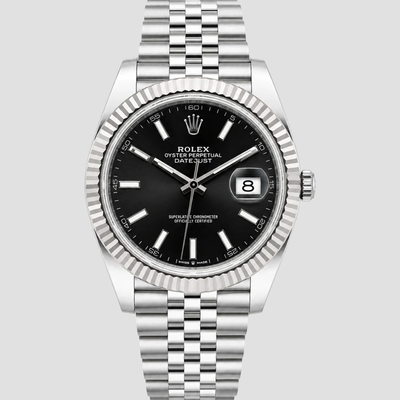
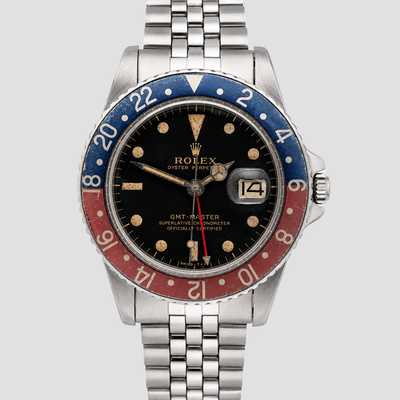
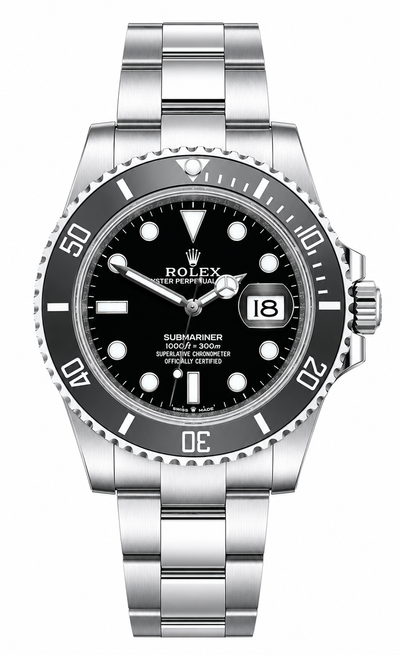
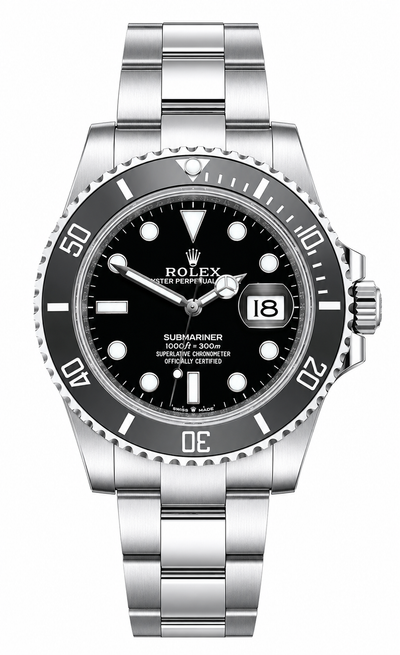
The proof came in public. In October 1927 the British swimmer Mercedes Gleitze wore an Oyster on a chain around her neck during her widely noted Channel swim – after several hours in cold water the watch was still running unchanged. Wilsdorf turned this into one of the first great marketing campaigns in watch history. Anyone wishing to see the direct line from then to now will find it in the Submariner Date 126610LN: a screw-down Triplock crown, a screw-down case back, a middle case made from a single piece – the same logic, only rated to 300 metres. You will find further models from this family in our selection of Rolex watches.
How other manufactures solved the same problem
The Oyster was the beginning, not the end of the development. Panerai, for example, took a completely different route and mechanically presses the crown of the Luminor against the case with a protective bridge and lever – a solution that was created for the Italian navy and is to this day the brand’s most distinctive hallmark, clearly visible on the Luminor Marina 44.
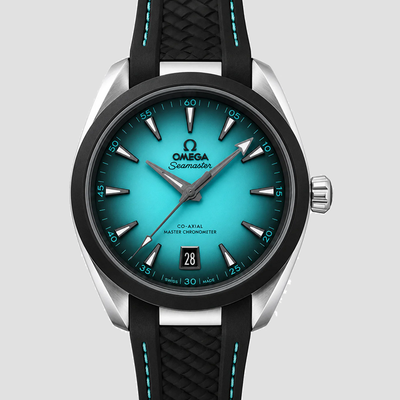
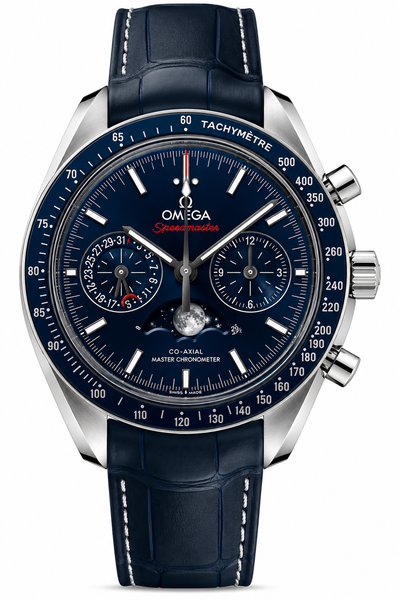
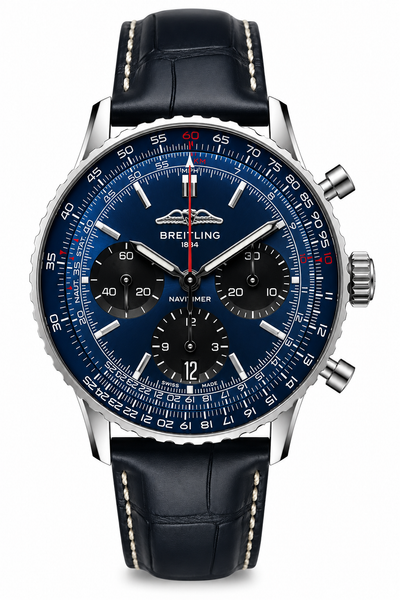
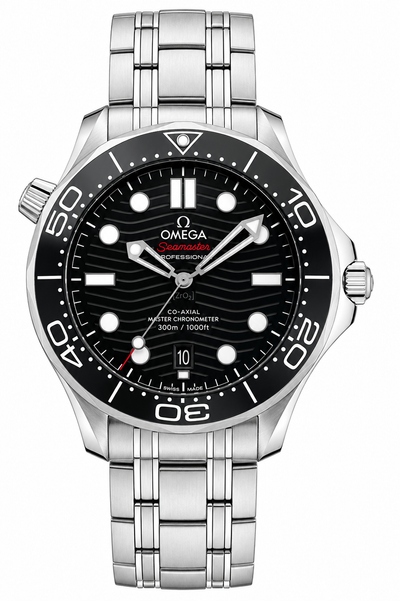
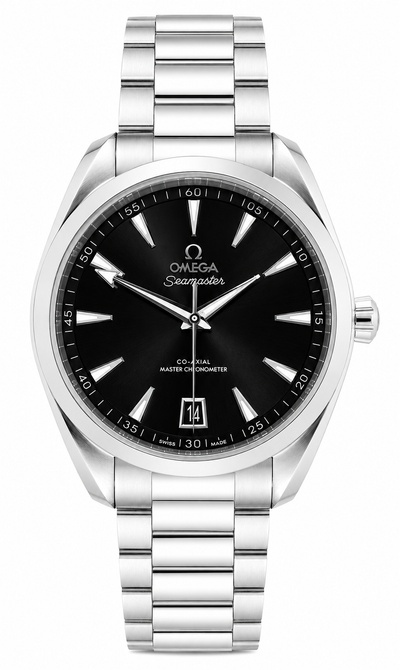
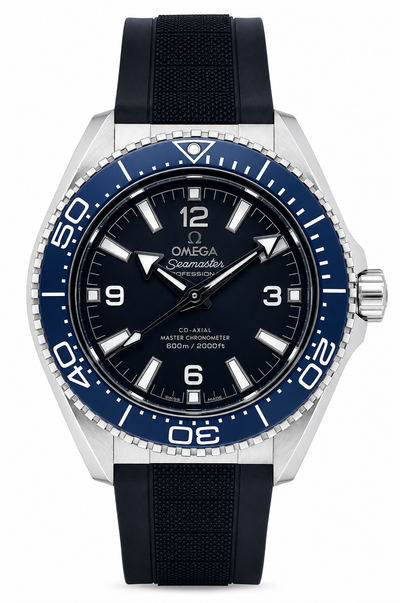
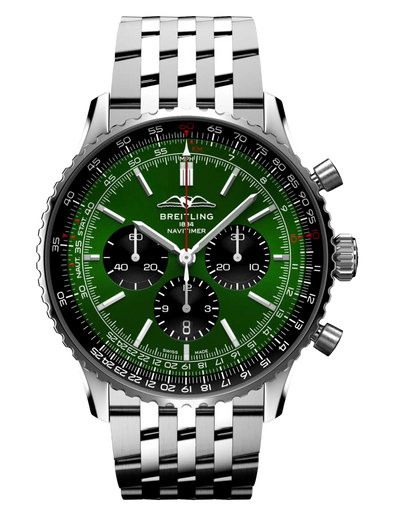
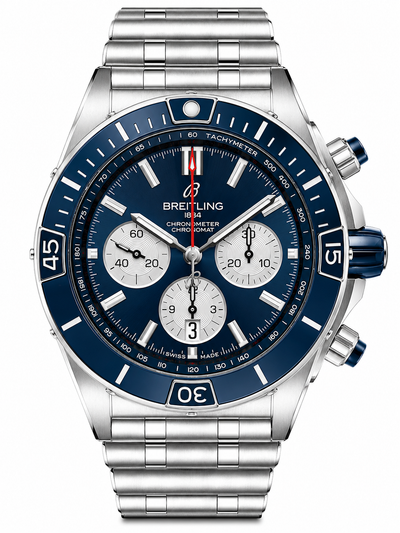
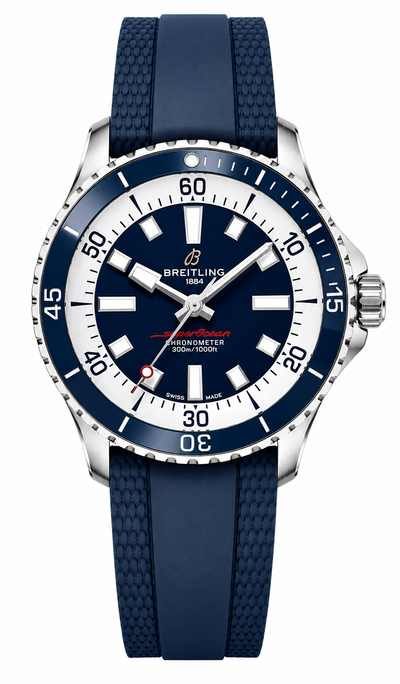
Omega, in turn, solved a problem that only arose with saturation diving: during stays in pressure chambers, helium penetrates the case and wants to escape again on resurfacing. The answer was a helium escape valve, as the Seamaster Diver 300M still carries today; our selection of Omega watches provides an overview of the line. In 1957 Breitling presented the Superocean as a pure tool watch for professional divers – today’s Superocean Automatic 44 continues this legacy with a clear dial and strong luminous material; further models are shown among the Breitling watches.
What 3, 10 or 30 bar really mean
Probably the most common confusion in everyday watch use: the figure on the case back is a pressure value from a static laboratory test, not a permitted diving depth. Movement in water, a jump from the edge of the pool or a vigorous swimming stroke briefly generate a multiple of the pressure that prevails at rest. In practice, therefore, the following applies:
| Rating | Corresponds to | In practice suitable for |
|---|---|---|
| 3 bar | 30 m | Splashes of water, rain, washing your hands |
| 5 bar | 50 m | Additionally showering, brief swimming at the surface |
| 10 bar | 100 m | Swimming and snorkelling |
| 20 bar | 200 m | Swimming, snorkelling, free diving |
| 30 bar and more | 300 m and more | Scuba diving |
A classic dress watch with 3 bar will survive a rain shower, but it does not belong in the swimming pool. And even a diving watch should not be taken into the sauna: the problem there is not the pressure but the heat, which affects the gaskets.
Five rules that keep your watch dry
- Always screw the crown down. An open screw-down crown turns any diving watch into an unprotected watch.
- Do not operate the pushers under water, unless the model is expressly designed for it.
- Rinse off salt water. After the sea, briefly rinse the watch under clear fresh water and dry it.
- Avoid changes in temperature. Sauna, hot showers and whirlpools put more strain on gaskets than cold deep water.
- Have the gaskets checked. Gaskets are wear parts – they are replaced as part of a service and the watch is then tested again.
Conclusion: an idea that changed everything
The Oyster turned the wristwatch from a delicate piece of jewellery into a reliable instrument. Everything that came afterwards – diving watches, helium escape valves, cases made of ceramic and titanium – builds on the same basic idea: to separate the movement hermetically from the outside world. 100 years later, water resistance is so self-evident that hardly anyone still thinks about it. That is precisely the mark of a genuinely good design. You will find an overview of models that implement this principle in very different ways in our selection of luxury watches.
Frequently asked questions (FAQ)
When was the Rolex Oyster introduced?
The underlying patent was granted in May 1926 and passed to Hans Wilsdorf in July 1926; he had the name Oyster protected at the end of July 1926. The first watches came onto the market in the same year.
Does 100 metres of water resistance mean that I can dive to a depth of 100 metres?
No. The figure comes from a static pressure test in the laboratory. Much higher loads arise when moving, which is why 10 bar in practice stands for swimming and snorkelling, not for scuba diving.
Does water resistance have to be checked regularly?
Yes. Gaskets age through temperature, skin oils and movement. At every service they are replaced and the watch is then tested for water resistance again.
May I take a diving watch into the sauna?
Better not. High temperatures and rapid changes between hot and cold put more strain on the gaskets than pressure does – regardless of how high the stated water resistance is.