





















News from the World of Watches
Introduction to the Omega Alaska Project

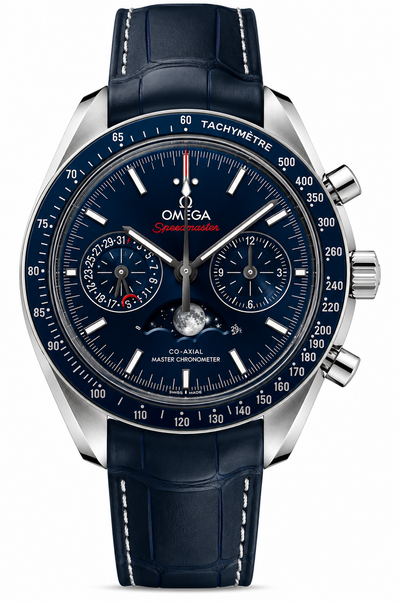
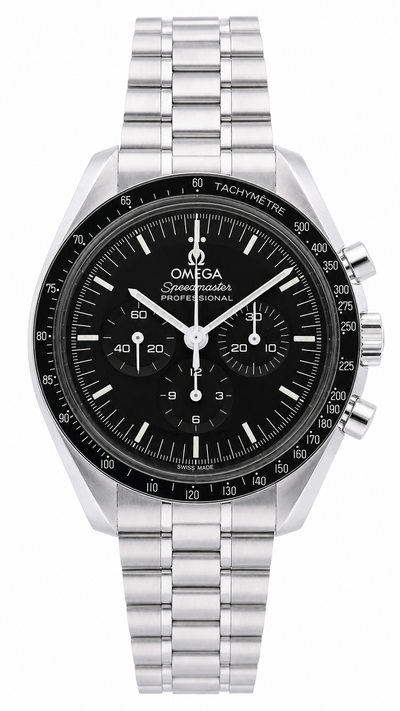
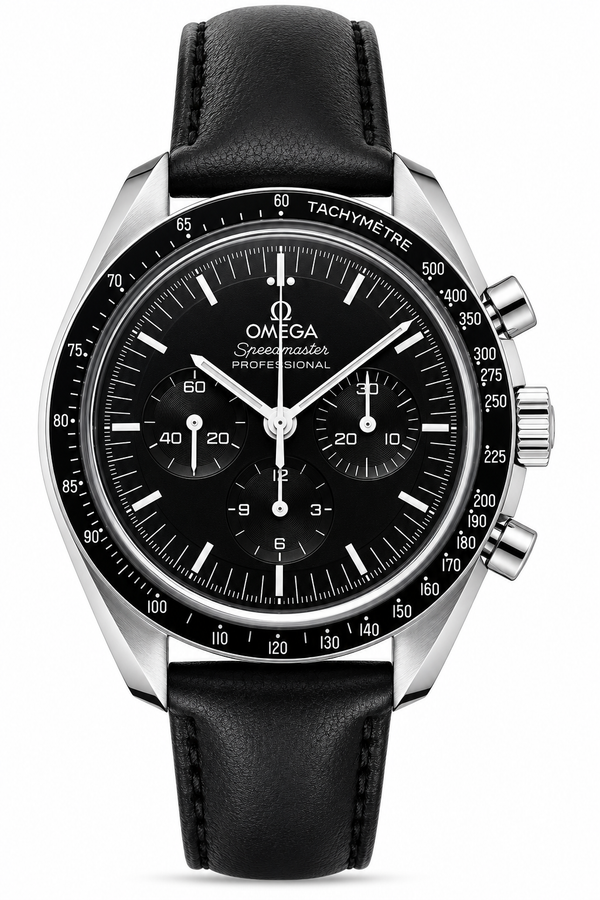
The formerly secret collaboration between the watch manufacturer Omega and NASA, known as the Alaska Project, tells a story that still captivates far more than just die-hard watch enthusiasts. The goal of the project: To create a watch that meets 100 % of the demands space travel places on timepieces. A goal that, of all things, was achieved on the basis of the Omega Speedmaster Professional Moonwatch listed in the regular catalogue. In this article, we describe the background to the Moonwatch Alaska Project and explain its connection to the regularly produced Speedmaster Moonwatch Professional.
Key facts at a glance
Space requirements: The Moonwatch "Alaska Project" watches were developed by Omega together with NASA to withstand extreme temperature fluctuations and the conditions in space.
Innovative materials: Advanced materials and innovative design features played a central role in the production of the Omega Speedmaster "Alaska Project" prototypes.
Collector value and exclusivity: Due to their limited production and special features, the vintage Moonwatch "Alaska Project" models have a high collector value.
Historical background
Contrary to what one might expect, the Omega Speedmaster Professional, which today is inseparably linked with the nickname "Moonwatch", was not originally intended for use in space. After its development in the 1950s, it was simply added to the Omega catalogue and was therefore available to anyone who could invest the necessary money. It was anything but an official NASA space watch.
Nevertheless, the Omega Speedmaster Professional was on board the Mercury-Atlas 8 mission, on the wrist of astronaut Wally Schirra. He had bought the timepiece privately, without the chronograph having previously been officially approved by NASA for use in space. The watch was then officially admitted to the NASA programme in 1964. At that time, reference 105.003 was the current version of the Speedmaster Professional Moonwatch. It passed all NASA tests exactly as it was listed in the public catalogue. An outstanding achievement and a sign that Omega had created something truly great with this steel watch.
It was not until 1968 that Omega and NASA began working together. Development started on what would later become reference 105.012. This was the successor to the watch with reference number 105.003, specially optimised for astronauts but still available to everyone. Just one year after the start of the Alaska Project collaboration, the Omega Speedmaster Professional reference 105.003 travelled to the moon with Neil Armstrong and Buzz Aldrin on the Apollo 11 mission, thus witnessing the moon landing. This makes it obvious why the Omega Speedmaster Professional is called the "Moonwatch".
The Omega Speedmaster Professional Moonwatch in the context of the Alaska Project
Time to take a very close look at the watch that is so robust it was chosen for timekeeping on space missions. Below, we go through the various stages that shaped the Alaska Project:
Alaska Project I
The first prototype to emerge from the Alaska Project saw the light of day in 1969. Ref. 5-003, with its pure white dial and strikingly contrasting orange hands, is visually inspired by the Gemini space capsules. Thanks to a zinc oxide coating and a shell of anodised aluminium, it is particularly resistant to sunlight and able to cope with the enormous temperature fluctuations in space. The titanium case was an absolute novelty in the watch industry at the time and could only be realised by drawing on known military technologies. Inside ticked a calibre 861 movement.
As already mentioned, however, it was not the reference developed in the Alaska Project that took part in the moon landing. That honour went to the standard Omega Speedmaster Professional, while Ref. 5-003 never progressed beyond prototype status.
Alaska Project II
Alaska Project I was followed in 1972 by Alaska Project II. The second prototype bore Ref. ST 145.022, had a minute scale instead of the tachymeter scale and was given a slightly smaller steel case. Years later, one of the few steel examples produced changed hands at auction for the equivalent of €145,000. This watch never made it into space either, but in the form of a limited reissue from 2008 it found its way into the hands of almost 2,000 lucky watch collectors.
Alaska Project III
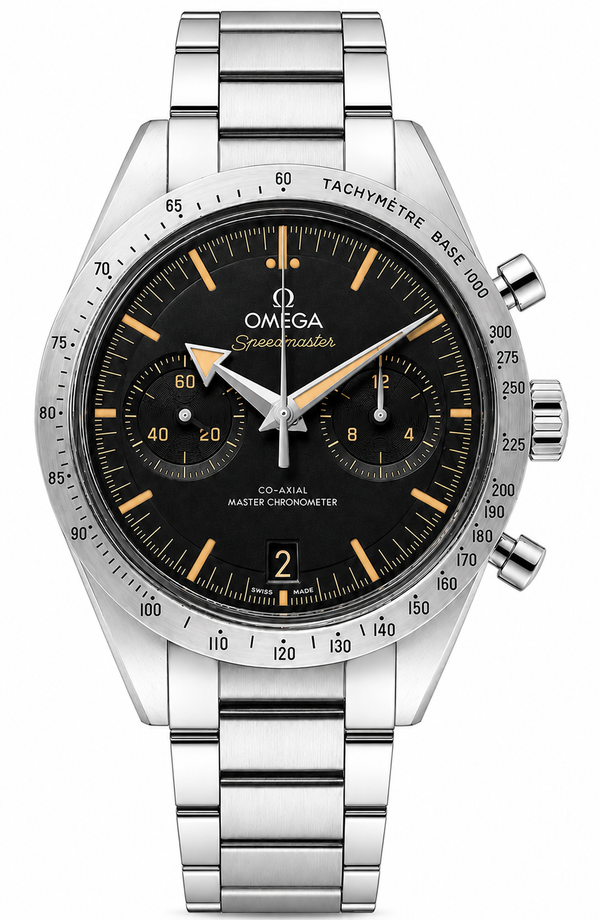
The Alaska III prototype was developed in 1978 and differed considerably in appearance from its predecessors. Omega now opted for a black dial, arranged the numerals on the totalisers radially and equipped the timepiece with the hand-wound calibre 861 movement. This steel prototype was actually adopted into NASA's Space Shuttle programme and remained in use well into the 1990s.
Alaska Project IV
A textile strap, a digital display and a quartz movement with a deviation of just 5 seconds characterise the prototype model that completes the group of watches created as part of the Alaska Project. The fourth Omega Speedmaster Professional Moonwatch from the Alaska Project was fitted with tritium gas tubes that illuminated the display and thus ensured optimal legibility without relying on potentially hazardous incandescent bulbs.


Technical innovations and design features
The Omega Alaska Project was not short of innovations. As briefly mentioned, the first Omega Speedmaster Moonwatch Alaska Project was not made of stainless steel but of titanium. This particularly light yet extremely hard material was used here for the first time to make the case of a watch – an impressive novelty. Later models were then produced in steel and had either a steel bracelet or a textile strap.
The red aluminium shell that surrounded the case of early Speedmaster Professional Moonwatch Alaska Project models must also be regarded as an innovation. The anodised material was ideally suited to protecting the movement of the watch from high temperatures of almost 130 degrees Celsius and from strong sunlight. Particularly practical: The shell was removable on both the titanium watch and the stainless steel model. Even though functionality clearly took priority in the development of watches for the Alaska Project, the orange-red protective shell became a famous visual hallmark of the early Omega Speedmaster Professional Moonwatch watches. Its colour picks up the shade found on the seconds hand, creates a visual link between shell and dial and is therefore in no way disturbing to the eye.
Collector's item and market analysis
The Omega Speedmaster Professional Moonwatch Alaska Project watches were each made in very small numbers. Accordingly, they are considered rarities among collectors and are extremely valuable, especially in good condition – that is, without serious signs of wear. Depending on the reference, condition and available accessories, customers on the secondary market pay €20,000 and more for such a watch. Provided, of course, that they are lucky enough to get hold of one of the rare Omega Speedmaster Professional Moonwatch Alaska Project watches at all. The most sought-after are unrestored and therefore authentic vintage models without damage to the dial, crystal, bezel, crown and so on, sold together with the original box and all documents and papers.
As with any watch purchase, buyers should bear a few things in mind when acquiring a Speedmaster Professional Moonwatch from the Alaska Project. The top priority is the authenticity of the stainless steel or titanium watch in question. If the original box and papers are present, that is a good first sign. However, the documents and the packaging could potentially be counterfeit. It is therefore advisable to consult an expert or to buy exclusively from renowned, proven dealers such as HORANDO . We thoroughly check every watch for authenticity before selling it, so our customers need not worry about the authenticity of their Omega Speedmaster Professional Moonwatch Alaska Project.

Care and maintenance
An Omega Speedmaster "Alaska Project" naturally wants to be looked after with care. The manually wound models must be wound regularly so that they do not stop. The robust titanium or stainless steel cases should also be stored on a soft surface so that the bezel and case are protected from scratches. The recommended care for the Omega Speedmaster Professional Moonwatch Alaska Project varies depending on the type of strap. Classic metal link bracelets can be polished with a soft cloth and cleaned between the links with a thin cotton bud or brush. Leather straps benefit from the occasional application of a suitable leather care product.
Apart from care, it is important to keep the box and certificates safe in order to preserve the value of the watch after purchase. In addition, it is advisable to take the Omega Speedmaster Professional Moonwatch Alaska Project to a specialist regularly for servicing. For servicing such rare, valuable watches as the Omega Speedmaster "Alaska Project", you should choose a watchmaker who knows vintage timepieces and is thoroughly familiar with Omega luxury watches.
Warranty and customer service
HORANDO grants customers a one-year warranty on used vintage watches. In addition, buyers have the security of being able to return the Omega Speedmaster "Alaska Project" up to 14 days after purchase. Delivery and return shipping are of course free of charge – so the buyer incurs no shipping costs even when returning the watch. Should there be any problems with the purchase or concerning the chronograph acquired, customers can contact our reliable customer service at any time by phone or email. It is on hand to help interested parties with advice and support, ensuring they are 100 % satisfied with their "new" Omega Speedmaster Professional Moonwatch Alaska Project.
We may not have a rarity such as the Moonwatch "Alaska Project" in stock at all times. If the item is not currently listed in our range, interested parties can use the Watchfinder service to let us know that they would like a suitable offer. We then contact our international network and, ideally, can quickly offer an Omega Speedmaster Professional Moonwatch Alaska Project of the desired reference at a fair price.
Future projects and outlook
Although the Moonwatch "Alaska Project" prototypes mostly played no significant role in actual NASA missions, they served as a great inspiration to the watch industry. The Omega Speedmaster Professional Moonwatch in particular, which, unlike the Moonwatch "Alaska Project" models, did accompany astronauts into space, remains historically inseparable from the Omega Speedmaster "Alaska Project" to this day. Every Omega Speedmaster chronograph is a reminder of Omega's close collaboration with NASA. Whether the watch manufacturer and NASA will undertake further joint projects in the future is unclear. What is perfectly clear, however: Omega timepieces have long proven their worth not only on Earth.
More from News from the World of Watches
All articles
News from the World of Watches Ballon d'Or 2026: The Stars' Watches – From Kane's Daytona to Mbappé's Hublot

News from the World of Watches How much does a Rolex cost in 2026? Submariner, Daytona, GMT-Master II and Day-Date price check

News from the World of Watches Tennis and Watches: Who Wears Which Brand – from Boris Becker to Carlos Alcaraz


