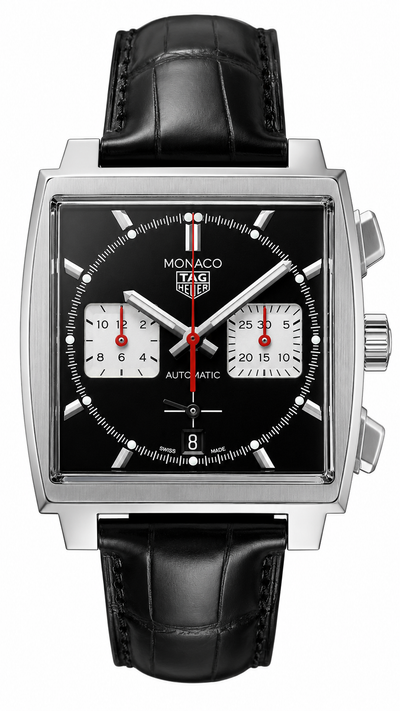
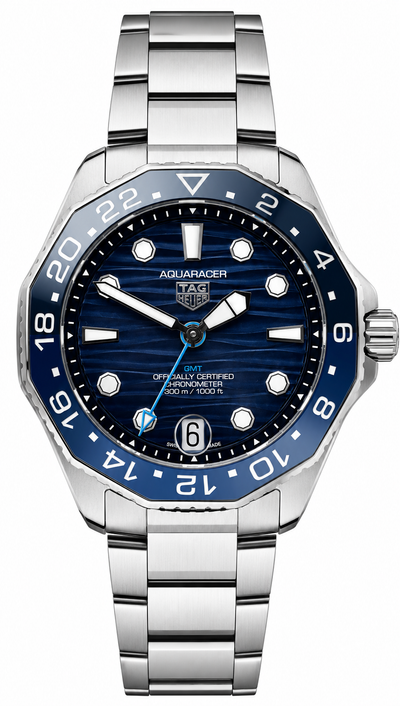
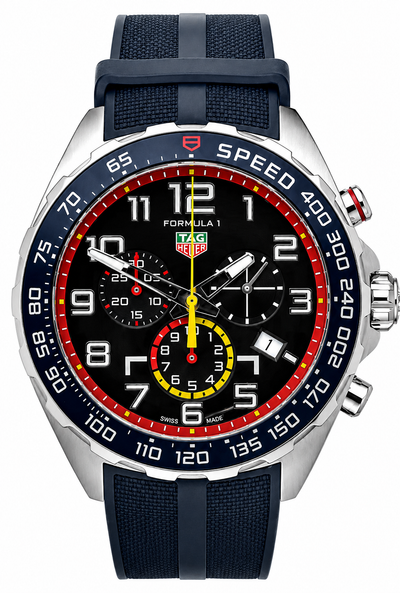
Five Legendary Chronographs – and the Stories That Made Them Icons

A chronograph does not measure time. It measures intervals of time. What at first sounds like a trifle was for decades one of the most difficult tasks in mechanical watchmaking: a gear train is meant to start, stop and jump back at the push of a button – without the actual time display being affected by it. This problem was always solved whenever someone needed it solved. Race directors needed lap times. Pilots needed rates of climb. NASA needed a watch that still works even when the on-board electronics fail. Out of these concrete requirements came five watches that everyone recognises at first glance today – even though none of them had planned to become an icon.
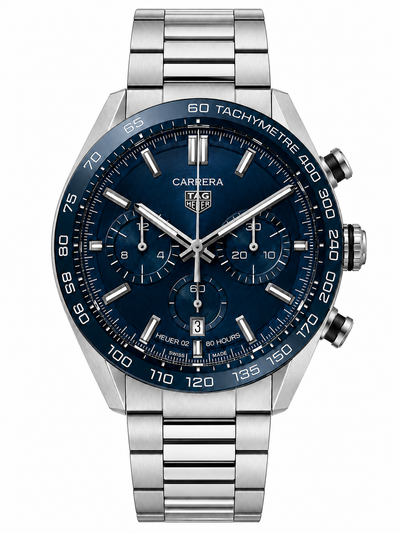
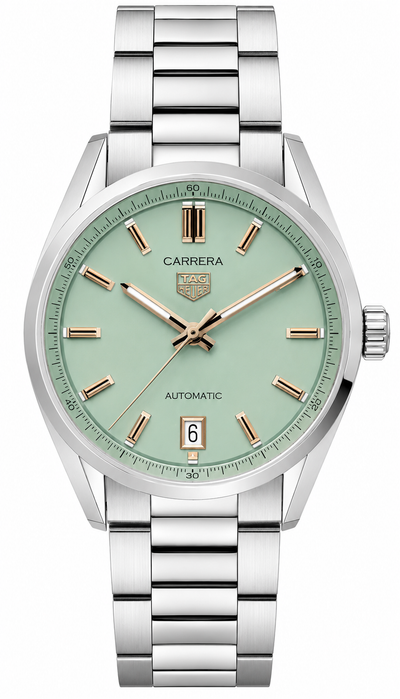
TAG Heuer Carrera: named after the most dangerous race of its time
In 1963 Jack Heuer designed a chronograph with a single requirement: it had to remain legible in a moving racing car. So everything that was not needed disappeared from the dial. No border, no decoration, just a cleanly set-off inner ring for the minute track and three clearly separated zones. The name was supplied by the Carrera Panamericana, a road race right across Mexico that was discontinued after five editions because of its fatalities. Heuer chose it nonetheless – or precisely because of that. Today’s Carrera Chronograph in 39 mm carries the in-house calibre TH20-00 with column-wheel control and 80 hours of power reserve. If you would like to see the line in its full breadth, you will find it in our TAG Heuer Carrera collection.
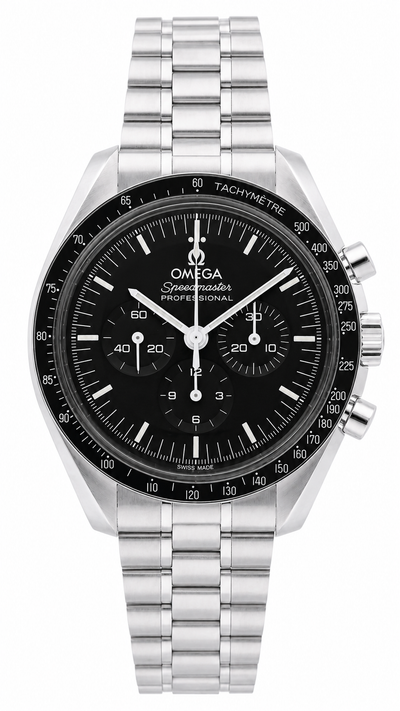
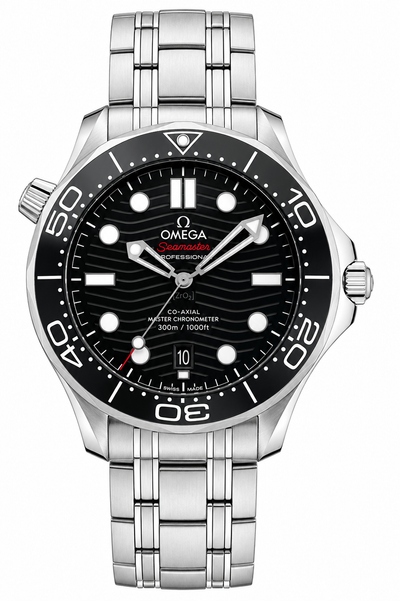
Omega Speedmaster: the only watch that survived the NASA tests
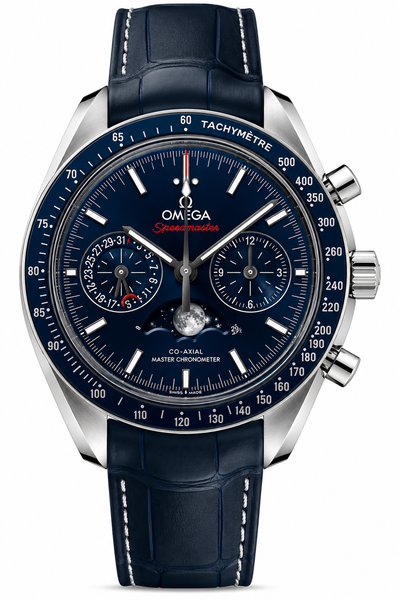
In 1964 NASA anonymously bought several chronographs from retailers and subjected them to a series of tests that was more reminiscent of material destruction than of watch testing: temperature changes between minus 18 and plus 93 degrees, vacuum, acceleration, shock, vibration, noise. Only one model survived every round – the Omega Speedmaster. On 21 July 1969, Buzz Aldrin wore it on the surface of the Moon. Astonishingly little has changed in the basic layout since then: black dial, tachymeter scale on the bezel, manual winding. The current Speedmaster Moonwatch Professional in 42 mm works with the Co-Axial Master Chronometer calibre and is additionally tested against magnetic fields. Our Omega collection shows further models from the brand.
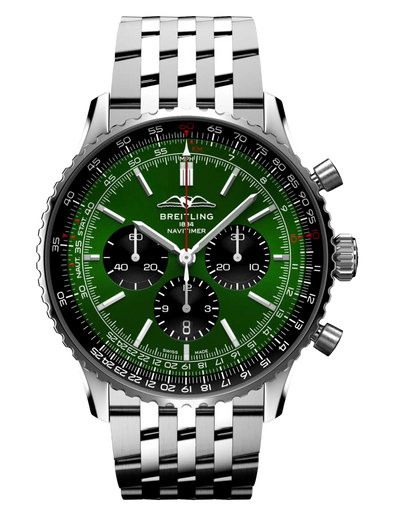
Breitling Navitimer: a slide rule on the wrist
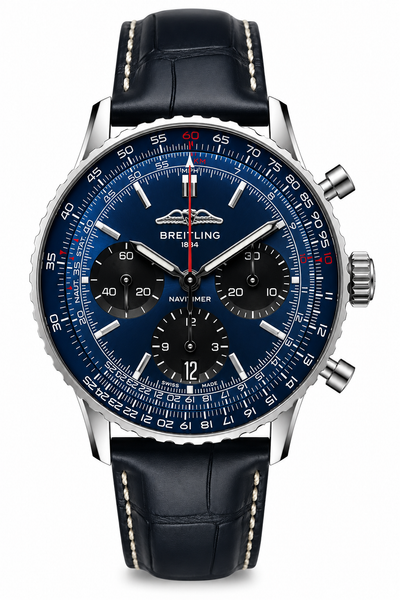
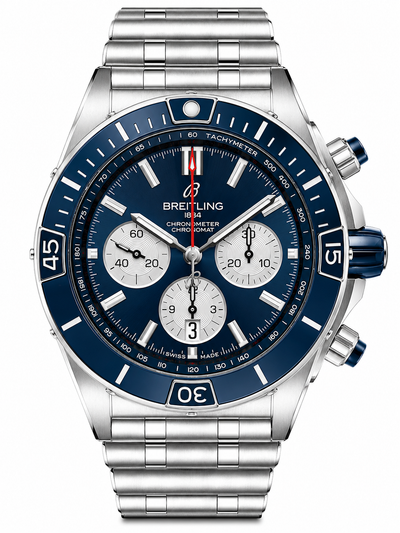
The Navitimer is the only chronograph in this selection whose most important function is not timekeeping at all. On its rotating bezel sits a slide rule with which rates of climb, fuel consumption, flight times and unit conversions can be determined – at a time when none of this was yet calculated automatically in the cockpit. Presented in 1952, it became the official watch of the American pilots’ association AOPA and remained standard equipment in civil aviation for decades. The Navitimer B01 Chronograph 41 today carries the in-house calibre B01 with 70 hours of power reserve. You will find the complete selection in the Breitling collection.
Zenith El Primero: the movement that was secretly saved
In 1969 several manufacturers were racing each other to produce the first automatic chronograph. Zenith won it with the El Primero – and set the bar considerably higher than necessary straight away: the movement beats at 5 hertz and can therefore actually display a tenth of a second instead of merely estimating it. To this day that remains the exception among series chronographs. A few years later the calibre almost ceased to exist. During the quartz crisis, the group management ordered the production tools to be scrapped. The watchmaker Charles Vermot refused, dismantled the presses and stamping tools and hid them together with the plans in an attic of the manufacture. When demand for mechanical movements returned, everything was still there. The Chronomaster Original is the direct continuation of this movement; the Zenith collection shows further models.
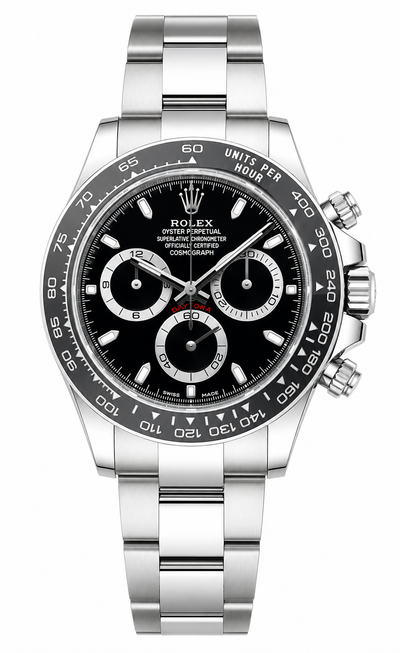
Rolex Cosmograph Daytona: from shelf-warmer to the best-known sports watch in the world
The Daytona came onto the market in 1963, named after the Daytona International Speedway in Florida, whose races Rolex was sponsoring at the time. It was built for racing drivers: a tachymeter scale for determining average speeds, pushers that are easy to grip, high-contrast subdials. Commercially it was initially a failure. Early references stood in display cases for years. That of all watches this one later became the best-known sports watch in the world is one of the greatest turns in watch history. The current Cosmograph Daytona works with the in-house calibre 4131 and 72 hours of power reserve. Our Rolex collection carries further references.
What connects these five watches
None of these watches was designed as a collector’s item. Each solved a problem that someone actually had – and only afterwards became an object. That is probably precisely where the reason lies for why they last so long: a design that emerged from a function ages differently from one that emerged from a stylistic decision. If you are interested in chronographs, you will find further models from these and other manufactures in our overview of all luxury watches.