


Tick Talk #7: Status or Substance – Watches in Dubai, with Dennis Uitz
The first guest on Tick Talk: Dennis Uitz, entrepreneur and investor, active in private equity and trading for around twenty years, now lives in Dubai – and has been a HORANDO customer for about nine years. A conversation about a collection of 126 watches, about whether a watch is an asset, and about a market in which luxury has become the norm.
The following is an edited transcript of the conversation. The full episode can be found further below.
How they met
It began with an Everose Daytona, closely followed by an Everose GMT-Master – nine years ago, when HORANDO mainly sold steel and steel-and-gold Rolex models and solid gold was still considered exotic.
The three only met in person years later, at Oktoberfest: a WhatsApp message asking whether they happened to be in the same tent – and an invitation to join the table.
A collection that begins with a bet
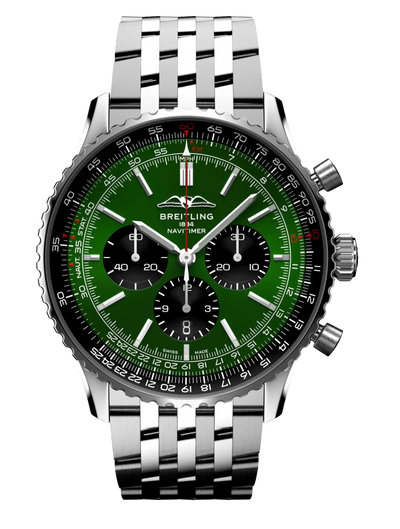
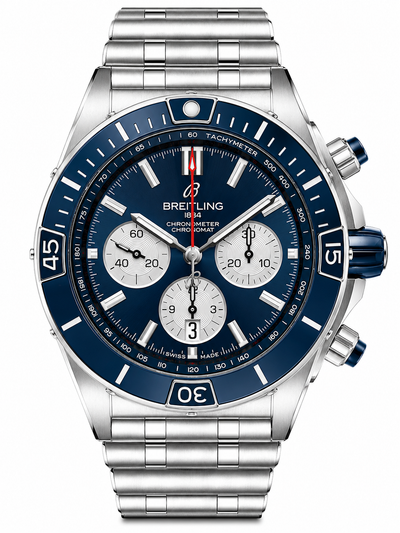
Uitz has been collecting since he was 13 or 14. It started with nail-biting and an offer from his father: hold out for four weeks and be granted one wish. The wish was his father’s Rolex Sea-Dweller. He did not keep the watch for long – it was stolen from him at boarding school, after which his father did not give him a new one. His mother then secretly bought him a Breitling.
The first watch he bought himself came at 18, paid for with the first money from a real estate deal – and bought before the notarial contract had been signed. On the way to the notary, his business partner had him put the watch in the glove compartment, saying it would bring bad luck. It cost 1,900 Deutsche Marks, bought from an acquaintance. Only during a later service did it turn out that the small “T” on the dial stands for a military origin – and that the watch is worth many times that amount. He never sold it; today it is a gift to his mother, who wears it.
126 watches – and hardly any sold
The collection comprises 126 watches, centred on three brands: Patek Philippe, Rolex, Audemars Piguet. In addition, there are four Richard Mille, three F.P. Journe – and one Hublot, bought for his own divorce because it was eye-catching at the time and he wanted to wear it in court.
He has sold so few, as he puts it, that you could count them on one hand. He does not buy with an eye to appreciation but according to taste – with a weakness for complications and for the watchmaking behind them. Besides the big names, he mentions H. Moser, MB&F – whose founder also lives in Dubai – and Urwerk. And a Vacheron Constantin, extra-thin, skeletonised, with tourbillon, bought last year: completely undervalued, in his view.
Dubai: luxury as the norm
The difference from Germany is not the wealth but how natural it is. Anyone sitting in a restaurant in the evening sees things you would hardly ever get to see in Germany.
Added to this is the proximity to Asia – and with it a counterfeiting problem on a different scale. Walk through the Dubai Mall at any time of day and you will see more than a hundred Richard Mille. Anyone who knows how many of them are actually made also knows that this cannot be right. The superclones are now so good that even he cannot reliably identify them. His conclusion: often no watch at all, or a Garmin.
There was also a phase in which the subject took the fun out of it for him – when his own employees, to whom he had given watches as bonuses, began trying to outdo one another. Today he is more pleased when he spots something on someone that is not designed to attract attention – an F.P. Journe, for example, or an old four-digit Rolex reference.
Watches in business
It matters somewhat less than in Germany, he says – but for formal meetings he would never think of wearing a large watch on a rubber strap. Rather a grand complication that stays under the cuff: anyone who is genuinely interested will see it. Everyone else will not.
His observation about those who handle it differently is clear: an Emirati would never show off with it – if in doubt, he gives the watch away. It is the expats who pose. With around 85,000 millionaires in the city, it is a futile exercise anyway.
Where to buy in Dubai
The market is highly concentrated: practically all the relevant licences are held by a single, very large authorised dealer. Without a connection there, nothing happens – and even with one, you have to wait. It is, as he says, all about relationship.
Jacob & Co. under scrutiny
He knows Jacob Arabo personally and describes him as a true designer who does his own drawings, and as exceptionally well connected. He still would not buy one of his watches – not even the unique piece he was offered at an attractive price. The reason is sober: the brand makes a great many models, each more extreme than the last, and does not manage to keep the market stable.
Is a watch an asset?
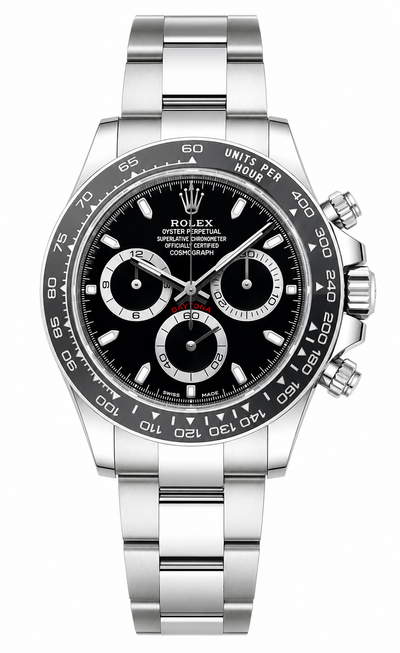
The clearest answer of the episode – and it comes from the investor: no. A watch is not bankable and is illiquid; anyone who has to sell has a problem. You should buy a watch to keep it, wear it and pass it on. Adjusted for inflation, only very few watches are genuinely an investment – a Paul Newman Daytona, bought in 2004 for 25,000 euros, is one of them. Back then it was simply an old Daytona.
A counterexample is a Vacheron Constantin in blue, which at the height of the hype was regarded as the more accessible alternative to the Nautilus and was priced at around 60,000 euros. Today you can get it for about 20,000.
Then there is the parallel with crypto, in which he himself holds around five percent: when his mother brought up Bitcoin at the end of the year, he sold. A great deal of institutional money is now in the market, and when regulations take effect there, book losses very quickly turn into real selling pressure.
The watch market, he says, was artificially pushed in a similar way during the coronavirus pandemic. Many people had money at their disposal back then that did not feel real – and exchanged it for something tangible. Anyone who paid 200,000 euros for a Nautilus 5711 back then is in tears today.
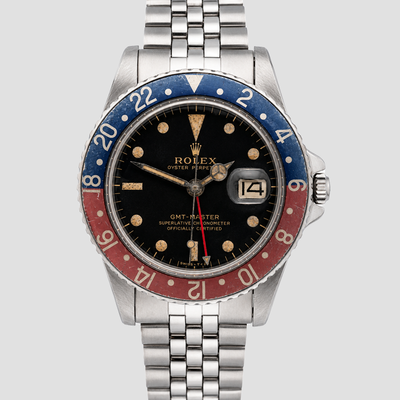
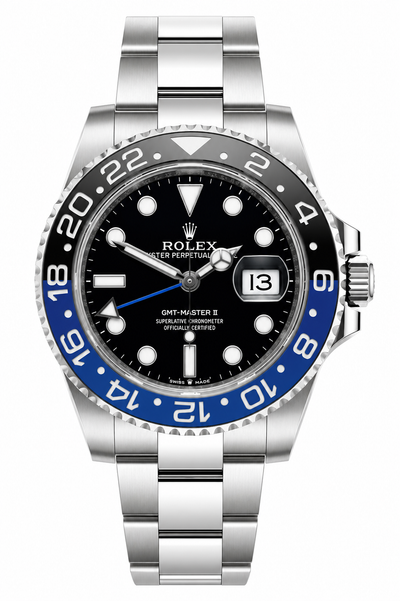
His advice to friends is accordingly narrow: if you can get a steel Daytona from an authorised dealer, you take it. There are two or three watches of this kind. Incidentally, that is exactly how one of the first “Batman” GMTs came to HORANDO – he had ordered from several dealers and received it twice.
The local pre-owned market
Since the markets softened, a lot has been coming onto the market in Dubai – especially gold Patek and AP models. Anyone who enquires with a dealer receives four or five offers, and prices are easing a little week by week. He is currently looking for a Royal Oak Perpetual Calendar Ultra-Thin – a watch that looks like an ordinary AP and appeals to him precisely for that reason.
Why Dubai
The reason is unromantic: Dubai is a hub. Almost everyone passes through at some point during the year, and from here you can fly direct in almost any direction – two thirds fewer flights overall than before. Prior to that, he lived in Cyprus for two or three years: good for business because there were few distractions, but every trip to America took two days. The original plan to move to the USA changed when his father died – he did not want to live in a completely different time zone.
To finish, a travel tip that fits the attitude of the entire episode: avoid Christmas and New Year’s Eve, when you are one of millions. And eat what is local when you are there – not in the same restaurant chains you also find in London, Bangkok and Ibiza.
Watch the episode
Chapters
- 01:48 – The first watch at HORANDO
- 03:28 – Collecting since childhood
- 07:06 – 126 watches, hardly any sold
- 08:47 – Luxury and counterfeits in Dubai
- 11:40 – Watches in business
- 14:25 – Buying watches in Dubai
- 16:03 – Jacob & Co. under scrutiny
- 18:56 – Is a watch an asset?
- 22:53 – Crypto money and the watch hype
- 28:04 – The pre-owned market in Dubai
- 33:44 – Why Dubai as a place to live
Listen
More from Tick Talk
All articles
Tick Talk Tick Talk #8: From Audemars Piguet to Chronext, with Frederike Knop
Tick Talk Tick Talk #6: Status or Passion – Questions from the Community
Tick Talk Tick Talk #5: How the luxury watch market will change by 2030


Leave a comment