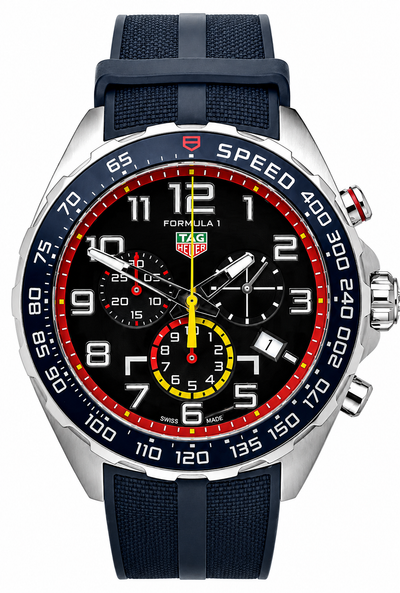
Mechanical Watches Insider Tip 2024

They are based on complex technology, are entirely devoted to traditional watchmaking and impress watch connoisseurs with far more than "just" their ingenious movements: Mechanical watches have always shaped the watch industry and never go out of fashion. In this article, we explain how the mechanical wristwatch works and its historical background, offer practical tips for buying one and reveal which watches with a mechanical movement we consider to be among the "insider tips" of 2024.
The key points at a glance
This article looks in detail at the following topics relating to mechanical watches:
-
How they work and the craftsmanship behind them: Mechanical movements are based on tensioning a spring which, as it releases its energy evenly, sets the wheels of the movement in motion. The complex interplay of the many components required for this fascinates watch enthusiasts all over the world as an expression of the finest craftsmanship. Today's mechanical movements are the result of centuries of achievements in watchmaking and therefore follow a long tradition.
-
Quality features and buying criteria: When buying a mechanical watch, you should always pay attention to careful workmanship. Buyers should also consider in advance which features (e.g. with regard to complications, material and type of winding) they value in a watch.
-
Popular brands and models: Among the many watch brands that quite rightly enjoy great success with their mechanical watches are Rolex, Patek Philippe, Audemars Piguet, Hublot, Panerai and Jaeger-LeCoultre. The Omega Speedmaster Moonwatch Professional and the Cartier Tank Must de Cartier are excellent examples of mechanical watches that have achieved legendary status.
What are mechanical watches?
While dedicated watch lovers naturally know exactly how a mechanical watch works, beginners and newcomers to the world of luxury watches often cannot really explain how it functions. That is why we take a look here at what goes on inside a mechanical watch and makes the hands move.
A mechanical movement is made up of numerous components whose interplay results in an even movement of the hands. The process begins with the winding mechanism, which, when operated - for example by turning the crown on the case - tensions the mainspring in its barrel. This stores energy in the spring. The minute wheel, which connects directly to the barrel, prevents the spring from unwinding immediately and releasing all its energy at once. This wheel drives the minute hand. The third wheel, which turns in the opposite direction, in turn meshes with the first wheel and acts as a "transmission" for the subsequent seconds wheel. The gear train is completed by the hour wheel, positioned slightly to one side, which turns twelve times more slowly.
The reliable display of the time through an even movement of the hands is ultimately only made possible by two further components of the movement: The escapement and the balance, which together form the so-called oscillating system of the watch. These two elements ensure that the hour, minute and seconds hands do not move arbitrarily, but exactly as intended. Put simply, they achieve this by the balance swinging back and forth and briefly releasing the braking escapement at each half oscillation. At precisely this moment, the seconds hand can advance.
Let us return to where it all begins and look at the winding. Winding the watch - that is, tensioning the spring - can be done either automatically or manually. Models with manual winding have to be wound by hand via the crown, while an automatic watch winds itself through the movements of the wrist while the timepiece is being worn.
Incidentally, quartz watches are often regarded as the counterpart to the mechanical watch. Their movements are far less complex, as a quartz watch is essentially based on a battery that sets a quartz crystal oscillating by means of electrical impulses. This is how the energy needed to move the hands is generated.
History and development of mechanical watches
The first pocket watch with a mechanical movement, which goes back to the technical expertise of the locksmith Peter Hehnlein, was created in the 15th century and was nicknamed the "Nuremberg Egg". Starting from this great milestone, it would take around another 300 years before the first mechanical wristwatch saw the light of day. It was created by none other than Abraham Louis Breguet, who thus went down in history as the inventor of mechanical watch movements.
The historical path of mechanical calibres was shaped by various manufactures and their achievements. In Germany, Uhrenwerke Ruhla, founded in 1891 and now part of the company POINTtec, is one of the best-known manufacturers of watch movements. But the Swiss manufacture ETA SA as well as Seiko and the Japanese company Miyota have also made pioneering contributions to the further development and establishment of mechanical wristwatches - and they continue to do so today.
Craftsmanship and tradition in the making of mechanical watches
It is a tradition in the watch world that watch manufacturers pride themselves above all on the movements they produce. No wonder, as the mechanical movement is the heart of a watch and the component that demonstrates the manufacturer's skill most clearly. Precision, the pursuit of perfection, a spirit of innovation, attention to detail and, not least, a wealth of knowledge and skill in the fascinating field of watchmaking are the ingredients needed to build a truly masterful calibre.
The movements of luxury watches, which are created by painstaking handwork, are complex works of art that become even more fascinating with every additional complication. In their production, however, besides the construction of the complicated movements, the so-called finissage also plays an important role. This term covers various techniques for refining watch movements. These include, for example, engraving and grinding various surfaces as well as polishing or gilding individual components. Popular techniques include guilloché, perlage and sunburst finishing. These loving embellishments are the crowning touch for the technically sophisticated movements and make them worthy representatives of traditional craftsmanship.
The importance of the movement: Automatic vs. manual winding
The biggest question that arises with a watch with a mechanical movement is the type of winding. As already mentioned, there are mechanical watches with manual winding and models with automatic winding. In the case of watches with manual winding, turning the crown rotates an attached arbor, which then tensions the mainspring in the barrel. With an automatic movement, things are different: Here, a rotor whose centre of gravity lies outside the centre of the watch does this work. Whenever the watch is moved on the wearer's wrist, the rotor starts to swing and winds the spring, while the slipping clutch prevents overwinding. In other words: The spring is not overwound even if the automatic watch is moved a great deal.
During the periods in which the automatic watch is not moved, the spring begins to unwind. The time span between full winding and the watch stopping when the spring is completely unwound is called the power reserve. It indicates how long the watch will continue to run without being worn or wound manually.
The greatest advantage of the automatic watch is obvious: If you wear it regularly or keep it in a watch winder, you do not have to wind it. Models with manual winding, on the other hand, have an undeniable charm, nostalgically remind collectors and enthusiasts of earlier times and are particularly sought after as collector's pieces.
Advantages and disadvantages of mechanical watches
In the watch industry, the movements with which watches are equipped are still a much-debated topic. Quartz watches or mechanical watches - which timepieces are better? The answer: It depends on what the wearer personally values in a watch. Mechanical watches are considered extremely durable and reliable. With good care, a high-quality mechanical watch remains the dependable timekeeper it was when new, even after many years. However, rate deviations of a few minutes per month are not unusual for mechanical watches, while quartz watches generally deviate by no more than 20 seconds per month. When it comes to accuracy, quartz models are therefore ahead.
Another advantage of the quartz watch: It is light and requires very little maintenance. Because of its more complex construction, a mechanical watch needs a little more attention and should be serviced at regular intervals. Quartz watches are also often somewhat more affordable to buy than mechanical watches. Yet many watch fans agree: It is worth paying a higher price for mechanical models. The craftsmanship that goes into every mechanical movement alone justifies the difference in price. Mechanical timepieces - whether automatic watches or models with manual winding - reflect the tradition of watchmaking and therefore hold an enormous fascination for technically minded watch lovers.
The fact that mechanical watches work without batteries is also an advantage. As an owner, you do not have to think about changing batteries, nor do you have to worry about batteries leaking if the watch is not worn for a long time. On the other hand, you have to remember to wind it. If automatic watches are not worn or hand-wound models are not wound in time before the power reserve runs out, they stop and have to be reset.
In the end, both watches with quartz movements and mechanical timepieces each have their own significant advantages and disadvantages. Consequently, watch-loving women and men should definitely familiarise themselves with the characteristics of the different movements before buying a new timepiece, make a comparison and consider what they personally value in a watch. Price-conscious buyers who are bothered by every second of deviation tend to opt for models with quartz movements, while watch fans whose focus is on tradition, craftsmanship and aesthetics are well advised to choose a mechanical (automatic) watch.
Quality features and criteria for mechanical watches
When buying mechanical (automatic) models, buyers should keep a few aspects in mind to make sure they choose a watch of the best quality that matches their expectations. These "top 5 buying criteria" play a particularly important role:
-
Movement and complications: Are automatic watches or models with manual winding preferred? And how long should the power reserve be at the very least? In addition to these questions, buyers should consider which complications (e.g. date, chronograph function or second time zone) their new watch should offer.
-
Materials and workmanship: Is a watch made specifically of stainless steel, gold, titanium or even platinum desired? Every material should be carefully finished, which you can generally rely on with models from major brands.
-
Design: Which watches impress with their design? The favourite model should of course be visually appealing, but the design also influences the practical use of the watch. For example, you should find out whether the strap of the respective model can be changed.
-
Watch brands: Is there a preferred watch brand, such as Rolex, Audemars Piguet, Tissot or Patek Philippe? Narrowing the selection down to models from certain manufacturers makes finding the ideal watch enormously easier.
-
Value for money: Which price segment suits the available budget? We recommend paying attention not only to the price alone, but always to value for money. With truly good products, the price is convincing not because it is as low as possible, but because you get good quality for your money.
The bigger the watch brand and the more the model falls into the "luxury" category, the more careful prospective buyers should be with regard to authenticity and potential counterfeits. Among other things, they should become suspicious when an actually expensive model from a renowned brand is offered at a strikingly low price or without the corresponding papers. Anyone who knows little about checking the authenticity of watches should seek professional advice when buying or buy from a dealer who handles this matter expertly for them.
Popular brands and models of mechanical watches 2024
The market offers mechanical watches in a colourful variety. Especially in the upper price segment, buyers are faced with a wide-ranging selection of high-quality (automatic) watches of the best quality. Below we would like to take a closer look at some of the most popular and best-known mechanical luxury watches from successful brands:
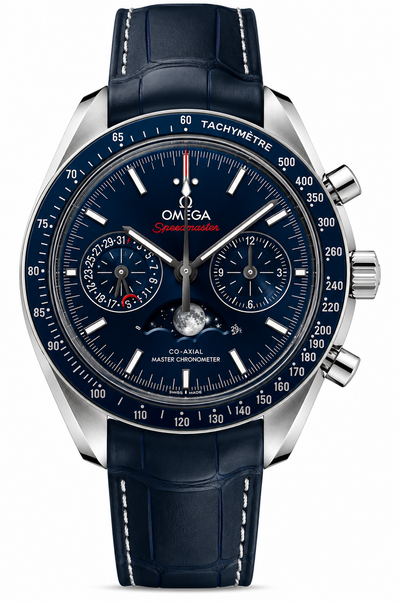
Omega Speedmaster Moonwatch Professional
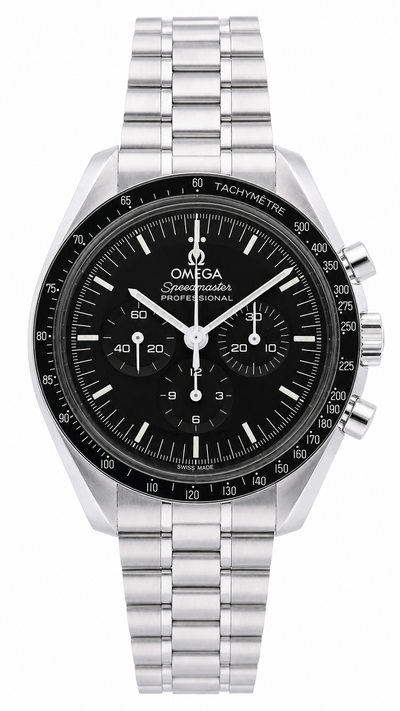
With a design based on the timepieces that accompanied the astronauts on the Apollo 11 mission, the Speedmaster Moonwatch Professional is a genuine icon of the watch world. Equipped with small seconds, chronograph hand and 30-minute and 12-hour counters, the watch is powered by the hand-wound Omega calibre 3861 and offers a power reserve of 50 hours. Visually, the Moonwatch can be recognised at first glance by the red highlights on the dial and the characteristic tachymeter scale on the bezel. In addition to the classic stainless steel models with a steel, leather or nylon strap, the extravagant two-tone versions with elegant gold elements on the dial and bracelet are very popular.
Vacheron Constantin Patrimony manual winding
The Patrimony watches from Vacheron Constantin are a dream come true for every watch lover with a penchant for traditional masterpieces with an understated, classic design. Exquisitely crafted leather straps meet a flat, perfectly round case that frames a thoroughly elegant dial. The technically simplest version is fitted with the hand-wound calibre 1440, while the more complicated versions with perpetual calendar and moon phase are brought to life by the automatic calibre 1120/3 QP/1. The Patrimony thus caters to the wishes of customers with a liking for manual winding as well as those who prefer automatic movements.
Hublot Big Bang One Click
Large visible screws, a striking case and a powerful automatic calibre with a 50-hour power reserve on board: That is the Big Bang One Click from Hublot. The eye-catching automatic watch with a diameter of 33 or 39 millimetres appeals above all to watch-loving women. This may be due partly to the diamond-set bezel, but also to the high-contrast design. For in the Big Bang One Click, opposites meet. The sparkling gemstones and the satin-finished steel and gold contrast strongly with the solid case shape and the functional rubber strap. That may not be to everyone's taste, but one thing is certain: A Hublot Big Bang One Click model draws every eye.
Cartier Tank Must de Cartier
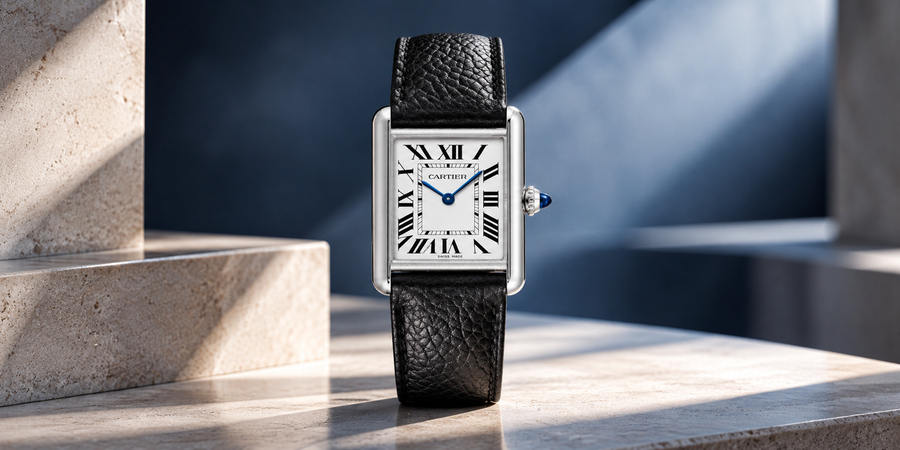
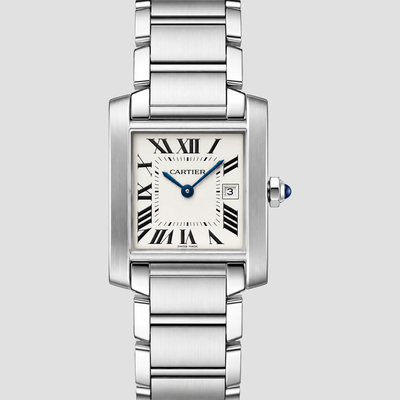
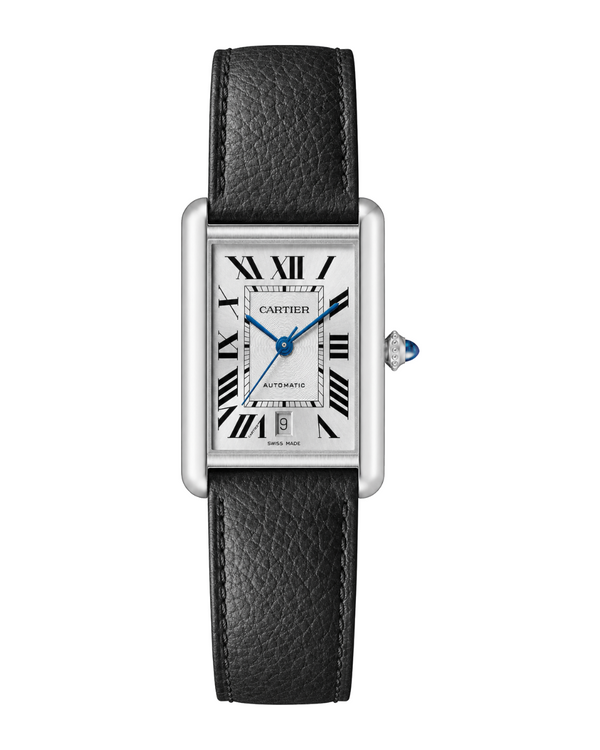
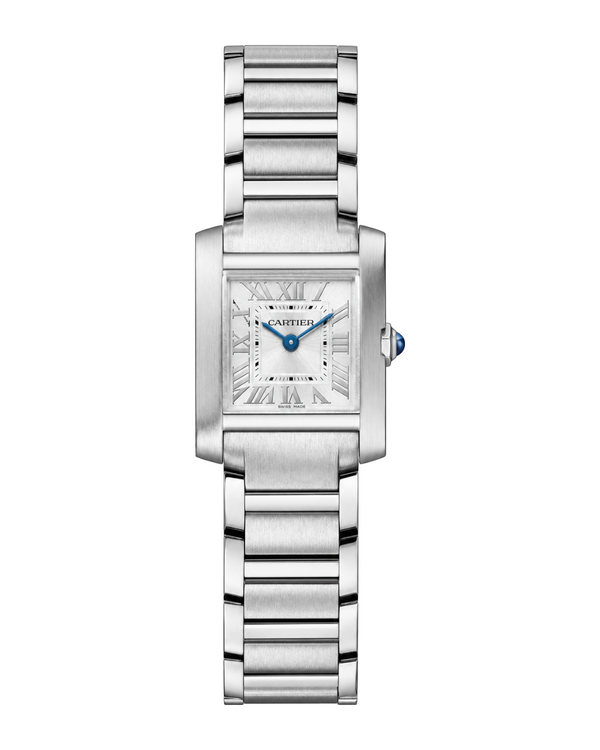
With its rectangular case and the Roman numerals on the unadorned dial, the Cartier Tank has long since become a legend. In the Must de Cartier version, which is available in three different sizes, a reliable automatic calibre brings the watch to life. Looking at this model more closely, sooner or later the small date display at 6 o'clock catches your eye. It is pleasantly and harmoniously integrated into the dial and enhances the timepiece without demanding attention. Available both on a leather strap and with a precious metal bracelet, the Cartier Tank Must de Cartier watches - whether new pieces or vintage models - have a very special charm. This is certainly one reason why the famous watches of the Cartier brand outlast the changing times and always seem to be on trend.
A. Lange & Söhne 1815
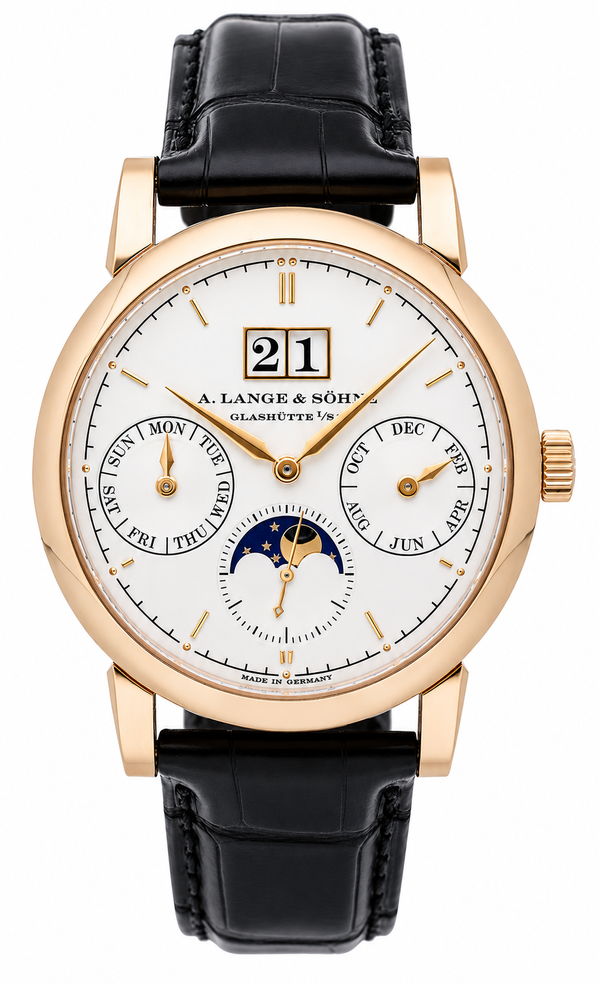
Would you like a watch with an extra portion of classic elegance? Then the A. Lange & Söhne 1815 collection is worth a closer look. The product line is entirely devoted to tradition and its name refers to the year of birth of the brand's founder, Ferdinand Adolph Lange. The awareness of tradition can be seen in these fine models on the one hand in the design, for example in the blued hands and the "chemin de fer" minute track. On the other hand, the mechanical movement L051.1 also features traditional components, such as hand-engraved balance cocks and screwed gold chatons.
Ulysse Nardin Executive Diver X Skeleton
The Diver X Skeleton watches from Ulysse Nardin are exciting reinterpretations of the conventional diver's watch, whose design showcases the courage to be extravagant that characterises the manufacturer. The watch combines the sporty character of the Ulysse Nardin Diver with the technical inner workings of the Blast Skeleton. The result is a solid titanium sports watch with automatic winding, a 72-hour power reserve and elaborate skeletonisation that makes it an absolute eye-catcher.
NOMOS Glashütte Orion 33
Style-conscious women who want a delicate watch with a mechanical movement will find what they are looking for in the Orion 33 from NOMOS Glashütte. Thanks to the small case diameter of 33 millimetres and its fine design, the watch with its hand-wound calibre also looks good on slender wrists without appearing too bulky or heavy. Combined with the soft calf suede strap, the slender cornflower-blue hands and the wafer-thin indices on the cream-coloured dial, the Orion 33 shows to perfection that mechanical watches can also shine in soft, gentle designs.
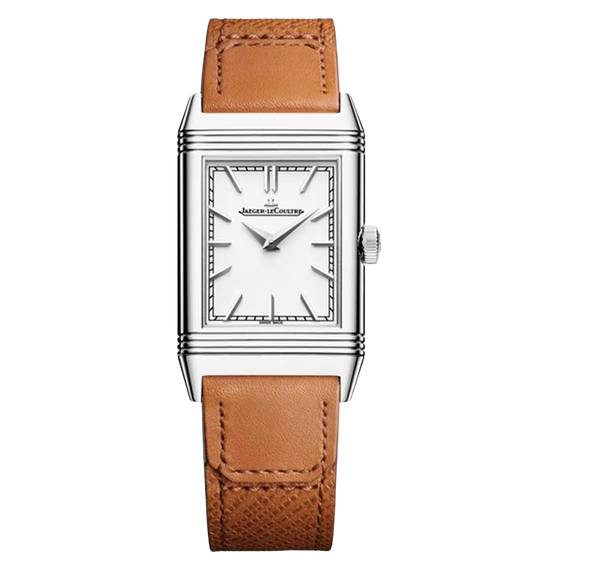
Jaeger-LeCoultre Reverso Tribute
Originally developed for polo players, the Reverso from Jaeger-LeCoultre has a very special feature: A reversible case. In the Tribute version, the watch presents itself in its familiar luxurious manner. The automatic watch for women and men stands out from the crowd with its rectangular dial, which leads to the strap in a harmonious gradation, and is optionally available with various complications. There are, for example, chronograph models, but also pieces with small seconds and calendar.
Panerai Luminor
The Panerai Luminor is a watch in which precision, exceptional character and robustness come together. At the heart of the classic "Base" version with rubber strap is the automatic manufacture calibre P.6000. This is a 110-part movement with manual winding and a full three days of power reserve. The case and caseback are made of stainless steel and frame a clean-lined dial with luminous hands, which underline the sporty touch of the timepiece, water-resistant to 10 bar.
Hamilton American Classic Intra-Matic Chronograph
Anyone who is enthusiastic about sporty chronographs with an automatic movement and is looking for high-quality entry-level watches should not miss the American Classic Intra-Matic watch from Hamilton. The model for women and men conceals a calibre H-31 beneath its handsome case - a chronograph calibre known for its reliability and accuracy. In addition to the smart steel or leather straps, the modern tachymeter scale and the skilfully placed date, the American Classic Intra-Matic impresses with extremely fair prices that not every Swiss manufacturer can match.
Care and maintenance of mechanical watches
The fact is: Mechanical watches need care to function reliably in the long term. It is advisable to have watches with a mechanical (automatic) movement serviced every few years. In the course of this, the calibre is checked for any defects, which in the best case can then be remedied before they cause consequential damage. Regular winding of the watches is also recommended. With automatic models, this happens through wearing them or keeping them in a watch winder; timepieces with a hand-wound calibre have to be wound manually via the crown.
When it comes to cleaning, the mechanical automatic watch differs only slightly from the quartz watch. As a rule, it is sufficient to wipe the watches occasionally with a soft cloth and to clean link bracelets with fine brushes. Leather straps, on the other hand, benefit from special leather care products that keep them supple. To avoid scratches, the timepieces should be stored on soft surfaces after wearing. Watch winders, fabric-lined watch boxes and the original boxes are suitable for this, among other things.
Investment potential and value retention of mechanical watches
Mechanical watches from renowned watch brands such as Rolex, Cartier, TAG Heuer, Patek Philippe, Tissot or Audemars Piguet mostly prove to be extremely stable in value on the market. This makes them an attractive investment option for investors. But: Not every watch necessarily rises in value and price just because it contains a mechanical (automatic) movement and comes from the production of a well-known brand. It is therefore always advisable to look at the past value development of specific models beforehand, make a comparison and, if necessary, seek advice from an expert.
One of the factors that can influence the value of a watch over time is, above all, availability. Models that are offered in large numbers on the secondary market and can be bought practically at any time with a few clicks are traded at a lower price in relation to the list price than watches that have a certain rarity value. For example, it can often be observed that watches change hands at higher prices when a watch brand discontinues their production or announces from the outset that the watch in question will only be made in small numbers.
In principle, of course, it is not only the watch itself but also its condition that influences the prices at which it can be resold. Timepieces that show signs of everyday use or that no longer come with all their accessories and papers will not sell for the highest price. For this reason, it is worth taking good care of these expensive products and keeping the corresponding documents and the original box safe.
Buying advice and tips for purchasing a mechanical watch
High-quality watches from successful watch brands have their price. Their purchase should therefore be particularly well thought through. But how do you find the perfect mechanical watch? First of all, we would like to refer here to the important buying criteria and quality features already discussed in detail in this article. Beyond that, details and little things also play a role with regard to the buyer's individual preferences, which buyers can think about using the following questions:
-
When will the watch be worn (e.g. everyday life, sport, office or special occasions) and which outfits should it go with?
-
Should the dial have a particular colour?
-
Is a delicate, slender model or a solid one preferred?
-
Does the watch need to be water-resistant?
-
What material should the strap be made of?
-
Are Roman or Arabic numerals preferred?
-
Does decoration with gemstones or special finishes on the dial suit your personal style?
Knowing exactly what you are looking for is half the battle when buying a watch. The other half is obtaining offers and making absolutely sure that you buy from a reputable dealer. After all, it is common knowledge that there are certainly black sheep among watch dealers. If you are not buying the watch directly from the manufacturer, caution is therefore advised. Counterfeits can be recognised, among other things, by discrepancies in the documents, inconsistent serial numbers and references, and flaws in the workmanship of the dial, case, hands and so on. If you want to be on the safe side, the most convenient route to a new watch is via an established dealer who conscientiously authenticates their watches. We at HORANDO check the authenticity of every single watch in our range and thus reliably protect our customers from bad purchases.
Current trends and innovations in mechanical watches
Even though mechanical movements are based on a long tradition, they are constantly changing. Every major watch brand - from Rolex and Omega to Audemars Piguet, Patek Philippe and Tissot - continually aims to optimise its watches and strives for contemporary changes and further developments in terms of calibre and design. This also includes the development of new materials. Rolex, for example, now makes bezels from Cerachrom, a scratch-resistant, colourfast ceramic material. The innovative further development of the escapement also comes from Rolex. The Chronergy escapement is characterised by its insensitivity to magnetic fields and achieves around 15 % higher efficiency.
Audemars Piguet has proved at least as inventive in the recent past. Among other things, the brand has focused on flat cases and impressively demonstrated that great complications and slim designs are not mutually exclusive. The anniversary model of the Royal Oak presented in 2022 is equipped with calibre 2968 with flying tourbillon - a movement that measures only 3.4 millimetres in height.
Time and again, established and up-and-coming watch brands also venture to create watches with designs that clearly deviate from the standard. They achieve this, for example, by experimenting with unusual case shapes, deliberately "misplacing" individual components on the dial or realising concepts that initially sound rather adventurous. The brand U-Boat, for example, makes watches that are filled with oil under the crystal, so that a characteristic air bubble is always visible.
Across brands, a trend towards a real love of colour can currently be observed. Some watch brands are releasing new additions to well-known collections that stand out with colourful straps and bright or even patterned dials. Where shades of white, black, grey, brown and silver once predominated, splashes of colour in green, blue, red, pink, orange or yellow are appearing more and more often, giving the watches a modern, playful touch.
Style advice for mechanical watches
As fascinating as mechanical watches are on a technical level, for many people they are above all one thing: A piece of jewellery for the wrist that is meant to complement their outfit as well as possible and express their personal style. If you approach buying a watch with precisely this intention, the occasion on which the watch is to be worn is particularly important.
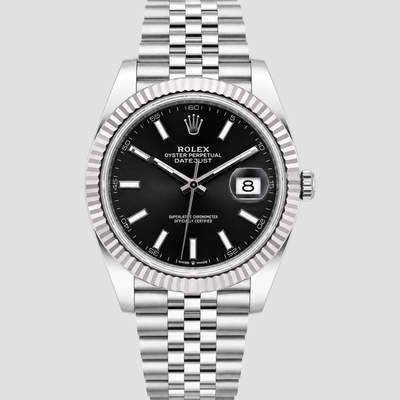
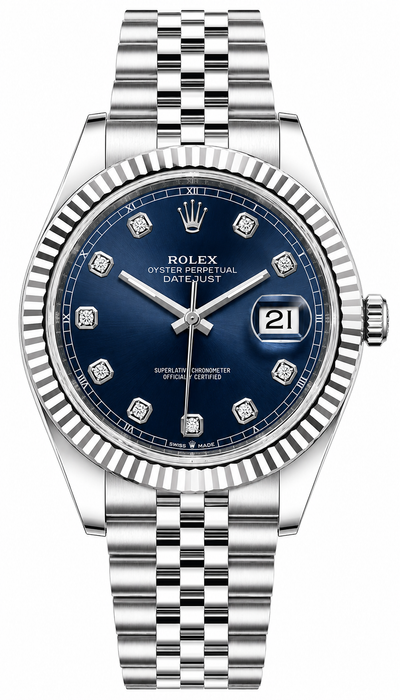
If you want to wear the luxury watch mainly at the office and are usually dressed there in a jacket and shirt, skirt and blouse or trouser suit, classic models - possibly with a date display as a practical feature - are a good choice. Women, for example, choose the elegant Rolex Datejust and usually base their choice of case material on the materials their other jewellery is made of. Currently, however, it is also becoming more and more of a trend to deliberately combine different precious metals. The old rule of thumb "gold with gold, silver with silver" therefore no longer necessarily applies. The aforementioned stainless steel Datejust with a dial in muted green, for instance, can be worn wonderfully with delicate yellow gold bracelets or a gold ring that picks up the dial colour with an emerald or a deep green moldavite.
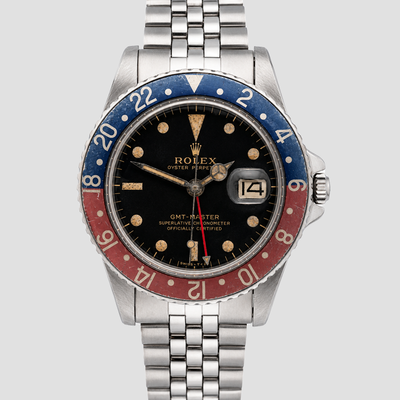
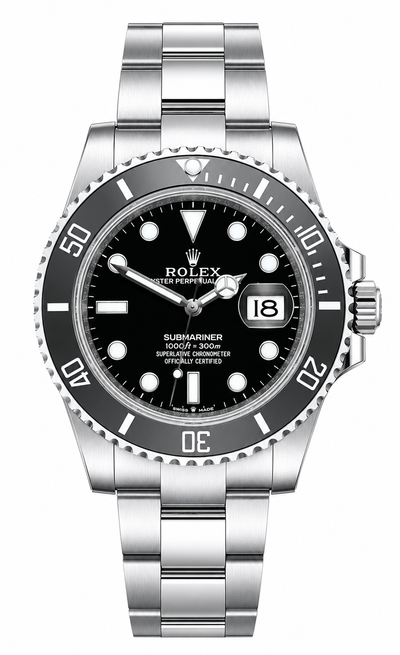
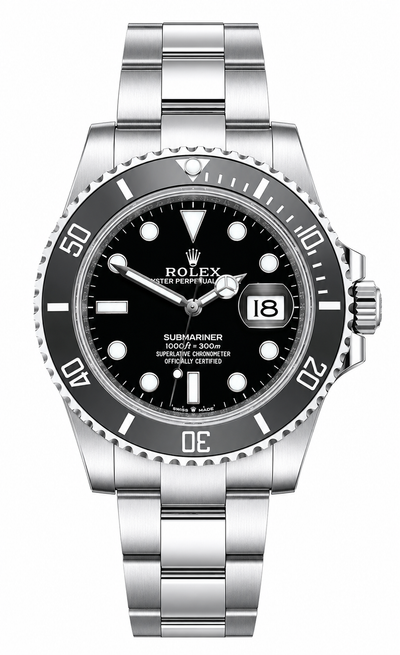
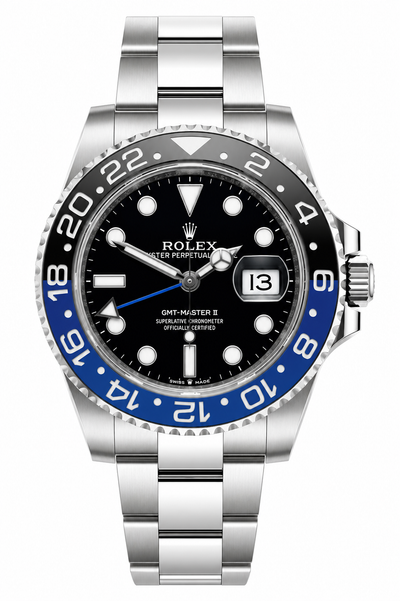
Men often wish to find a certain sporty touch in their favourite watch even in everyday office life. This is exactly what numerous diver's watches and chronographs with mechanical movements offer. The best examples of watches that, despite their sporty design, can be worn excellently with a classic office look are the Rolex Submariner, the Rolex GMT-Master II, the Tissot T-Sport or the Nautilus from Patek Philippe. If you would like a watch with a traditional look for special occasions that undoubtedly deserves the title of status symbol, the Rolex Perpetual 1908, perhaps with a cognac-coloured strap matching shoes and belt in the same leather tone, is an excellent choice. Women will find the ideal companion for grand appearances in the Patek Philippe Gondolo with a diamond-set dial and pearl bracelet.
If you wear the watch mainly for sport and in everyday life, diamond setting and pearls are generally too much of a good thing. In that case, simple but no less stylish mechanical timepieces are recommended that enhance the "casual look" without pushing themselves too obtrusively into the foreground. For women, the Rolex models Oyster Perpetual or Yacht-Master with a small case diameter are among the options here, while men can combine jeans and a T-shirt perfectly with the Hublot Classic Fusion, the Panerai Luminor or the Royal Oak from Audemars Piguet.
Ultimately, choosing a mechanical watch is a very individual matter that should follow no limits and rules, but above all your very personal preferences and values. Here the world of watches invites you to try things out, reinvent yourself, perfect your own look with an exquisite watch and discover how the most beautiful facets of your own style can be highlighted and emphasised by a perfectly chosen timepiece.
Conclusion
Mechanical watches manage without batteries, have complex, technically sophisticated movements and are entirely devoted to tradition and the impressive developments in watchmaking. Compared with quartz watches, they are often somewhat higher in price, but they are also considered extremely durable and frequently prove to be enormously stable in value. Thanks to the great variety of mechanical watches that characterise the product ranges of renowned brands such as Rolex, Hublot, Hamilton or Audemars Piguet, women and men with the most diverse tastes and expectations will find what they are looking for.
More from Buyer's Guide
All articles
Buyer's Guide Buying an IWC Ingenieur: 35 or 40 – References, Movements and Prices Compared
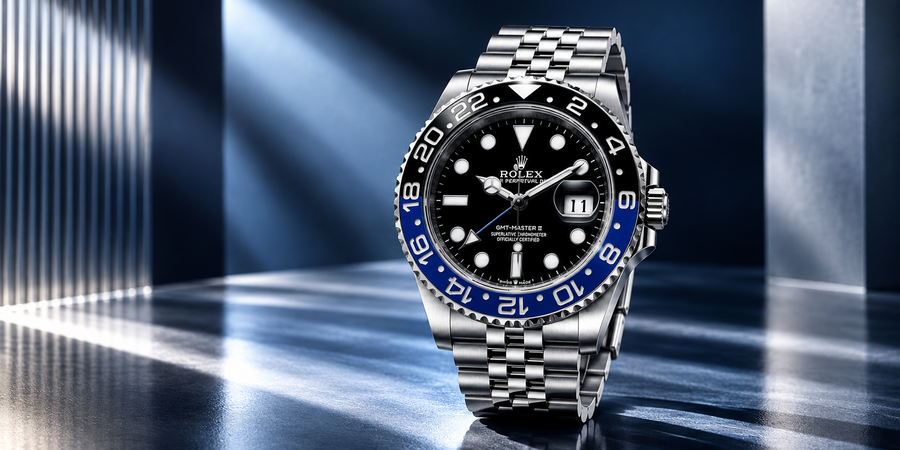
Buyer's Guide Rolex Batman, Batgirl and Bruce Wayne: The GMT-Master II Variants Compared

Buyer's Guide Dress watch: Which watch goes with a suit – and which does not