Which Rolex to Start With? Models, Prices and Differences

Hardly any question is put to us more often than this one: which Rolex is suitable to begin with? The answer becomes easier once you understand how the range is structured – because it is considerably clearer than it appears from the outside.
This guide sorts out the lines, names the realistic price levels and explains the difference between a new and a pre-owned example. At the end there are four specific models from our stock.
The key points in brief
- The Oyster Perpetual is the simplest entry point. One case, one movement, no additional function – reduced to the display of time.
- The Datejust is the classic. It adds a date and a Cyclops lens and is available in 31, 36 and 41 millimetres.
- Condition also determines the price. The same model as a pre-owned piece sits noticeably below the price when new – with the same movement and the same reference.
How the Rolex range is structured
At its core, Rolex distinguishes between the classic models and the so-called Professional models. The classic side comprises the Oyster Perpetual, Datejust and Day-Date. The Professional side brings together watches that were originally created for a specific purpose: Submariner and Sea-Dweller for diving, GMT-Master and Air-King for aviation, Explorer for expeditions, Daytona for motor racing.
Both sides share the same technical foundation: the waterproof Oyster case, automatic winding and movements from in-house production. The difference lies in the function, not in the quality.
The Oyster Perpetual – where the entry begins
The Oyster Perpetual is the foundation. It displays hours, minutes and seconds, nothing else. No date, no rotating bezel, no second time zone. That is precisely what makes it the right first watch for many: the dial stays calm, and the proportions are right.
It is available in several diameters, from 28 to 41 millimetres. With us, the 39-millimetre version currently sits in the region of €9,400.
The Air-King – the underrated entry point
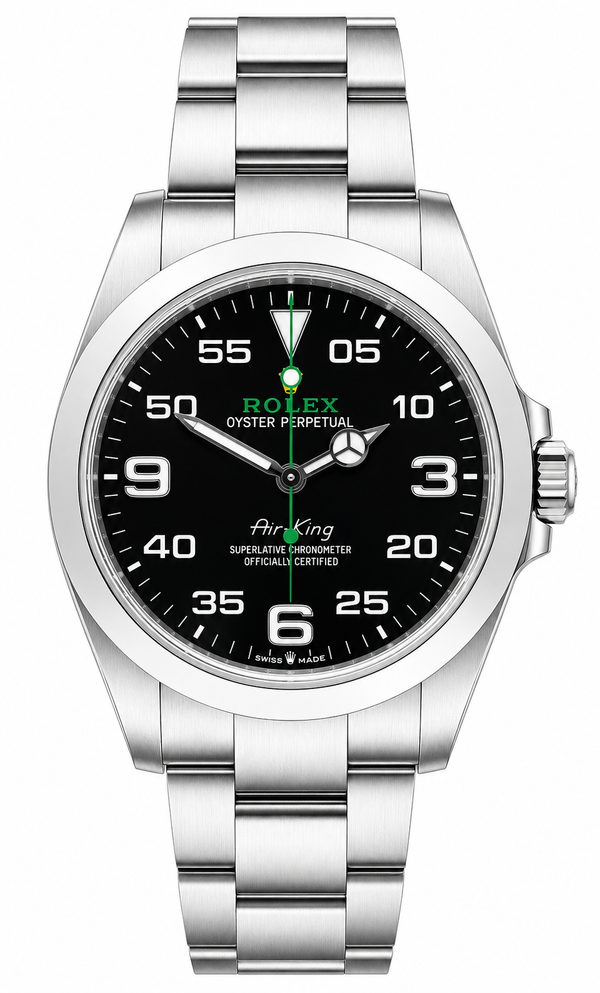
Anyone looking for a way in via the Professional line usually arrives first at the Air-King. It goes back to the Air series that Rolex dedicated to the pilots of the Royal Air Force in 1945, and to this day it carries the most unusual dial in the range: the minute track is numbered in five-minute increments, with only the 3, the 6 and the 9 in between.
Technically it is a fully fledged Professional: 40 millimetres of Oystersteel, the manufacture calibre 3230 with 70 hours of power reserve and a soft-iron inner case that shields against magnetic fields – a legacy from aviation. In terms of price it sits with us in the region of €9,300.
The Datejust – the classic with a date
When people think of a Rolex, they usually think of the Datejust. It came onto the market in 1945 and was the first automatic wristwatch with a date window that changes over automatically at midnight. The magnifying Cyclops lens above the three was added later and remains a distinguishing feature to this day.
The Datejust comes in 31, 36 and 41 millimetres, with a smooth or fluted bezel, on an Oyster or Jubilee bracelet. This breadth is the reason why it is so often the first choice: from the same reference family you can put together a very restrained or a very striking watch. Prices with us start in the region of €9,900.
The large Professional models – the step after that
Submariner, GMT-Master II, Explorer, Daytona: these models are more expensive, but not better made. They simply do more. A rotating bezel makes dive times legible, a 24-hour hand shows a second time zone, a chronograph measures intervals.
Anyone who actually uses one of these functions will find the right watch here. Anyone who does not need them is better served by a Datejust, an Oyster Perpetual or the Air-King. The Explorer II sits with us in the region of €12,000.
New or pre-owned?
This is the decision that moves the price most – and it is often overlooked. A certified pre-owned example carries the same reference, the same movement and the same finishing as a new one. The difference lies in the scope of delivery, in the age and sometimes in fine traces of wear.
What to look out for:
- Authenticity and condition: both should have been checked by watchmakers before the sale – case, movement, bracelet and dial.
- Papers and box: complete sets sit above examples without accessories. Whether the premium is worth it depends on how long the watch is meant to stay.
- Last overhaul: a recently performed service pushes the next due servicing back by years.
- Warranty: when buying from a dealer the statutory warranty applies; beyond that, reputable providers give their own guarantee on the movement.
On the subject of value retention: Rolex models are regarded on the market as comparatively stable in value. That is not a promise for the future – secondary-market prices fluctuate, and a watch should above all be bought because you like it.
The entry-level lines compared
| Line | Functions | Sizes | Price level at HORANDO |
|---|---|---|---|
| Air-King | Time, magnetic-field protection | 40 mm | from around €9,300 |
| Oyster Perpetual | Time, central seconds | 28–41 mm | from around €9,400 |
| Datejust | Time, date with Cyclops lens | 31 / 36 / 41 mm | from around €9,900 |
| Explorer II | Time, date, second time zone | 42 mm | from around €12,000 |
Four models from our stock
Rolex Air-King, reference 126900. The entry into the Professional line. 40 mm Oystersteel, black dial with the characteristic five-minute track, manufacture calibre 3230 with 70 hours of power reserve, soft-iron inner case against magnetic fields, waterproof to 100 metres. Supplied new, with the original box and papers.
Rolex Oyster Perpetual 39, reference 114300. The most pared-back form. 39 mm Oystersteel, calibre 3132 with a Parachrom hairspring and Paraflex shock absorbers, around 45 hours of power reserve. A certified pre-owned watch with the original box and papers.
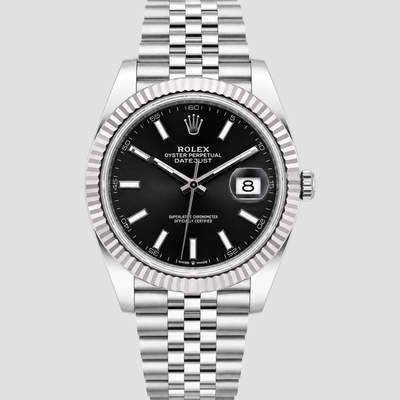
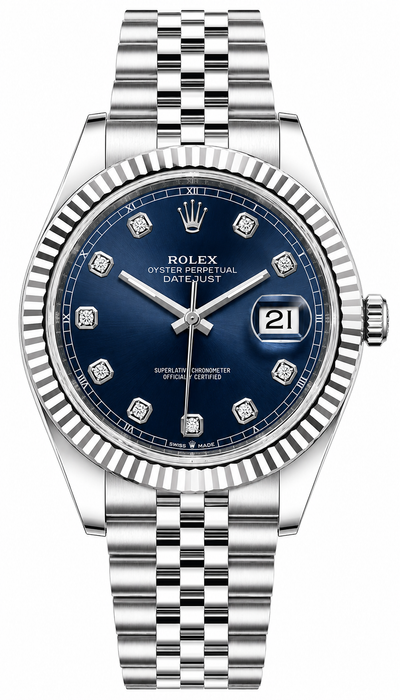
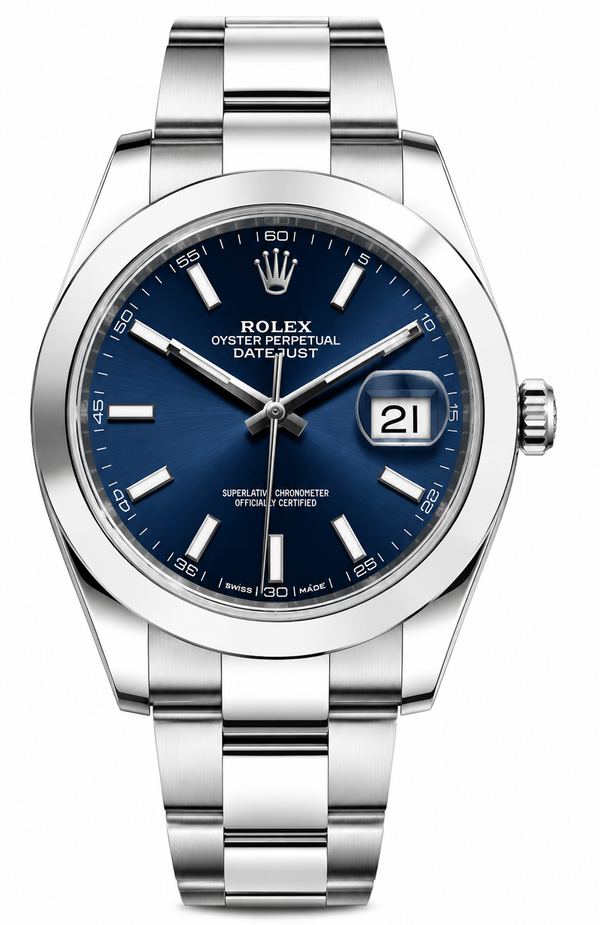
Rolex Datejust 41, reference 126300-0001. The classic in 41 mm with a blue dial. Calibre 3235 with around 70 hours of power reserve, Chromalight luminous material, date beneath the Cyclops lens. Supplied new, with the original box and papers.
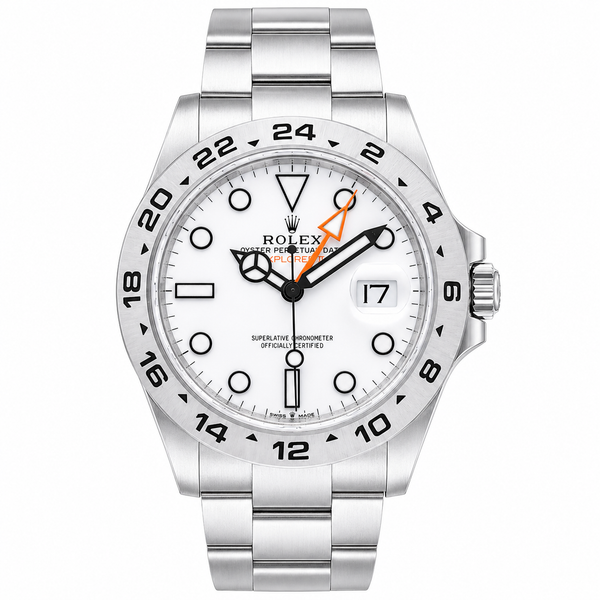
Rolex Explorer II, reference 226570-0001. The step into the large Professional models. 42 mm stainless steel, white dial, orange 24-hour hand on a fixed bezel, calibre 3285 with around 70 hours of power reserve. Supplied new, with the original box and papers.
The complete offering can be found in our overview of Rolex watches; a broader overview across all brands is given by the selection of luxury watches.
Conclusion: the entry point is a question of function
The simplest Rolex is not automatically the right one, and neither is the most expensive. What is decisive is which functions are actually needed – and whether a pre-owned example is an option. Anyone who has an answer to that will quickly find the right entry point.
If you would like to familiarise yourself with the terminology first: our article on the most important watch complications explains what date, GMT and chronograph mean technically.
Frequently asked questions (FAQ)
What is the best way to start with Rolex?
At the lower end of the range are the Oyster Perpetual and the Air-King. Both do without a date; the Air-King additionally brings magnetic-field protection. Anyone who wants a date display starts with the Datejust.
What is the difference between the Oyster Perpetual and the Datejust?
The Datejust has a date display at 3 o'clock, magnified by the Cyclops lens in the crystal. The Oyster Perpetual has no date. Technically and in terms of finishing, the two are equivalent.
Is a pre-owned Rolex worth it?
In terms of price, a pre-owned example sits well below the price of the same reference when new – with an identical movement. What is decisive is verified authenticity, documented condition and a guarantee on the movement.
Which size suits which wrist?
As a rough guide: 31 to 36 millimetres look balanced on slim wrists, 39 to 41 millimetres on stronger ones. What matters, though, is less the diameter than the distance between the lugs – the watch should not protrude beyond the edges of the wrist.
More from Buyer's Guide
All articles
Buyer's Guide Buying an IWC Ingenieur: 35 or 40 – References, Movements and Prices Compared
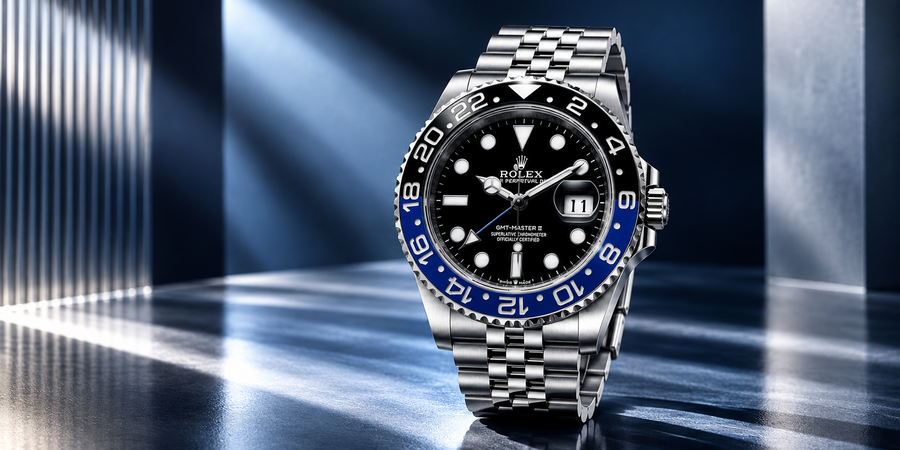
Buyer's Guide Rolex Batman, Batgirl and Bruce Wayne: The GMT-Master II Variants Compared

Buyer's Guide Dress watch: Which watch goes with a suit – and which does not