


Tick Talk #2: Series A, Covid and the Move – How HORANDO Grew
The first episode ended with the crowdfunding. Episode 2 picks up the thread in 2018 and runs all the way to today’s office: A seven-figure funding round, a change of shop system, the first employees, Covid – and two exit enquiries that were not pursued.
The following version is an edited transcript of the conversation. The full episode can be found further below.
How the contact for the Series A came about
The road to the first major funding round did not begin on a pitch stage but in the checkout. A customer who had bought from HORANDO several times and came from the online insurance business himself brought along the idea of offering watch insurance at the point of sale – the way large electronics retailers do. The insurance product never materialised; to this day there is none in the shop. The contact, however, led to access to a venture advisor.
At that very time, this advisor was attending an investor conference in Tel Aviv. So they flew there. The journey sums up the way the two work rather well: At Bamberg station it turned out that the passport was still at home – and Tel Aviv is outside the EU. The train was gone; the next one came two hours later. Particularly annoying, because shortly before a WhatsApp message had gone out reminding everyone not to forget the train ticket and charging cable.
Hanover instead of Berlin
The market environment was heated at the time. Competitors in Berlin and Cologne were closing large rounds with well-known venture capital funds; capital for e-commerce was plentiful. There was just no direct route from Bamberg to that world. In the end it went via Hildesheim and Hanover, where the customer who had made the contact was based. There HORANDO met its later investors – among them the managing director of today’s Bravo Capital and an institutional investor of the state of Lower Saxony.
The talks began in 2018, and closing took place in 2019. In between lay half a year of due diligence and, at the end, a notary appointment in Hanover lasting five to six hours. Afterwards, the seven-figure round was not celebrated in any grand way: There was a beer on the ICE back to Bamberg. The photo of it now appears in the anniversary book marking twelve years of HORANDO.
What mattered was less the moment than what became possible afterwards. With working capital, sought-after models could be bought and kept in stock. By then the market had already shifted: It was no longer primarily about price but about availability. Those who have watches in stock can deliver – and customers can view them beforehand.
From PrestaShop to Shopify
In 2013 there had not been enough money for an expensive shop system; the start was made with PrestaShop, which was continually upgraded with an external developer. With the fresh capital came the fundamental question: Keep tinkering with the existing system or switch? The decision for Shopify was made quickly, the implementation took considerably longer – the relaunch came in 2023.
The first employees and learning to delegate
At this point the episode becomes self-critical. Both say openly that for far too long they saw it as a strength to do everything themselves: A mid single-digit million turnover handled by two people, including customer service, packing, investor relations and due diligence. In hindsight the question is: What were we thinking?
With the first hires came a topic that neither of them had any previous experience with – leading staff. The first two colleagues joined customer support, and the back office was set up as a second office in Hanover city centre. Nobody arrives with watch knowledge; it has to be built up, as does the feel for demanding customers that is needed in this price segment.
To this day, the difficult judgement remains when a customer really needs to speak to a managing director. Above a certain order size the wish is understandable, but a growing company cannot be run if both founders look after every customer personally.
2020: First standstill, then a rush
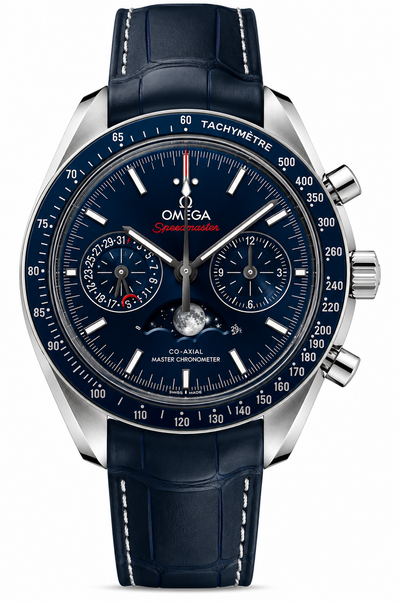
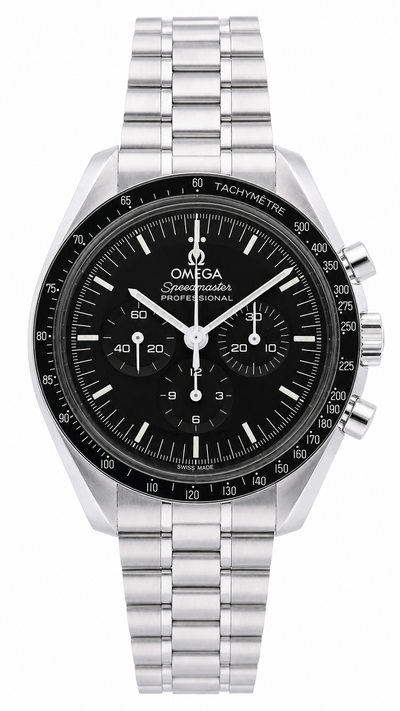
2019 was all about the Series A, then came Covid. The scene both of them remember takes place in the old showroom on Lange Straße: A customer from the region was collecting an Omega Speedmaster, the first shops already had to close – and the two looked at each other and wondered what would come next. Weeks of working from home followed.
From the spring onwards, things tipped in the other direction. People were no longer travelling, money was sitting idle, interest rates were low. The investment character of a watch, which had always been part of the picture, came to the fore more strongly than ever before. Above all, a barrier fell: Those who had previously bought in store no longer had that option – and discovered that the watch really does arrive after the bank transfer. Both put this clearly into perspective: The boost came at a time when many friends and acquaintances in the hospitality industry were experiencing exactly the opposite.
The move: From a crowded showroom to today’s office
Operationally, things got tight. The main handling – goods receipt, inspection, photography, shipping – continued to run through Bamberg. At some point the watches were stacked in the seating area, sorted by brand, and the whole showroom smelled of cardboard. For customers collecting their watch, it was not a pretty sight.
The plan to add the first floor in the same building fell through. Instead, a vacant former architect’s office in a rear courtyard turned up a few hundred metres away. Viewing, contract signed two to three weeks later, conversion at the end of 2021, move at the beginning of 2022. As a logical consequence, the Hanover office and the showroom were closed and everything was consolidated in Bamberg – the necessary step, even if both like to look back on the years on Lange Straße. Today there is a safe room, various workstations and a dedicated podcast corner.
In between there were further, smaller funding rounds with the existing investors – without much fuss, because the business was developing positively.
Two exit enquiries
Asked whether a sale has ever been on the table, there is a clear answer: Twice, both times proactively from outside. Both describe such weeks as intense and quite flattering. In the end, the decision was not made by the price but by the question of where they actually want to go – and that this goal is not only that of the two founders, but also that of the team and the shareholders. Stopping halfway was therefore out of the question.
The quick three
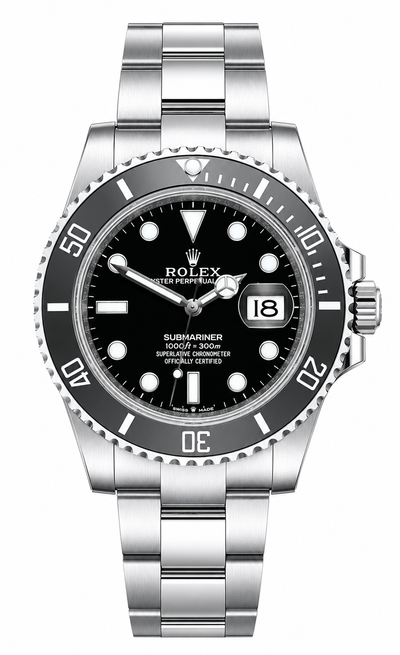
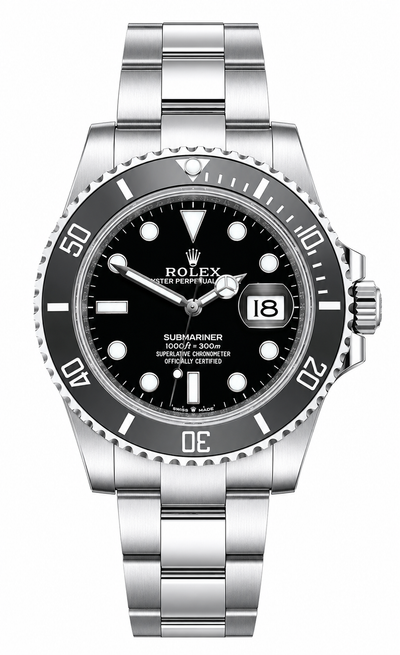
- A watch with box and papers, or one €5,000 less without? Without. Every watch that comes into the house is inspected by the partner watchmakers in Cologne. An example from current stock: A Rolex Submariner, freshly serviced by Rolex, with a service card and a two-year warranty extension – and still prospective buyers decline because the original papers are missing.
- Richard Mille or A. Lange & Söhne? A. Lange & Söhne.
- The customer who tries watches on for two hours and then sleeps on it, or the one who buys in thirty seconds and then calls ten times? The caller.
How customer behaviour has changed
Between 2013 and 2020, buying behaviour was largely constant from the two founders’ perspective. Since Covid, not only has the share of online purchases increased, but also the depth of the questions. Around 70 percent of orders go through without complications; the remaining 30 percent need advice – on diameter, automatic or quartz, sporty or elegant.
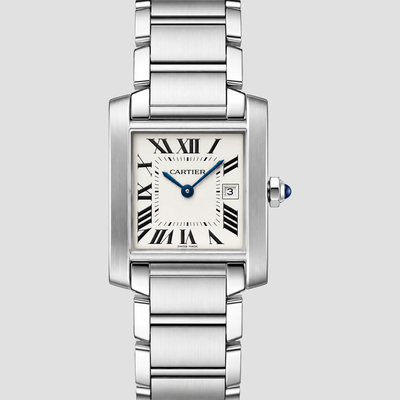
How much of this is technology and how much is lifestyle depends heavily on the brand. With Cartier, which has seen a revival with the Santos and Tank, identification with the brand tends to be in the foreground. With technically oriented brands, it is about calibres and components – in one case so extensively that HORANDO took the brand out of its range again after just a few watches sold on consignment.
Watch the episode
Chapters
- 01:52 – The road to the Series A
- 04:18 – Overnight trip to Tel Aviv
- 07:03 – Investors, notary and closing
- 10:45 – From PrestaShop to Shopify
- 12:39 – The first employees
- 14:57 – Covid and the online boom
- 19:32 – From the showroom to the new office
- 22:58 – Relaunch and trade fair visits
- 25:04 – Exit enquiries
- 27:11 – The quick three questions
- 29:39 – How customers have changed
- 33:31 – Conclusion and outlook
Listen
Tick Talk is available on YouTube and on Spotify. The current range can be found in the selection of luxury watches, and inspected pieces under Certified Pre-Owned.
More from Tick Talk
All articles
Tick Talk Tick Talk #8: From Audemars Piguet to Chronext, with Frederike Knop
Tick Talk Tick Talk #7: Status or Substance – Watches in Dubai, with Dennis Uitz
Tick Talk Tick Talk #6: Status or Passion – Questions from the Community


Leave a comment