
Watch Winders and Winding an Automatic Watch: When a Winder Is Worth It and How to Set It Up

An automatic watch winds itself while you wear it. Leave it in a drawer for a few days, and it stops. A watch winder keeps it running, but not every collection needs one. We explain how automatic winding works, how to wind an automatic watch correctly by hand and when a watch winder is worth it.
Key points at a glance
-
Automatic watches wind via a rotor: Every movement of your arm tensions the mainspring. If the watch is left lying, it runs down after roughly 40 to 80 hours, depending on the movement.
-
Hand winding always works: Around 30 to 40 turns of the crown are enough to restart an automatic watch that has stopped.
-
A watch winder makes sense for watches with a perpetual calendar, moon phase or annual calendar, and for collections in which several watches are worn in rotation.
-
Setting it correctly: Most movements need 650 to 950 turns per day (TPD), and some wind in one direction only.
-
It is not essential: A watch suffers no harm when it stops. Regular servicing matters far more.
How automatic winding works
Inside an automatic movement sits a rotor, a semicircular oscillating weight that turns with every movement of the wrist. Via a gear train, it tensions the mainspring that powers the movement. Once the spring is fully wound, it slips via a bridle spring. That is why an automatic watch cannot be overwound, whether on the wrist, on a watch winder or via the crown.
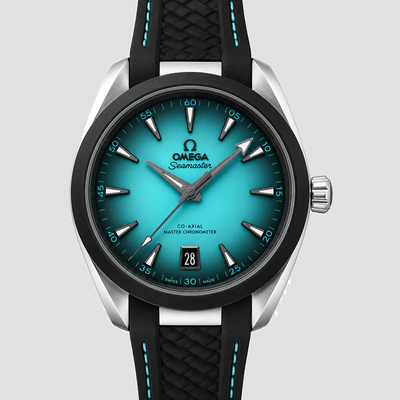
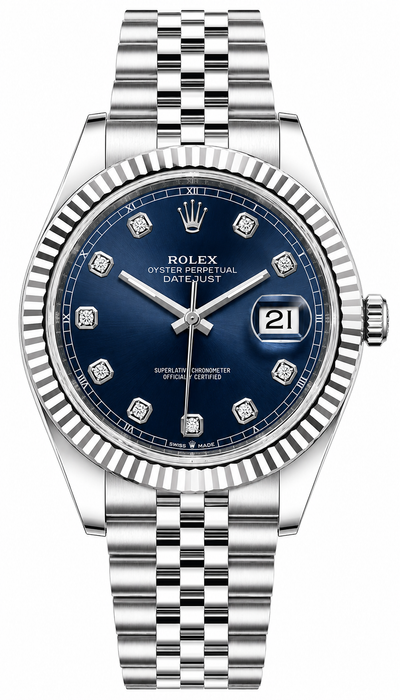
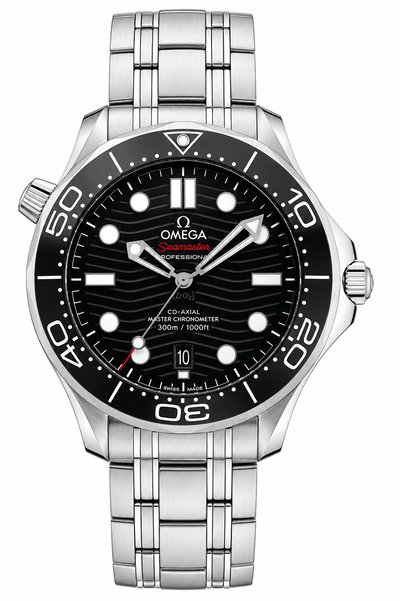
How long the watch keeps running without movement is determined by its power reserve. Classic movements manage about 40 hours, modern calibres considerably more: the Rolex calibre 3235 in the Rolex Datejust runs for around 70 hours, the Omega calibre 8800 in the Omega Seamaster Diver 300M for around 55 hours. Take off a watch with a 70-hour power reserve on Friday evening, and you will usually find it still running on Monday morning.
Winding an automatic watch by hand: step by step
If the watch has stopped, it is best to wind it by hand rather than shake it. This is gentler on the movement and gives you a full power reserve straight away.
-
Release the crown: With a screw-down crown, as on dive watches, first unscrew it anticlockwise until it pops out. It is then in the winding position.
-
Wind: Turn the crown clockwise, around 30 to 40 full turns. With many movements you will not feel a stop, and that is normal.
-
Set the time and date: Pull out the crown and set the time. Avoid using the quick-set date function between roughly 9 pm and 3 am, as the date change mechanism is engaged during this period in many movements.
-
Return the crown: Push it back in and, with a screw-down crown, screw it down fully again, otherwise the watch is not water-resistant.
A manual-wind watch is the exception: here you will feel resistance at the end. Stop at that point and do not force it any further.
When a watch winder is worth it
A watch winder turns the watch at regular intervals, replacing the movement of the wrist. Three cases clearly speak in its favour:
-
Complicated calendars: A perpetual calendar, an annual calendar or a moon phase is tedious to reset after the watch has stopped. Here a watch winder saves a great deal of time.
-
Several watches in rotation: If you own three or more automatic watches and wear them in turn, you can reach for a running watch showing the correct time every morning.
-
Presentation: Many collectors also use their watch winder for storage, keeping their watches protected and on display.
For a single watch that you wear almost every day, on the other hand, there is no need for a watch winder. Watches with a simple date and a long power reserve are also easy to wind by hand.
Setting up your watch winder correctly
Two values are decisive: the turns per day (TPD) and the direction of rotation. Most automatic movements wind in both directions and need between 650 and 950 turns per day. Some movements, such as the widely used Valjoux 7750 chronograph calibre, wind in one direction only. The exact values for your calibre are provided by the manufacturer of the watch winder or the watch.
Our recommendation: start with bidirectional rotation and around 800 turns. If the watch loses time or stops after a few days, increase the number. More turns than necessary do no harm, but cause unnecessary wear on the rotor bearing and winding mechanism. How accurate your watch should be is explained in our article COSC and Master Chronometer.
Does a watch winder harm the watch?
A good watch winder does not harm the watch. Once the daily turns have been reached, it lets the watch rest. Its motor is shielded so that the movement does not become magnetised. There is only one thing to bear in mind: a watch that runs constantly wears in much the same way as a watch that is worn. The service interval of usually five to ten years therefore also applies to watches kept on a winder. Conversely, a watch suffers no harm if it stands still for a few weeks. The oils in the movement do not gum up in days or weeks.
Which watch winder is right for you?
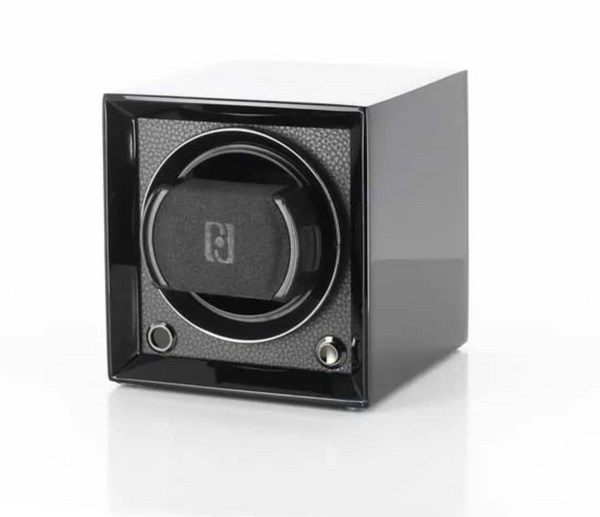
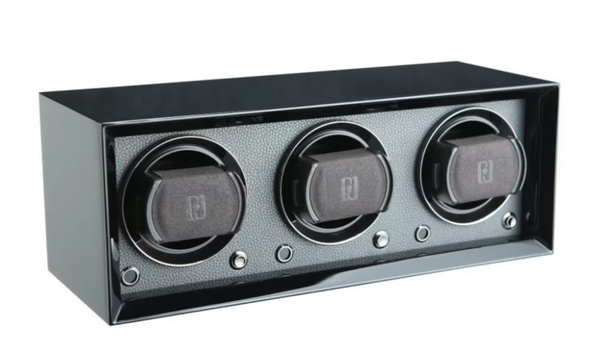
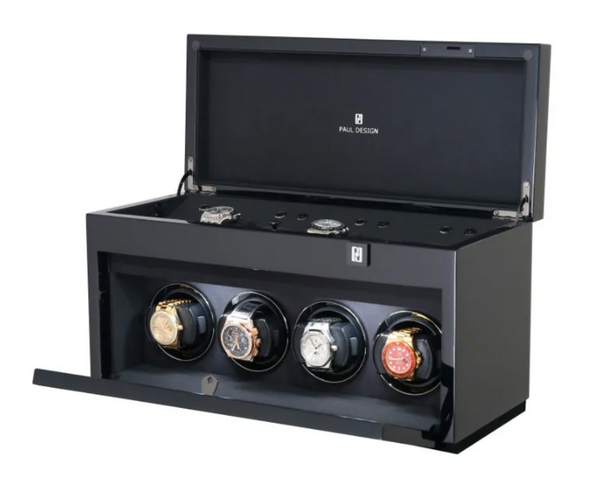
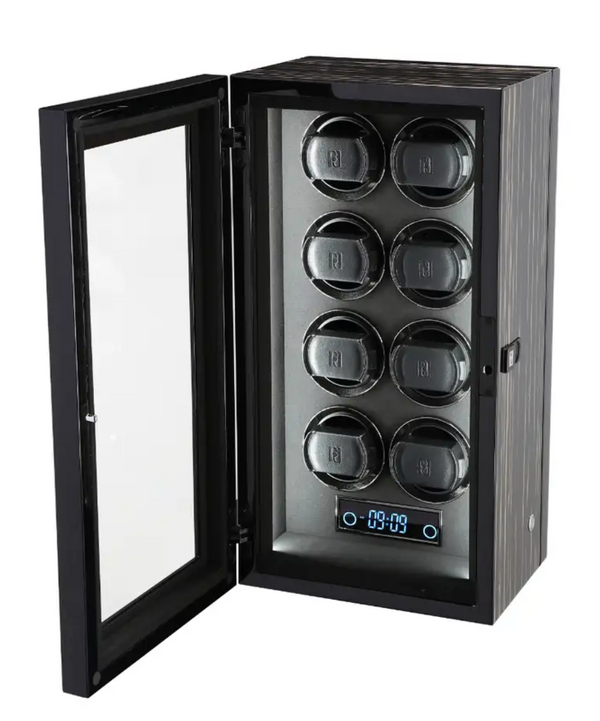
The most important question is the number of positions. For a single watch, a model such as the Paul Design Gentlemen 1 at €240 is sufficient. If you have several watches, choose a model with three, four or more rotors, each individually programmable, such as the Paul Design Gentlemen 3 at €590. Combination models such as the Gentlemen 4+6 pair four rotors with six fixed storage spaces for watches that do not need to be running.
Frequently asked questions
How long does an automatic watch run without movement?
That depends on the power reserve. Classic movements run for about 40 hours, modern calibres for 55 to 80 hours. After that the watch stops and has to be reset.
Can you overwind an automatic watch?
No. A slipping clutch on the mainspring prevents overwinding, both when winding via the crown and on a watch winder.
How many turns does my watch need on a watch winder?
Most automatic movements need 650 to 950 turns per day, usually in both directions. Some movements wind in one direction only. If in doubt, start with around 800 turns in both directions.
Is it a problem if an automatic watch stops?
No. The watch suffers no harm. Simply wind it by hand, set the time and date, and carry on wearing it.
Does a quartz watch need a watch winder?
No. Quartz watches are powered by a battery and keep running without movement.
Conclusion
An automatic watch gets along perfectly well without a watch winder: wind it by hand, set the time, done. However, if you wear several watches in rotation or own a watch with a calendar complication, a watch winder saves you from constantly resetting it. You will find all models in our watch winder selection. If you have questions about your calibre, we will be happy to advise you personally in our showroom in Bamberg, by phone or via WhatsApp.
More from Watches & Technology
All articles
Watches & Technology Mechanical Watch or Smartwatch? Why a Movement Needs No Update
Watches & Technology 100 Years of the Rolex Oyster: How the Waterproof Wristwatch Came About – and What Water Resistance Means Today
Watches & Technology Hardlex Glass in Watches: Properties, Advantages, and Differences from Sapphire and Mineral Glass