Complete calendar, annual calendar, perpetual calendar: the difference explained simply

On 15 September 2026, Rolex unveiled the Perpetual Padellone: an annual calendar with moon phase, in Everose gold and platinum. The name alone is remarkable. “Padellone” – Italian for “big frying pan” – was never an official designation but a nickname that collectors gave to reference 8171 from the late 1940s, because its case looked enormous by the standards of the time. It is rare for a manufacture to adopt the jargon of its clientele.
More interesting than the name is the complication behind it. “Calendar watch” is an umbrella term for three very different constructions – and the difference between them determines how often you have to reset your watch by hand.
Key points at a glance
-
The complete calendar shows a lot and knows little. Day of the week, month, date and usually moon phase – but it does not know the length of the months. It has to be corrected by hand five times a year.
-
The annual calendar thinks ahead. It distinguishes between months with 30 and 31 days on its own. Correction: once a year, at the end of February.
-
The perpetual calendar even knows the leap years. Set correctly and kept running continuously, it will run until the year 2100 without intervention.
Level 1: The complete calendar
The complete calendar – often also called “Complete Calendar” or “Triple Calendar” – shows the day of the week, month and date, usually supplemented by a moon phase. On the dial it therefore often looks more complex than its more expensive relatives.
Mechanically, however, it is the simplest of the three levels: its date wheel stubbornly counts to 31 and then jumps to 1. In every shorter month, the display falls out of step. This affects April, June, September, November and February – five corrections per year.
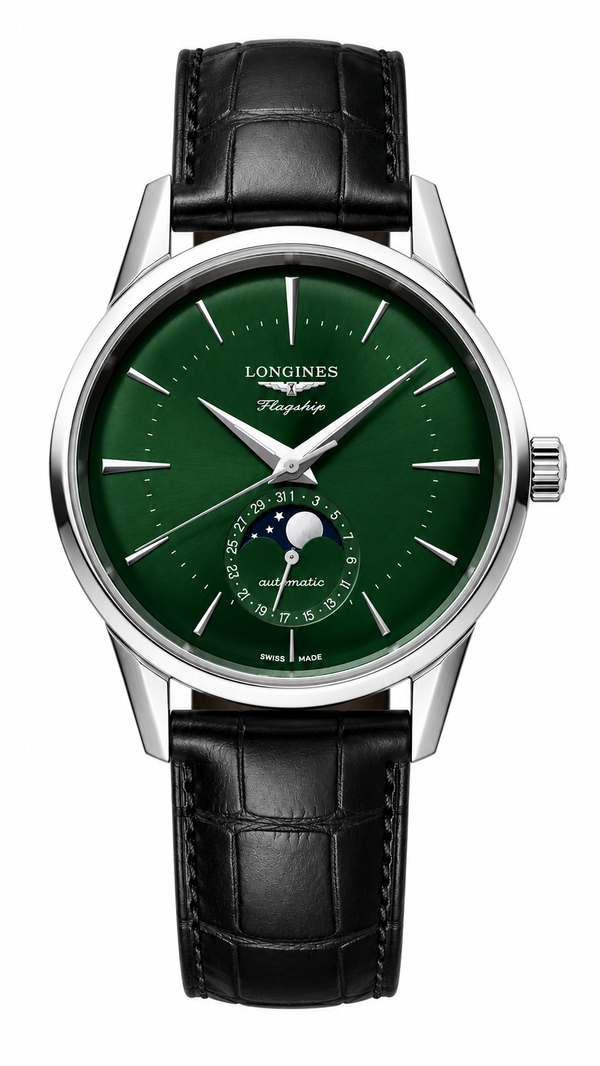
This is not a design flaw but a deliberate decision: the complete calendar brings the calendar display to the wrist at a price that makes it accessible in the first place. The Longines Flagship Heritage Moonphase, for example, combines day of the week, month, date and moon phase in a 38.5 mm stainless steel case, powered by the automatic calibre L899 with a 72-hour power reserve.
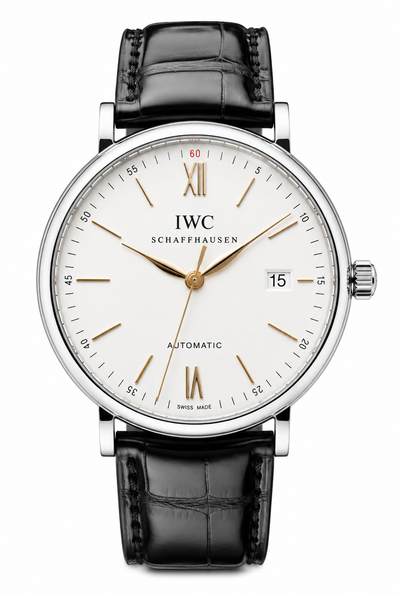
How differently the same complication can be designed is shown by the IWC Portofino Complete Calendar: here the day of the week and month sit side by side in two windows, the date is indicated by a hand on the edge of the dial, and the moon phase is at twelve o’clock. Inside works the manufacture calibre 32150, also with a 72-hour power reserve. You will find further models from the brand in our selection of IWC watches.

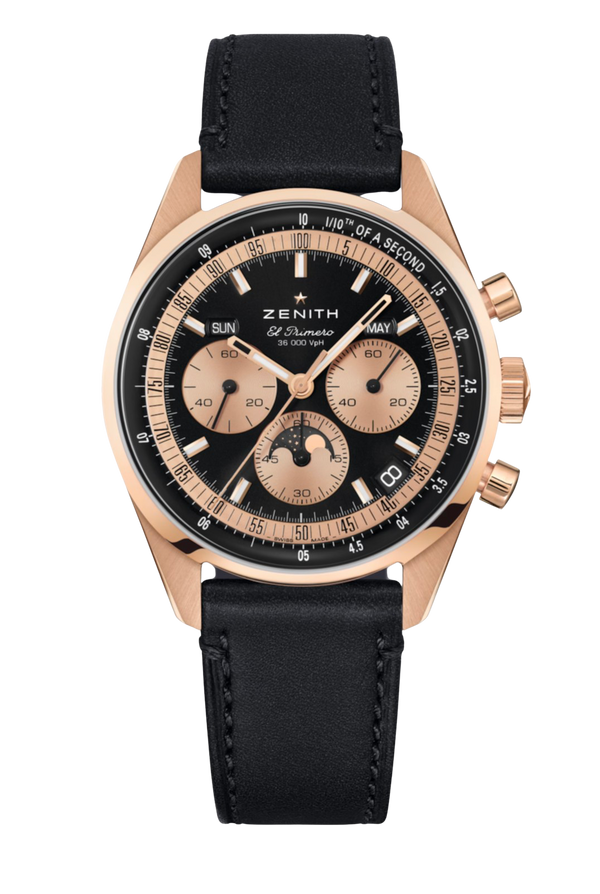
A third route leads via the chronograph: the Zenith Chronomaster Original Complete Calendar combines the complete calendar with the El Primero movement, which beats at 36,000 vibrations per hour and thus resolves tenths of a second – calendar and short-time measurement in a 38 mm case.
Level 2: The annual calendar
For a long time there was a gap between the complete calendar and the perpetual calendar: either you reset the watch five times a year, or you bought one of the most elaborate complications in watchmaking. Patek Philippe closed it in 1996 with a patent for the annual calendar.
Its mechanism distinguishes between months with 30 and 31 days on its own. Only February is too much for it – once a year, at the end of February, a correction is due. For everyday wear this is the decisive leap: five interventions become one.
Reference 5147G-001 combines this annual calendar with a power reserve indicator and moon phase. The white gold case measures 39 mm, and a sapphire caseback reveals the automatic calibre 324 S IRM QA LU. The new Rolex Perpetual Padellone belongs to precisely this category – which explains why its launch attracted so much attention in the industry: calendar complications have so far not been part of the core of the Rolex collection.

Level 3: The perpetual calendar
The perpetual calendar is the supreme discipline. Its movement contains a mechanical memory of finely tuned cams and levers that knows not only the different lengths of the months but also the four-year rhythm of the leap years. Once set correctly and kept running continuously, it will run without intervention until 28 February 2100 – when a leap year is skipped that the mechanism does not anticipate.
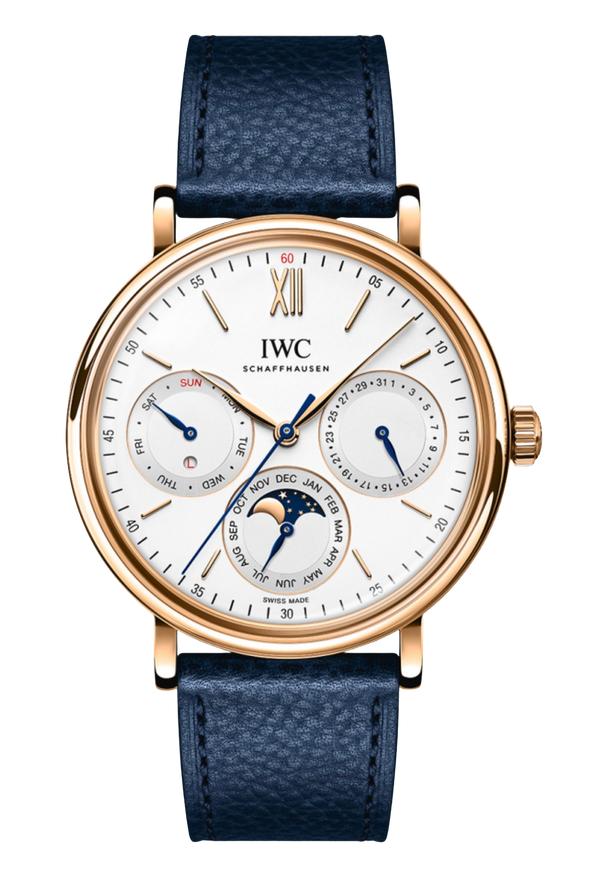
The IWC Portofino Perpetual Calendar shows how discreetly this technology can be packaged: 40 mm red gold, silver-coloured dial, calibre 82650 with a power reserve of around 60 hours. Date, day of the week, month and moon phase set themselves.
A practical note: a perpetual calendar wants to be worn or kept in a watch winder. If it stops, it has to be reset – and with this complication that is considerably more involved than with a date watch. Many manufacturers recommend leaving the setting to a watchmaker.
And the moon phase?
The moon phase is not a calendar level but an independent display that can be combined with all three – or with none. Technically, it is a disc with two moons that slowly rotates behind an aperture in the dial.
The synodic month lasts around 29.5 days. Simple mechanisms calculate with exactly 29.5 days and deviate by one day after about two and a half years; more precise constructions take more than a hundred years to do so.
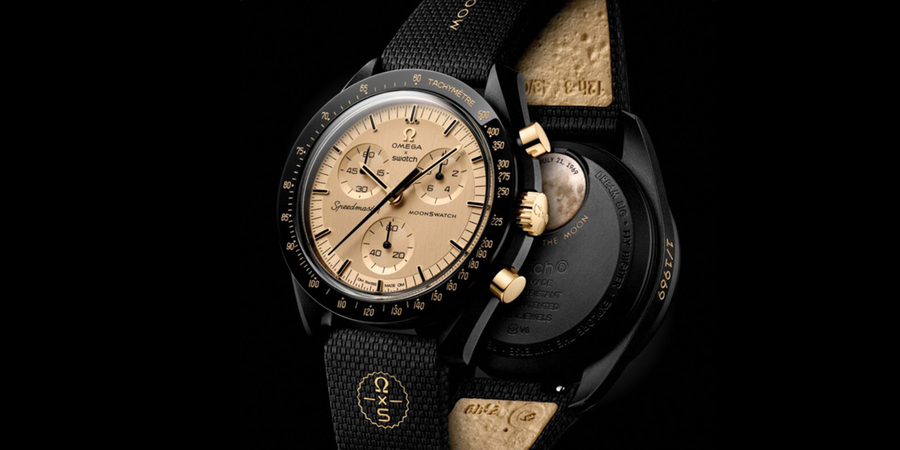
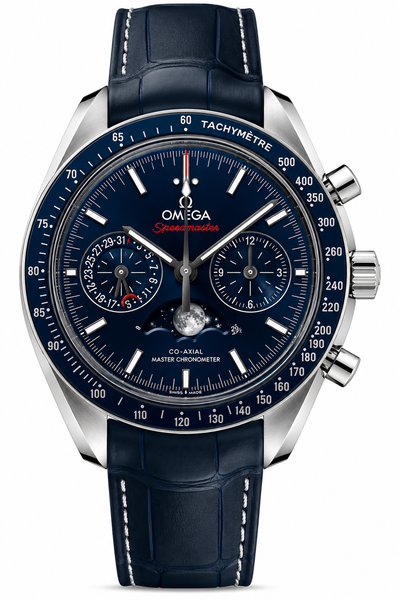
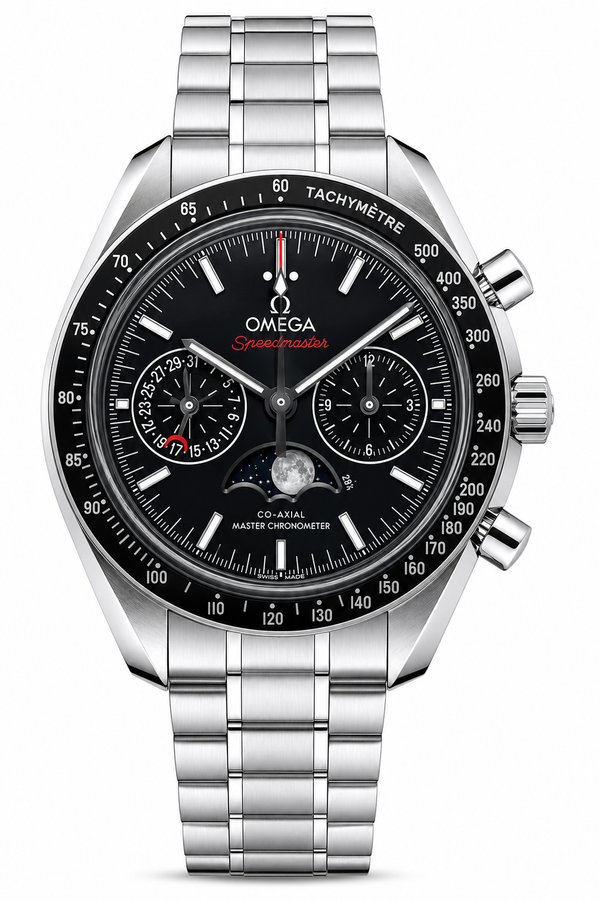
That the moon phase also works without a calendar is demonstrated by the Omega Speedmaster Moonwatch Moonphase: chronograph, date and moon phase, powered by calibre 9904 with Co-Axial escapement and Master Chronometer certification. You will find more models from the brand under Omega watches.
The three levels compared
| Type | What it displays | Corrections per year |
|---|---|---|
| Complete calendar | Day of the week, month, date, usually moon phase | Five |
| Annual calendar | As complete calendar, recognises 30- and 31-day months | One, at the end of February |
| Perpetual calendar | As annual calendar, plus leap years | None (until 2100) |
Which level suits you?
The honest answer depends less on budget than on how you wear your watches. Anyone who wears a watch every day and sets it occasionally anyway will live well with a complete calendar – and in return gets the most complete dial at the lowest price.
Anyone who switches between several watches notices the difference more quickly: every watch that has been left lying for a week needs to be reset. This is where the annual calendar plays to its strengths.
The perpetual calendar, finally, is a decision in favour of the mechanics themselves. Its practical advantage over the annual calendar amounts to one correction per year; its real appeal lies in the fact that a purely mechanical movement reproduces the Gregorian calendar over decades.
We provide a broader overview of the functions of mechanical watches in our guide to the most important watch complications. Calendar watches of all three levels as well as models with moon phase can be found in our selection of luxury watches – from Longines and Zenith to Patek Philippe.
Frequently asked questions (FAQ)
What is the difference between an annual calendar and a perpetual calendar?
The annual calendar distinguishes between months with 30 and 31 days but fails at February – it has to be corrected once a year. The perpetual calendar also takes leap years into account and, set correctly, runs until 2100 without intervention.
How often do I have to reset a complete calendar?
Five times a year: after April, June, September, November and February. In all months with 31 days, the display advances correctly.
What does “Complete Calendar” on the dial mean?
It is the English term for the complete calendar – that is, day of the week, month and date, usually supplemented by a moon phase. It has nothing to do with the annual calendar or the perpetual calendar.
How accurate is a moon phase display?
That depends on the gear ratio. Simple mechanisms deviate by one day after around two and a half years, elaborate constructions only after more than a hundred years.
What is the Rolex Perpetual Padellone?
An annual calendar with moon phase unveiled on 15 September 2026, available in Everose gold and platinum. The name goes back to the collectors’ nickname for Rolex reference 8171 from the late 1940s – “padellone” means “big frying pan” and referred to its case, which was unusually large for the time.
Does a perpetual calendar always have to be running?
Ideally, yes. If the watch stops, the calendar display falls out of step and has to be reset – a procedure that many manufacturers recommend leaving to a watchmaker. A watch winder prevents this.
More from In Depth
All articles
In Depth James Bond and Omega: Why 007 Has Worn a Seamaster Since 1995

In Depth The Watches in “The Gentlemen”: All Models from Seasons 1 and 2 at a Glance
In Depth The Most Important Watch Complications Simply Explained