




Wissensdonnerstag #5: Automatic or manual winding – what is the difference?
Automatic and manual-winding watches both work without a battery and are mechanical movements. In both cases, a tensioned mainspring drives the movement. The only difference lies in how this spring is wound.
The key points
- An automatic watch winds itself as it is worn. A rotor makes use of the movements of the wrist.
- A manual-winding watch is wound via the crown. Usually once a day, or less often depending on the power reserve.
- Both stop when their energy is used up. How long they run is determined by the power reserve.
How an automatic watch works
Inside an automatic watch sits a rotor, a semicircular oscillating weight. It turns with every movement of the wrist and winds the mainspring via a gear train. If the watch is worn regularly, it practically supplies itself with energy. A slipping clutch ensures that the spring cannot be overwound.
When the watch is taken off, it continues to run for as long as the power reserve lasts. With current calibres, this is often two to three days. Those who own several automatic watches and wear them in rotation often use a watch winder.
How manual winding works
A manual-winding movement has no rotor. The mainspring is wound via the crown, which is turned between thumb and forefinger. When the spring is fully wound, resistance can be felt. At that point at the latest, it is time to stop; the crown should not be turned any further.
So why do watch enthusiasts still deliberately choose manual winding? Without a rotor, the movement is usually slimmer and the view through the transparent caseback is unobstructed. Bridges, wheels and balance are on full display. And for many, winding the watch every day is simply part of the ritual of owning a mechanical watch.
A brief look at history
Manual winding is the older type of construction. Pocket watches and early wristwatches were wound exclusively by hand. In the 1920s, the Englishman John Harwood patented a wristwatch with automatic winding. In 1931, Rolex presented the Perpetual rotor, a design whose freely rotating oscillating weight still defines the principle of modern automatic movements today.
Which type suits whom?
Anyone who wears a watch every day and does not want to think about it is well advised to choose an automatic. Anyone who owns several watches and wears them in rotation will have to rewind and reset either type after a few days. Manual winding is worthwhile for anyone who wants to experience the mechanics consciously. This applies in particular to collectors of classic chronographs, for whom manual winding is part of the history.
The power reserve
The same applies to both types: once the energy of the mainspring is used up, the watch stops until it is wound again. The power reserve indicates how long a fully wound movement will run. Some watches display it on the dial, for example the Patek Philippe 5147G with its power reserve indicator.
Examples from our range
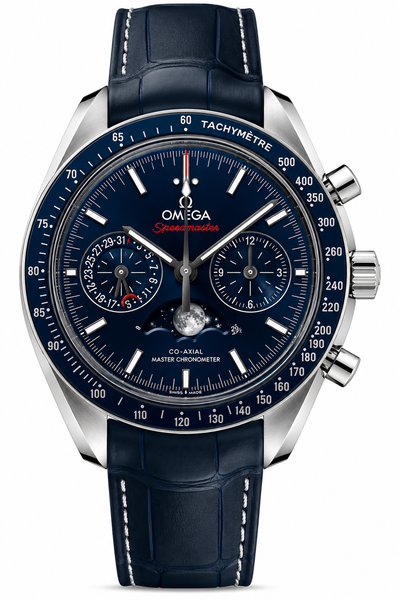
The Omega Speedmaster Moonwatch Professional is the best-known example of a manual-winding watch. Its calibre 3861 offers around 50 hours of power reserve. During the Apollo missions, too, the Speedmaster was a hand-wound chronograph.
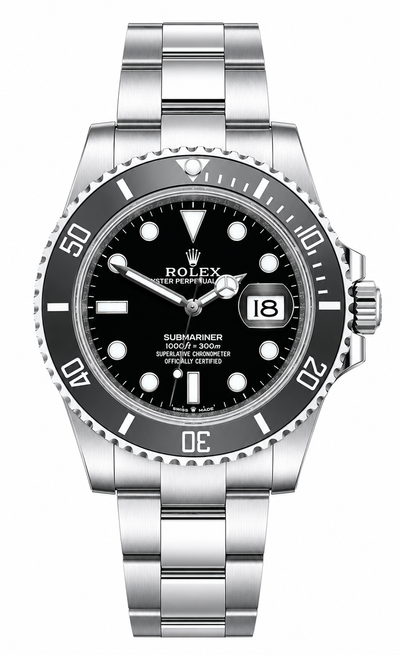
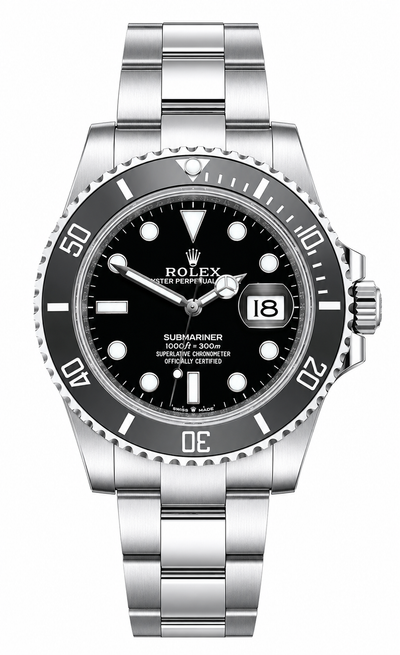
The Rolex Submariner Date 126610LN, by contrast, is an automatic. Its calibre 3235 achieves around 70 hours of power reserve – an entire weekend on the bedside table.
You will find further models under manual-winding watches and automatic watches.
Frequently asked questions (FAQ)
Can an automatic watch be wound by hand?
With most automatic calibres, yes, via the crown. This is particularly useful if the watch has stopped. After that, the rotor takes over.
Can a manual-winding watch be overwound?
No, provided you stop when you feel resistance. Forcing the crown any further can, however, damage the movement.
Which is more reliable?
Both types are equally reliable. What matters is regular servicing, as described in our article Mechanical watch or smartwatch.
Conclusion
Automatic is more convenient, manual winding more traditional. Anyone who wears their watch every day will hardly notice the difference. Those who enjoy the ritual of winding or an unobstructed view of the movement will find the more honest form of mechanics in manual winding.
Wissensdonnerstag appears every week on Instagram and Facebook. Here in our watch magazine you will find each episode in greater depth – with background, examples from our range and the most frequently asked questions.