Wissensdonnerstag #16: What can a chronograph do?
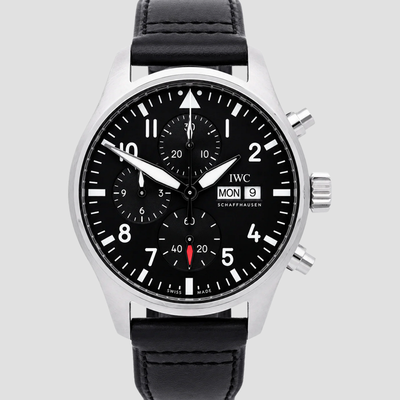
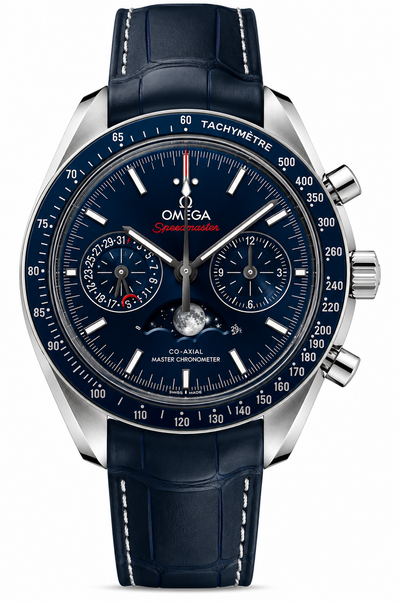
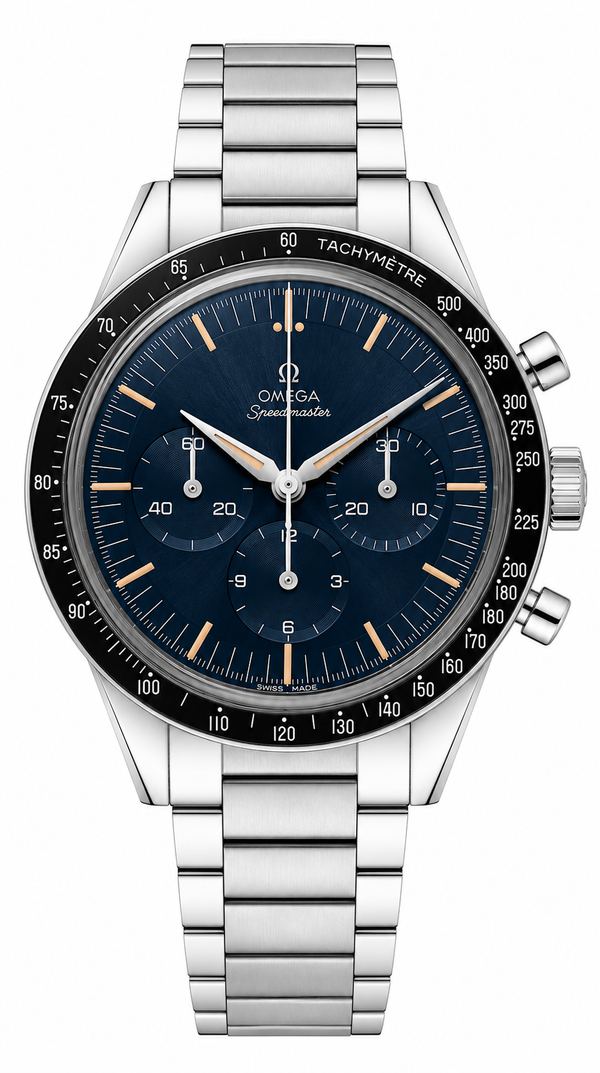
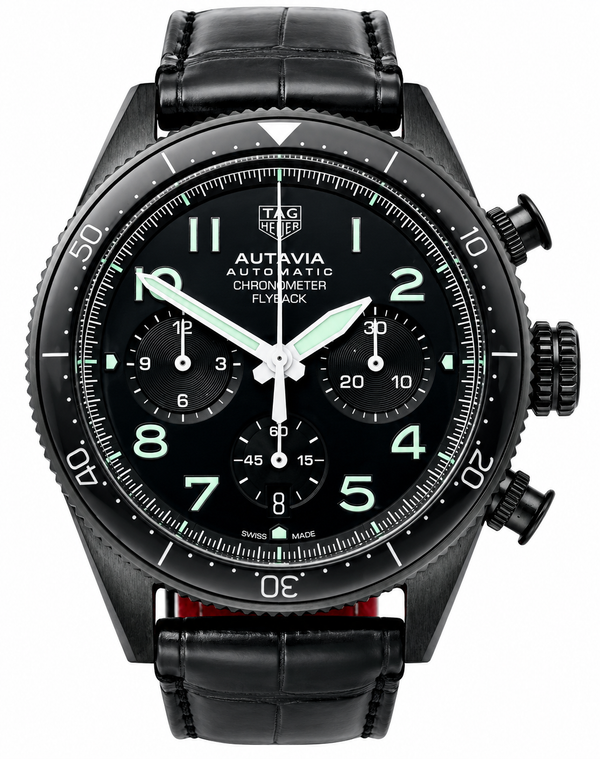
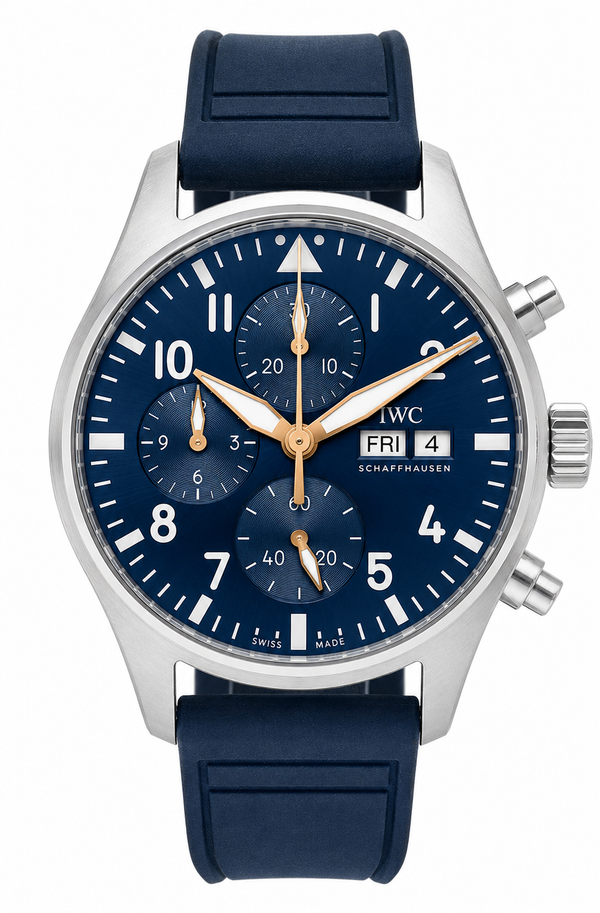
Two pushers beside the crown, small sub-dials on the dial: many watches have the look of a chronograph. But what does the function actually do? A chronograph is a wristwatch with a built-in stopwatch. It measures intervals of time without interrupting the display of the time of day. Three watches from the range show what this complication can do: the Omega Speedmaster Anniversary Series with its tachymeter scale, the TAG Heuer Autavia Flyback Chronometer with its flyback function and the IWC Pilot's Watch Chronograph 43 Le Petit Prince as a classic pilot's chronograph.
The key points
- A chronograph is a watch with a stopwatch function. It measures intervals of time while the normal time continues to run independently.
- The tachymeter scale turns a measured time into a speed. Over a known distance, the speed can be read directly from the bezel.
- The flyback function saves steps. A single press resets the running chronograph and restarts it immediately.
How a chronograph works
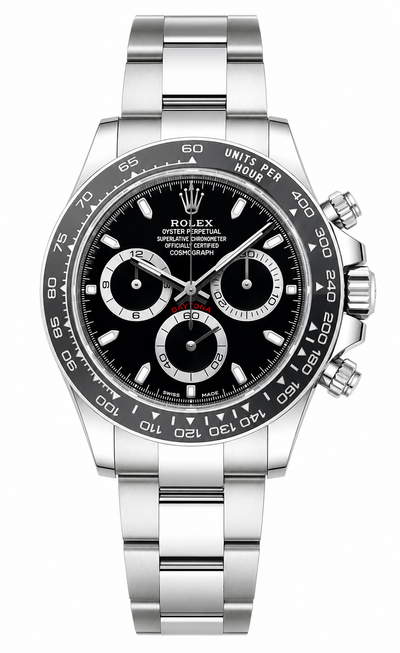
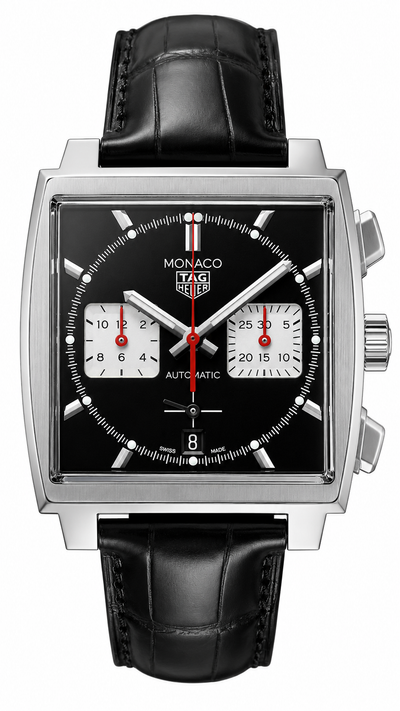
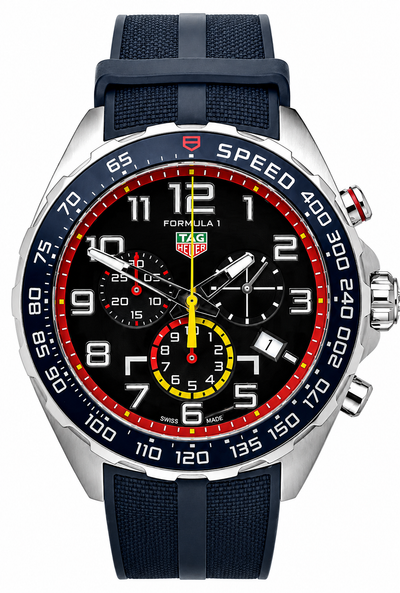
On most chronographs, two pushers sit on the right-hand side of the case. The upper pusher at 2 o'clock starts and stops the measurement, the lower one at 4 o'clock returns the hands to zero. In stopwatch mode, the large central seconds hand shows the measured seconds. Small sub-dials, known as totalisers, count the elapsed minutes and on many models the hours as well. Technically, the chronograph is a complication, meaning a function that goes beyond displaying hours and minutes. What exactly that means is explained in Wissensdonnerstag #8: What exactly is a complication?
Tachymeter: reading off speed
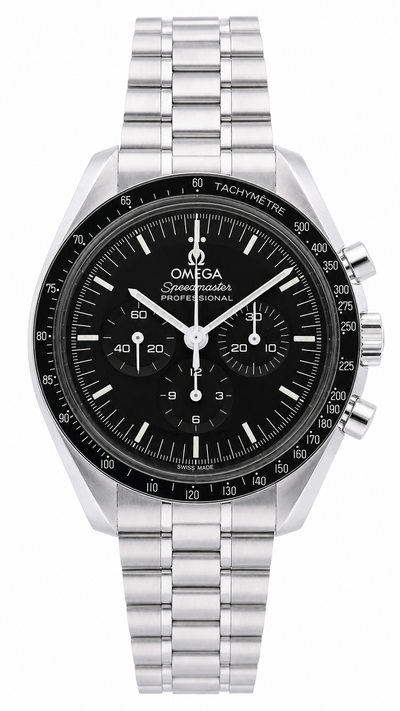
The tachymeter scale is a series of numbers on the bezel or around the edge of the dial. It converts a measured time into a speed based on a known distance, usually one kilometre. The calculation behind it: the 3,600 seconds of an hour are divided by the measured seconds. If one kilometre is covered in 30 seconds, the seconds hand points to 120, so the vehicle was travelling at 120 km/h. The scale is designed for measurements of less than one minute and is generally not sufficient for longer intervals. The Omega Speedmaster has carried the tachymeter on its bezel since the very first models and has made it one of its hallmarks. Further calculation examples can be found in the article Tachymeter.
Flyback: restart with a single press
With a conventional chronograph, a restart takes three steps: stop, reset, start again. The flyback function reduces this to a single press. If the lower pusher is pressed during a running measurement, the hands jump back to zero and the measurement starts again immediately. The function was developed for pilots who had to time flight segments one after another without losing any seconds. Longines filed the patent for the mechanism in 1935, and it was granted in 1936. The TAG Heuer Autavia Flyback Chronometer continues this idea with the automatic Calibre Heuer 02 and offers up to 80 hours of power reserve. How long a watch runs without winding is explained in Wissensdonnerstag #12: What does power reserve mean?
Manual winding or automatic
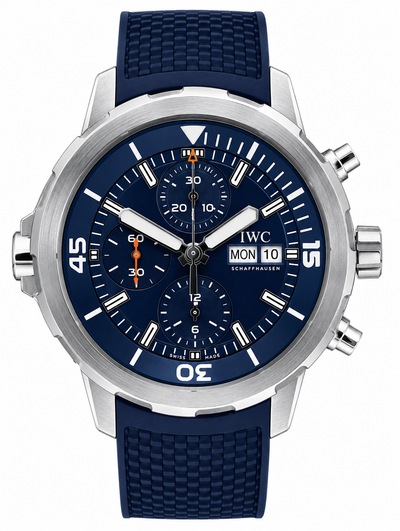
Chronographs are available with both types of winding. The Speedmaster Anniversary Series works with the manual-winding calibre 3861, which is tested as a Master Chronometer. The IWC Pilot's Watch Chronograph 43 Le Petit Prince, on the other hand, uses the in-house automatic calibre 69385, which also displays the day of the week and the date. The differences between the two types of winding are described in Wissensdonnerstag #5: Automatic or manual winding – what is the difference? What makes a manufacture calibre is shown in Wissensdonnerstag #10: What is a manufacture calibre?
Examples from our range
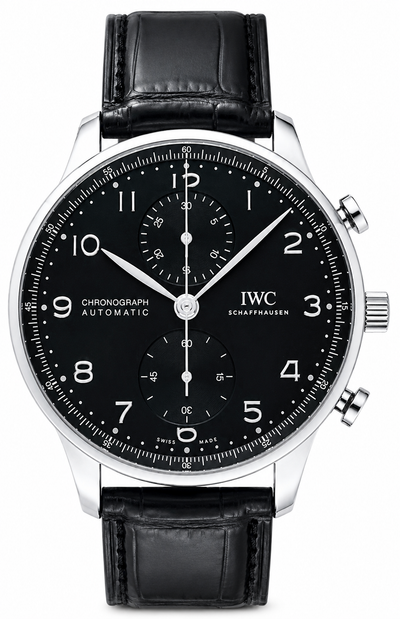
The Omega Speedmaster Anniversary Series 310.30.40.50.06.001 measures 39.7 millimetres and combines a blue-grey dial with three totalisers and the tachymeter bezel. The manual-winding calibre 3861 offers up to 50 hours of power reserve. The TAG Heuer Autavia Flyback Chronometer CBE511C.FC8280 combines a 42 mm case with a black dial, a leather strap and the Calibre Heuer 02 with flyback function. It has been inspected as Certified Pre-Owned and is available with its original box and papers. The IWC Pilot's Watch Chronograph 43 Le Petit Prince IW378011 shows three chronograph counters, the day and the date on a blue dial and is water-resistant to 100 metres.
You will find further models under Omega Speedmaster, TAG Heuer Autavia, IWC Pilot's Watches and in the overview of chronographs.
Frequently asked questions (FAQ)
What is the difference between a chronograph and a chronometer?
A chronograph is a watch with a stopwatch function. A chronometer is a watch whose movement has passed an official accuracy test. The two can be combined, as the TAG Heuer Autavia Flyback Chronometer shows. More on this is explained in Wissensdonnerstag #6: COSC and Master Chronometer – what is the difference?
Can the chronograph run continuously?
A running chronograph requires additional energy and can shorten the power reserve. Whether continuous operation is harmless depends on the respective calibre. The manufacturer's instruction manual provides information on this; if in doubt, a partner watchmaker can advise.
Can the pushers be operated underwater?
As a rule, no. When the pushers are operated, water can get past the seals into the case. Underwater, the pushers should therefore remain untouched unless the manufacturer expressly provides for this. Background information is provided in Wissensdonnerstag #14: How water-resistant is a watch really?
Conclusion
A chronograph measures intervals of time while the time of day continues to run independently. With a tachymeter scale, it becomes an instrument for measuring speed; with the flyback function, a tool for rapid sequences of measurements. Whether manual winding as on the Omega Speedmaster or automatic as on TAG Heuer and IWC: the stopwatch on the wrist combines technology with a sporty character. Whether it is actually used in everyday life or mainly shapes the design remains a matter of personal taste.
The Wissensdonnerstag appears every week on Instagram and Facebook. Here in the watch magazine you will find each episode in more detail – with background, examples from our range and the most frequently asked questions.