Wissensdonnerstag #14: How water-resistant is a watch really?
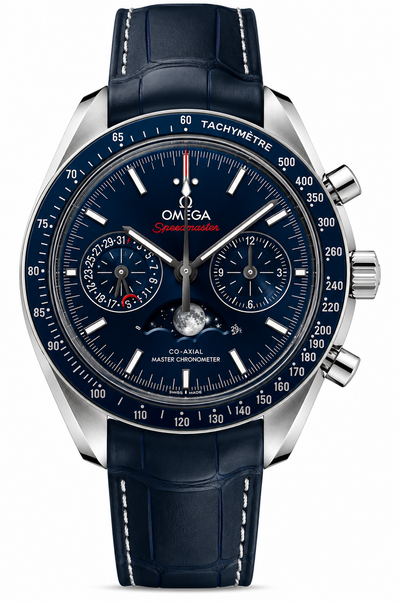
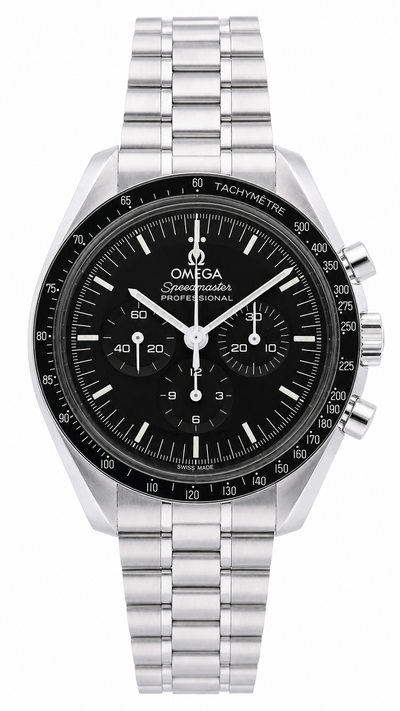
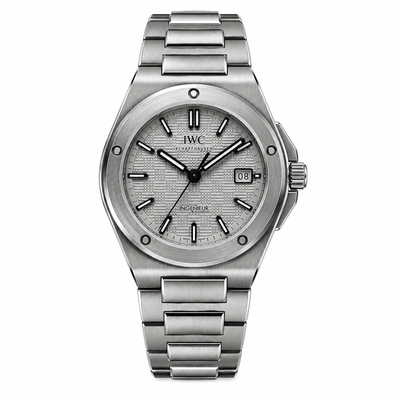
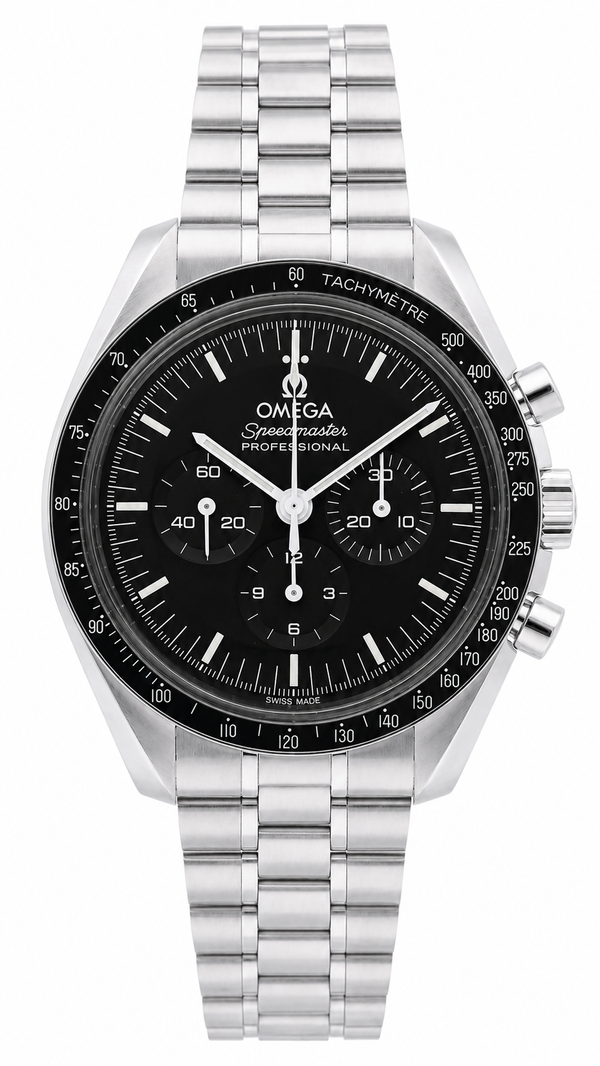
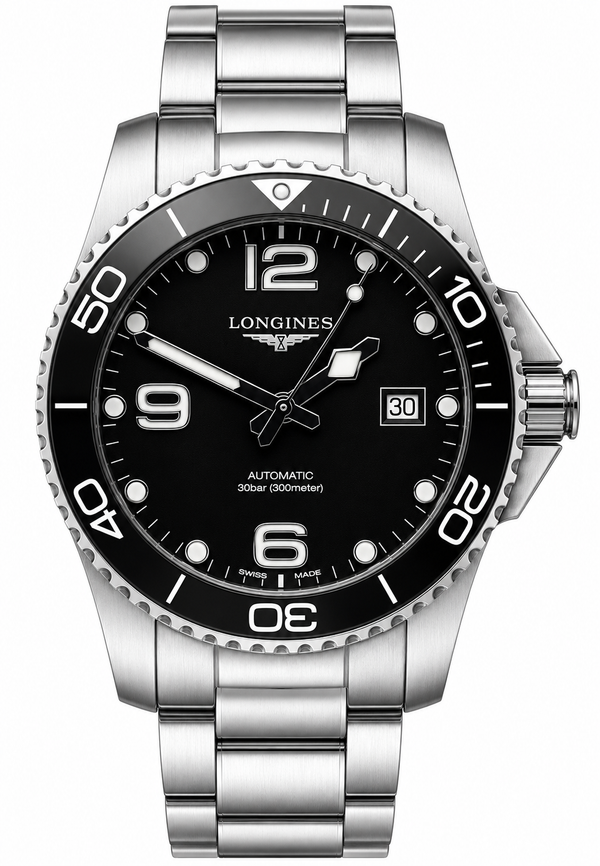
Whether 30, 50 or 300 metres: almost every wristwatch carries a water-resistance rating on the dial or caseback. Many read this figure as the maximum diving depth. In fact, it describes a test pressure that the case withstands under laboratory conditions. Everyday life, by contrast, adds movement, temperature changes, soap and ageing seals. Three watches from our range show what the depth rating means in practice: the Omega Speedmaster Moonwatch Professional with 50 metres, the IWC Ingenieur Automatic 40 with 100 metres and the Longines HydroConquest with 300 metres.
Key points
- The depth rating is a test pressure, not a diving depth. It stands for the pressure the case withstands during testing at rest.
- The crown is the most common weak point. A screw-down crown sits firmly on its gasket and significantly increases security in the water.
- Seals age. Water resistance is not a permanent condition and should be checked regularly and at every service.
What the depth rating really means
Watches marked “water-resistant” are governed by the international standard ISO 22810. It defines the tests a watch must pass to carry this designation. The minimum requirement is an overpressure of 2 bar, which corresponds mathematically to a water column of 20 metres. Testing takes place under controlled conditions: the watch lies still in water or in a pressure chamber, the temperature remains constant and nobody operates the crown or pushers. Movement while swimming, a jump into the pool or a strong jet of water stress the seals differently from the static test. Added to this are temperature changes between sunshine and cold water as well as soap and sun cream, which can attack the seals. The figure on the case is therefore more of a class than a promise for a specific depth.
The crown as a weak point
Every opening in the case is a possible entry point for water: crystal, caseback, pushers and above all the crown. Via its stem, it is directly connected to the movement and is moved regularly for winding and setting. After setting, a screw-down crown is turned onto a thread on the case tube and thus presses firmly onto the gasket. It is essential to screw the crown down completely again after every adjustment. For chronographs, the pushers should not be operated under water unless the manufacturer expressly provides for this.
Dive watches: the stricter ISO 6425 standard
Dive watches are additionally subject to the considerably stricter ISO 6425 standard. A dive watch must be water-resistant to at least 100 metres and is tested at 125 percent of the stated pressure. There are also requirements for legibility in the dark, a device for monitoring diving time such as a unidirectional rotating bezel, for shock and magnetic resistance and for the strength of the bracelet. What else makes a dive watch is explained in Wissensdonnerstag #7: What makes a true dive watch?
Why seals should be checked regularly
The water resistance of a watch is a snapshot. Seals made of rubber or plastic lose elasticity over the years. Heat, chlorinated water and cosmetics accelerate this process. This is why a water-resistance test is part of every service. Anyone who swims regularly is best advised to have the water resistance checked once a year by a partner watchmaker. After bathing in the sea, it is advisable to rinse the watch with clean fresh water. Further advice on sun, sand and salt water can be found in the article Protecting watches properly in summer. How the water-resistant wristwatch came about in the first place is shown in 100 years of the Rolex Oyster.
Examples from our range
The Omega Speedmaster Moonwatch Professional 310.30.42.50.01.001 is water-resistant to 50 metres. Rain, hand washing and splashes in everyday life are no problem, and swimming is also possible. The chronograph pushers, however, remain untouched under water, and the manual-winding chronograph with calibre 3861 is not built for diving. The IWC Ingenieur Automatic 40 IW328902 reaches 100 metres with its screw-down crown and is thus a companion for the pool, the sea and snorkelling. The Longines HydroConquest L3.781.4.56.6 is designed as a dive watch with 300 metres, a screw-down crown and a unidirectional rotating ceramic bezel.

Further models can be found under Omega Speedmaster Moonwatch Professional, IWC Ingenieur, Longines HydroConquest and in the overview of dive watches.
Frequently asked questions (FAQ)
Can you swim with a watch rated water-resistant to 30 metres?
As a rule, a rating of 30 metres is designed for splashes, rain and hand washing. For swimming, many manufacturers recommend at least 50 metres, and for regular water sports 100 metres with a screw-down crown. The manufacturer’s specifications always apply.
Can a watch be worn in the shower or the sauna?
Showering combines warm water, soap and shampoo. Soap can attack seals, and heat makes the case and seals expand and contract. This applies even more to the sauna: high temperatures and humidity stress seals and lubricants. The watch is best left in the locker there.
How often should water resistance be checked?
At every service and each time the case is opened, for example when changing a battery. Anyone who regularly wears the watch in the water should ideally have the water resistance checked once a year. A partner watchmaker does this with a pressure tester in just a few minutes.
Conclusion
The depth rating on a watch describes a test pressure under laboratory conditions, not a diving depth. 50 metres are sufficient for everyday life and occasional swimming, 100 metres with a screw-down crown for regular water sports, and dive watches in accordance with ISO 6425 for diving. Because seals age, a water-resistance test is part of every service. This keeps the watch reliably protected even after many years.
The Wissensdonnerstag appears every week on Instagram and Facebook. Here in the watch magazine you will find each episode in more detail – with background, examples from our range and the most frequently asked questions.