Wissensdonnerstag #10: What Is a Manufacture Calibre?
Whether a watch is driven by a manufacture calibre or a refined base movement is one of the most debated questions among collectors. The term manufacture suggests craftsmanship and independence, yet it is not protected. Anyone who wants to understand what really defines a movement should know both approaches. Breitling demonstrates them within one and the same brand.
Key points
- A manufacture calibre is developed and produced by the brand itself. How many parts are actually made in-house varies from manufacturer to manufacturer.
- A base movement comes from a specialised movement maker. The brand reworks, finishes and regulates it and often gives it its own calibre name.
- Both approaches can power an excellent watch. A manufacture calibre stands for independence, a good base movement for reliability and predictable servicing.
What is a manufacture calibre
A manufacture calibre is a movement that a brand designs itself and produces in its own workshops. However, the term has no legal definition. Some manufacturers make almost every component themselves, right down to the balance wheel and hairspring. Others develop the movement in-house and source individual components such as jewels or springs from suppliers. What usually matters is that design, assembly and regulation are in the hands of the brand.
The effort involved is considerable: Developing a new calibre usually takes several years, plus tooling, test benches and specialised staff. A movement of its own is therefore also a statement: The brand defines construction, features and power reserve itself.
What is a base movement
A base movement, also known as an ébauche, comes from a specialised movement maker. The best-known names in Switzerland are ETA and Sellita. Watch brands buy these movements, rework them, finish the rotor and bridges and regulate them to their own specifications. They often receive their own calibre designation in the process. More on the history of these movements can be found in the article ETA movements – exclusive technologies from Switzerland.
A base movement is by no means second best. Calibres such as the ETA 2824-2 have been running in an enormous number of watches for decades, are fully mature and familiar to watchmakers worldwide. Spare parts are readily available and servicing is predictable.
Two approaches under one name: Breitling
Breitling is particularly well suited to illustrate the difference, as the brand follows both approaches. Many automatic models are powered by the Breitling 17 calibre. Its base is the ETA 2824-2 or the largely identical Sellita SW200-1. Breitling has these movements tested as chronometers by the independent testing institute COSC. The power reserve is around 38 hours.
With the B01 calibre, Breitling presented a chronograph of its own design in 2009. The movement features a column wheel and vertical clutch, offers around 70 hours of power reserve and is also chronometer-tested. The vertical clutch ensures that the chronograph hand does not jump when started. How chronometer testing works is explained in Wissensdonnerstag #6 on COSC and Master Chronometer.
What the difference means in everyday life
A manufacture calibre shows the technical signature of a brand and plays an important role for many collectors. During a service, however, certain parts may only be available from the manufacturer. A proven base movement scores with robustness and a broad service base. For everyday accuracy, regulation and care are often more important than the origin of the movement. The role of the winding type is described in Wissensdonnerstag #5: Automatic or manual winding.
Examples from our range
The Breitling Avenger Automatic 42 A17328101B1A1 represents the path of the proven base movement. Inside works the chronometer-tested Breitling 17 calibre, and the case is water-resistant to 300 metres. Further models can be found under Breitling Avenger and Breitling Avenger Automatic 42.
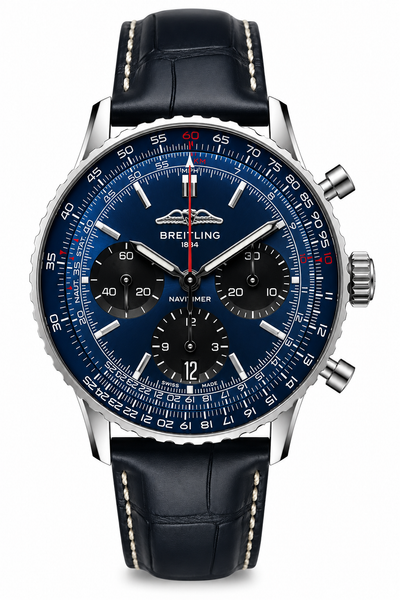
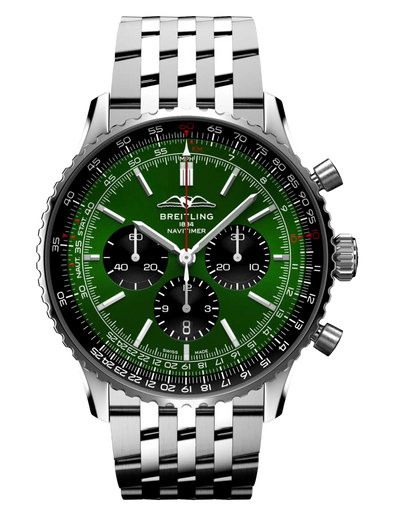
The Breitling Navitimer B01 Chronograph 43 AB0138241G1P1 showcases the B01 manufacture calibre with 47 jewels, 28,800 vibrations per hour and 70 hours of power reserve. More under Breitling Navitimer B01 Chronograph 43 and Breitling Navitimer. The brand's complete selection can be found under Breitling.
Frequently asked questions (FAQ)
Is a manufacture calibre better than a base movement?
Not necessarily. A manufacture calibre shows the independence of a brand and often offers special design features or a longer power reserve. A carefully regulated base movement can be just as precise and durable.
Is the term manufacture protected?
No. There is no binding definition of how much a brand must produce itself. Specific information on the design, production and regulation of the respective calibre is more meaningful.
How can you tell which movement is inside a watch?
The calibre designation is listed in the manufacturer's technical data and in the product description. With the Breitling 17, the jewel count reveals the base: The ETA version has 25 jewels, the Sellita version 26.
Conclusion
A manufacture calibre stands for independence, a good base movement for reliability. Both can power an excellent watch. With the Calibre 17 and the B01, Breitling shows both approaches under one name. Which approach fits better depends on whether the technical signature or proven robustness is the priority.
Wissensdonnerstag appears every week on Instagram and Facebook. Here in the watch magazine you will find each episode in more detail – with background, examples from our range and the most frequently asked questions.