Wissensdonnerstag #17: Quartz, mechanical or Spring Drive?
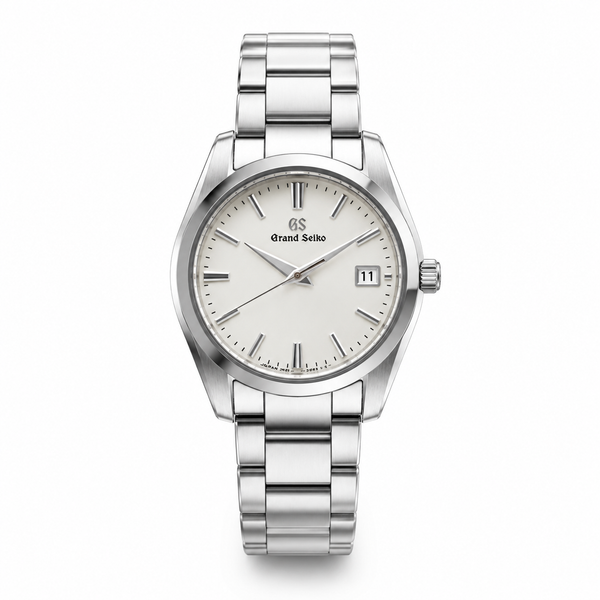
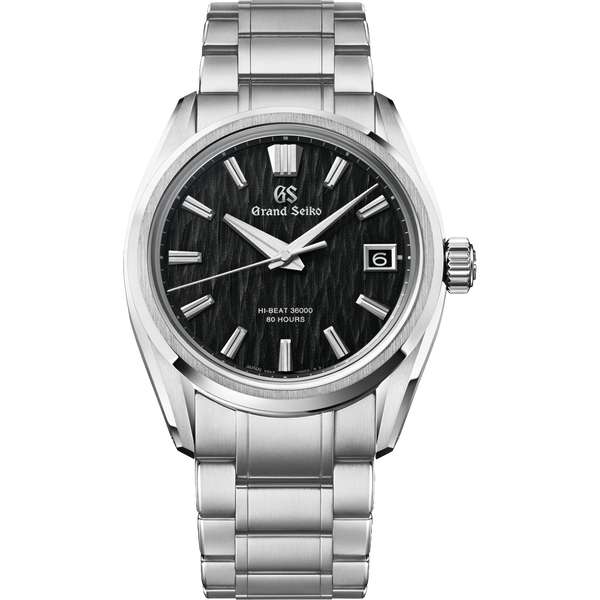
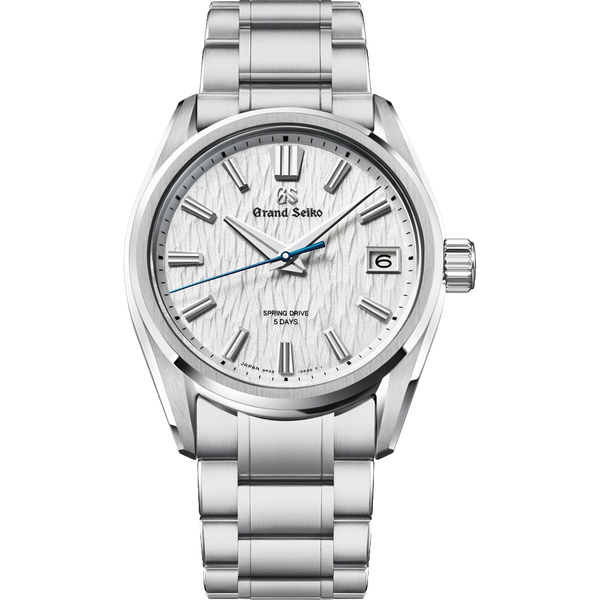
Every watch needs a regulator that divides time into equal steps. In a quartz movement this is a crystal that oscillates under electrical voltage, in a mechanical movement a balance wheel with a hairspring. Grand Seiko masters both worlds and, with Spring Drive, has developed a third solution that combines spring power with quartz regulation. Three watches from the same brand show the difference: the Grand Seiko Heritage SBGX263G with quartz calibre 9F62, the Evolution 9 SLGH017G with the mechanical Hi-Beat calibre 9SA5 and the Evolution 9 SLGA009G with the Spring Drive calibre 9RA2.
The key points
- Quartz is the most accurate. Calibre 9F62 is rated to an accuracy of ±10 seconds per year, and the battery lasts around three years.
- Mechanical movements need no electronics. A wound mainspring, a gear train and an oscillating balance wheel drive the watch, there is no battery.
- Spring Drive combines both principles. A mainspring supplies the energy, while a quartz crystal regulates the rate – with a gliding seconds hand and ±10 seconds per month.
Quartz: the crystal as regulator
In a quartz movement, a tiny quartz crystal oscillates as soon as a battery applies voltage. In wristwatches this is usually 32,768 oscillations per second. An electronic circuit divides this frequency down and sends one pulse per second to a stepping motor that moves the hands. That is why the seconds hand of a quartz watch jumps once per second. Standard quartz movements deviate by several seconds per month. For calibre 9F62, Grand Seiko uses pre-aged crystals and compensates for temperature fluctuations. As a result, the movement is rated to ±10 seconds per year.
Mechanical: spring, gears and balance wheel
A mechanical movement stores energy in a mainspring that is wound by hand or via a rotor. The spring transmits its power through the gear train to the escapement, and the balance wheel swings back and forth, dividing time into equal intervals. The faster the balance oscillates, the less shocks and changes of position disturb the rate. Calibre 9SA5 in the SLGH017G is a so-called Hi-Beat movement with 36,000 vibrations per hour, or five hertz. The Dual Impulse Escapement developed by Grand Seiko works particularly efficiently and, despite the high frequency, enables a power reserve of around 80 hours. Why such a movement never needs a software update is explained in the article Mechanical watch or smartwatch? The difference between automatic and manual winding is explained in Wissensdonnerstag #5: Automatic or manual winding – what is the difference?
Spring Drive: spring power with quartz precision
Spring Drive starts like a mechanical movement: a mainspring supplies the energy, wound via a rotor or the crown. Instead of a balance wheel, however, the so-called Tri-synchro Regulator controls the movement. The gear train turns a glide wheel, which generates a small electrical voltage in the process. This powers a quartz crystal and a circuit that compare the speed of the glide wheel with the quartz frequency and brake it precisely via an electromagnetic brake. There is no battery. Because the glide wheel turns evenly, the seconds hand glides across the dial with perfect smoothness. Calibre 9RA2 in the SLGA009G is rated to ±10 seconds per month and, with two barrels, offers around 120 hours, or five days, of power reserve. What power reserve means is shown in Wissensdonnerstag #12: What does power reserve mean?
Which movement suits whom
Quartz is the choice for anyone looking for a precise and low-maintenance watch that still shows the correct time after days in a drawer. Mechanical movements appeal to lovers of traditional watchmaking who value the living movement and independence from electronics. Spring Drive is aimed at collectors who want to combine mechanical power with an accuracy that a balance wheel can hardly achieve. All three calibres are developed and manufactured in-house by Grand Seiko. What defines a manufacture calibre is explained in Wissensdonnerstag #10: What is a manufacture calibre?
Examples from our collection
The Grand Seiko Heritage SBGX263G takes up the design of the first Grand Seiko with a 9F calibre. The 37 mm steel case features a beige dial with date, is water-resistant to 100 metres and closes with a steel bracelet and folding clasp. The Grand Seiko Evolution 9 SLGH017G combines the Hi-Beat calibre 9SA5 with a 40 mm case in high-intensity titanium and a black dial reminiscent of birch forests at night. The Grand Seiko Evolution 9 SLGA009G features a silver birch dial in a 40 mm steel case, powered by the Spring Drive calibre 9RA2 with a blued, gliding seconds hand.
Further models can be found under Grand Seiko, Grand Seiko Heritage, Grand Seiko Evolution 9 and in the overviews of quartz watches and automatic watches.
Frequently asked questions (FAQ)
Does a Spring Drive watch need a battery?
No. All the energy comes from the mainspring. The movement generates the small current for the quartz and the circuit itself via the glide wheel. If the watch is not worn, it stops once the power reserve has run down, just like a mechanical watch.
Is a quartz watch less valuable than a mechanical watch?
Not necessarily. The value depends on finishing, movement quality and brand. A calibre such as the 9F62, with pre-aged crystals, temperature compensation and elaborately crafted components, has little in common with a simple mass-produced quartz movement.
How can the movement be recognised by the seconds hand?
A quartz movement makes the seconds hand jump once per second. A mechanical movement moves it in many small steps, ten times per second in a Hi-Beat movement such as the 9SA5. With Spring Drive, the hand glides without visible steps.
Conclusion
Quartz, mechanical and Spring Drive solve the same task in three ways. Quartz offers the highest accuracy with minimal effort, mechanical stands for pure watchmaking without electronics and Spring Drive combines spring power with the precision of quartz. Whether a jumping, ticking or gliding seconds hand fascinates more remains a matter of personal taste.
Wissensdonnerstag appears every week on Instagram and Facebook. Here in the watch magazine you will find each episode in more detail – with background, examples from our collection and the most frequently asked questions.