Wissensdonnerstag #11: What does Swiss Made really mean?
On many dials, just two words appear at six o'clock: Swiss Made. In Germany, the designation Glashütte carries similar weight. Neither is a design element. Both are legally protected indications of origin with defined minimum requirements. An IWC Portugieser from Schaffhausen and the Lange 1 by A. Lange & Söhne from Glashütte show what lies behind them.
Key points
- Swiss Made is regulated by ordinance in Switzerland. Since 2017, at least 60 percent of a watch's manufacturing costs must be incurred in Switzerland.
- The movement must be Swiss as well. Technical development, casing and final inspection of the watch also take place in Switzerland.
- Glashütte has been protected in Germany since 2022. More than 50 percent of the value added must be created in the area of origin, key production steps entirely in Glashütte.
What Swiss Made means legally
The basis is the Swiss Ordinance on the Use of the Name Switzerland for Watches, known as the Swiss Made ordinance. It was tightened considerably as part of the so-called Swissness legislation, and the new rules have applied since 1 January 2017. Since then, a watch may only be called Swiss if at least 60 percent of its manufacturing costs are incurred in Switzerland, the movement is cased in Switzerland and the manufacturer carries out the final inspection in Switzerland.
Technical development is added to this: For mechanical watches, at least the design and the construction of prototypes must take place in Switzerland. After a transition period, this requirement has applied since 1 January 2019. Before 2017, the bar was lower. The decisive factor was mainly that Swiss components accounted for at least half the value of the movement.
The movement must also be Swiss
A Swiss case alone is not enough. The movement itself must meet the criteria of a Swiss movement: It is technically developed, assembled and inspected by the manufacturer in Switzerland. At least 60 percent of its manufacturing costs must be incurred in Switzerland, and Swiss components must make up at least half the value of all components.
Whether the movement comes from a specialised movement maker or from in-house production makes no difference for Swiss Made. The difference between the two approaches is explained in Wissensdonnerstag #10: What is an in-house calibre?. The history of the best-known Swiss base movements is covered in the article ETA movements – exclusive technologies from Switzerland.
IWC Portugieser: Swiss origin from its own manufacture
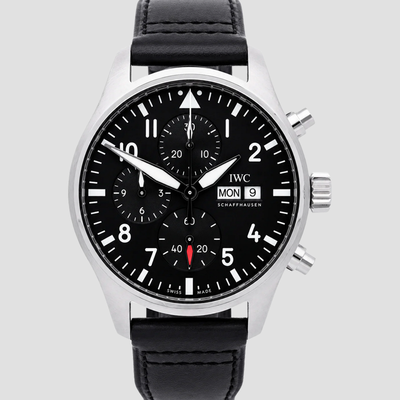
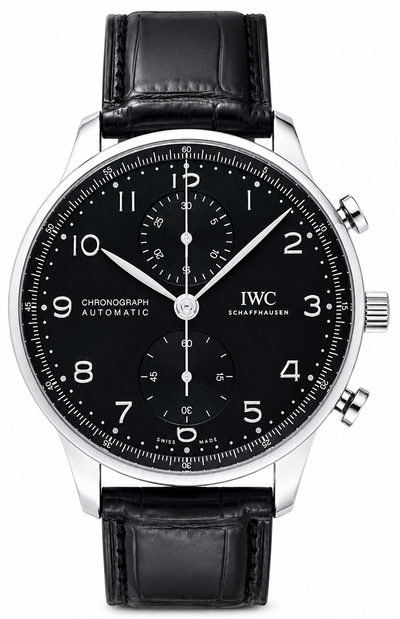
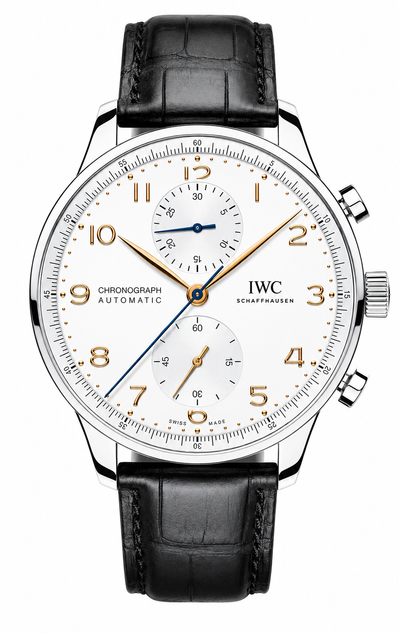
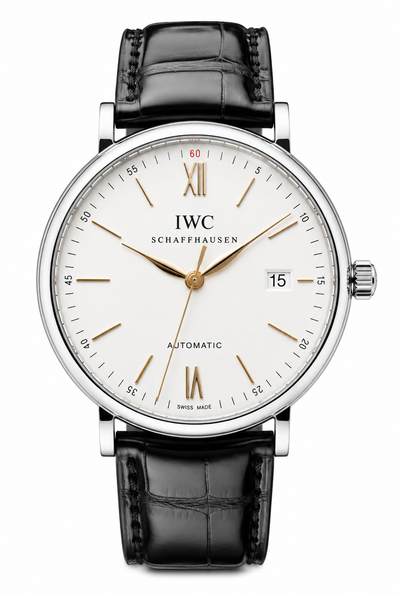
IWC has been manufacturing in Schaffhausen since 1868. The Portugieser Automatic with reference IW358304 is powered by the in-house calibre 82200. Its Pellaton winding system winds the mainspring in both directions of rotor rotation, and the heavily stressed pawls are made of virtually wear-free ceramic. The power reserve is 60 hours. Design, movement and final inspection of this watch are located in Schaffhausen and thus entirely in Switzerland.
Glashütte: the German indication of origin
In Germany, the Glashütte ordinance has applied since March 2022. A watch may only bear the designation Glashütte if, across all essential production stages, more than 50 percent of the value added is generated in the area of origin. Assembly and starting of the movement, regulation, fitting of the dial, setting of the hands and casing must take place entirely within the town of Glashütte. After Solingen for cutlery, Glashütte is only the second geographical indication of origin in Germany with its own protective ordinance.
The Lange 1 by A. Lange & Söhne stands for the town's tradition. It was presented in 1994, four years after the brand was re-established. The watch marks the new beginning of the manufacture in the Müglitz valley. Its asymmetrical dial layout and the outsize date still shape the brand today.
Examples from our range
The IWC Portugieser Automatic IW358304 shows Swiss Made from its own manufacture: calibre 82200, Pellaton winding and 60 hours of power reserve in a 40.4 millimetre stainless steel case. You will find further models under IWC Portugieser and IWC.
Watches from Glashütte in our range include the A. Lange & Söhne Saxonia Annual Calendar 330.032E and the Glashütte Original SeaQ Panoramadatum 1-36-13-04-91-34. You will find the complete selection under A. Lange & Söhne and Glashütte Original.
Frequently asked questions (FAQ)
Is Swiss Made a seal of quality?
No. Swiss Made is an indication of origin. It defines where essential steps of production take place and how high the Swiss share of costs must be at a minimum. A chronometer test says more about accuracy, as Wissensdonnerstag #6 on COSC and Master Chronometer shows.
What does Swiss Movement mean on a watch?
The designation Swiss Movement refers only to the movement. It states that the movement meets the requirements for a Swiss movement. The watch as a whole then does not necessarily have to meet the criteria for Swiss Made.
May watches from Glashütte contain parts from elsewhere?
Yes. The ordinance requires more than 50 percent of the value added in the area of origin as well as certain production steps in the town of Glashütte. Individual components may also come from elsewhere, and defined neighbouring towns also count as part of the area of origin for certain supplies and finishing work.
Conclusion
Swiss Made and Glashütte describe where a watch is made – with defined minimum standards behind them. In Switzerland, manufacturing costs, a Swiss movement, casing and final inspection count, in Glashütte the value added and key assembly steps on site. Both designations provide clarity about origin, but do not replace a close look at the movement, the craftsmanship and the condition of the individual watch.
Wissensdonnerstag appears every week on Instagram and Facebook. Here in the watch magazine, you will find each episode in more detail – with background, examples from our range and the most frequently asked questions.